
21 min read
Are omega-6 fatty acids pro-inflammatory? No. (part 2; my literature list)
In this document I list all the literature I came across during my search for scientific studies on the pro-inflammatory effects of omega-6 fatty acids (among others based on the “omega-6/omega-3 (n6/n3) ratio” and the oxidation theory). These theories state that when we get too much n6 relative to n3, this leads to the production of arachidonic acid and oxidative stress, with more (chronic) inflammation in our body as a result. Also called low-grade inflammation. This would be bad for our health. The advice that follows from this is that we should cut down on products rich in omega-6 fatty acids (and especially linoleic acid) such as vegetable oils - or, more specifically, seed oils.
Linoleic acid is said to be converted in the body into arachidonic acid (also an omega-6 fatty acid: AA), which is known to be the raw material the immune system uses to make inflammatory substances. That is fine in itself, because inflammation is essential for a well-functioning immune system, but it becomes a problem when these processes are overactive.
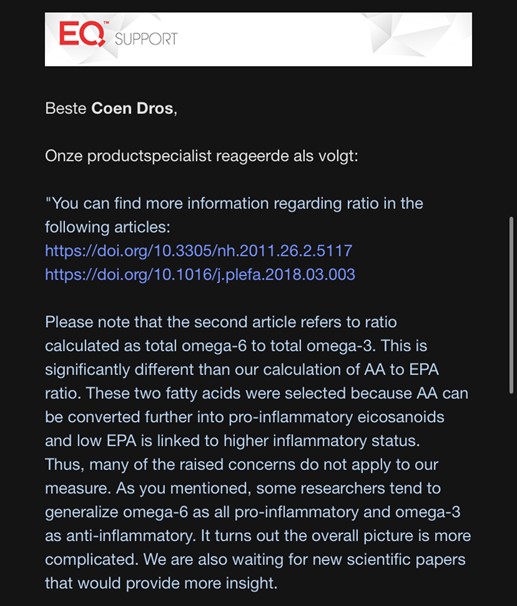
Eqology (a large omega-3 supplement company) also acknowledges that the pro-inflammatory effect comes from arachidonic acid — and not from linoleic acid. They only make the mistake of suggesting that more research is needed, while there is already a gigantic body of evidence that has investigated this. (translated from Dutch)
In addition, omega-6 fatty acids are said to oxidise easily, among other things through heating, which would lead to oxidative stress, inflammation and disease. The biggest problem with this argument, however, is that experimental research in humans shows that a higher intake of omega-6 fatty acids does not lead to more inflammation.
That makes sense, because (1.) those same studies also show that a higher intake of vegetable oil or linoleic acid does not directly lead to higher arachidonic acid concentrations — even though the body is able to convert linoleic acid into AA, and (2.) oxidative stress is a complex system, in which antioxidants also play a role. And antioxidants are found in vegetable oils, in food and in our body. So the fact that a substance can oxidise does not automatically lead to oxidative stress.
More vegetable oil therefore does not cause more inflammation. This has been investigated dozens of times in experimental studies with humans, which find, time after time, a neutral effect or even a reduction in inflammation and oxidative stress.
We also have clear evidence that replacing animal fats with vegetable oils has positive effects, such as a reduction in inflammation.
We also see in observational research that people with more linoleic acid in the body live longer (without disease) than people with lower omega-6 concentrations.
Conclusion: Theories about harmful effects of omega-6 fatty acids from vegetable (seed) oils have been tested and refuted in studies with humans.
See my literature list below.
Evidence that would support the theories
Often cited as evidence for the negative effect of an increased n6/n3 ratio on human health:
(the work of Simopoulos such as) Simopoulos et al.The importance of the omega-6/omega-3 fatty acid ratio in cardiovascular disease and other chronic diseases (2008)
https://pubmed.ncbi.nlm.nih.gov/18408140/
I wrote a blog about this narrative review and concluded that it is not good scientific evidence: https://www.coenfirmationbias.nl/post/zijn-omega-6-vetzuren-ontstekingsbevorderend-deel-1
"She does not assess studies on quality, does not name strong and weak points, and lets the reader get lost in the literature. As if she does not want you to check what she claims. It is also unthinkable that a reviewer of the journal verified everything. On top of that, a ridiculous number of the references are her own work (30 of the 150): even more narrative reviews. This makes it impossible to check. The fact that she interprets the results of some studies selectively and leaves out results here and there makes me lose trust in the scientific integrity of Simopoulos."
Another narrative review that is often cited as evidence for the harmful effects of omega-6 fatty acids (n-6):
Bosma-den Boer et al. chronic inflammatory diseases are stimulated by current lifestyle: how diet, stress levels and medication prevent our body from recovering. (2012)
https://pubmed.ncbi.nlm.nih.gov/22510431/
The experimental studies cited in this review, however, tell a different story and are misinterpreted by Bosma-den Boer et al:
Guebre-egziabher et al. Nutritional intervention to reduce the n-6/n-3 fatty acid ratio increases adiponectin concentration and fatty acid oxidation in healthy subjects. (2008)
https://pubmed.ncbi.nlm.nih.gov/17700650/
In this study, people had to eat two tablespoons of rapeseed oil every day for 10 weeks. The n6/n3 ratio went down because n3 intake went up (rapeseed oil is relatively high in n3). There was no effect on arachidonic acid and inflammation went down.
Liou et al. Decreasing linoleic acid with constant alpha-linolenic acid in dietary fats increases (n-3) eicosapentaenoic acid in plasma phospholipids in healthy men. (2007)
https://pubmed.ncbi.nlm.nih.gov/17374659/
In this study, people had to eat a vegetable oil high in n6 or low in n6 for 4 weeks. In the high n6 group this was more than two tablespoons a day.
Participants had to eat the vegetable oils in the form of a margarine that they used to bake the following things: "cookies, savory and sweet breads, cakes, deserts, and snacks were developed using the oil blends"
Despite the high n6 intake and n6/n3 ratio, there was no effect on arachidonic acid in the body and no effect on inflammation.
In addition, I found this study in the book by Richard de Leth, who also claims that omega-6 fatty acids/seed oils can be harmful:
Forsythe et al. Comparison of low fat and low carbohydrate diets on circulating fatty acid composition and markers of inflammation. (2008)
https://pubmed.ncbi.nlm.nih.gov/18046594/
In this study, a ketogenic diet was compared with a low-fat diet. The ketogenic diet caused an increase in n6/n3 from 9.7 to 13.1. The ratio stayed the same (around 10) in the low-fat diet. Both groups had a decrease in inflammation, but the ketogenic group had the biggest decrease. The researchers also found a strong association between a higher n6 intake and less inflammation.
Evidence that is often cited for the oxidation theory is the work of Dinicolantonio. I took a dive into his work during my dive into a YouTube video. See my review here:
https://www.coenfirmationbias.nl/post/plantaardige-of-plantkwaadaardige-olien-deel-1
My conclusion: "The narrative review by DiNicolantonio & O’Keefe makes strong claims about the effect of vegetable oils (rich in omega 6 fatty acids) on cardiovascular disease. But when I dive deeper into their substantiation, it turns out that the effect is not that clear at all -- and in the end a claim should never be stronger than the strength of the scientific evidence. Studies are misinterpreted and results are (deliberately) left out. Maybe this is the result you get when a pharmacist and a cardiologist practise nutrition science."
Evidence for the omega-6/omega-3 ratio
So are there no primary studies at all that show a benefit of lowering the ratio? Certainly:
Adam et al. Anti-inflammatory effects of low Arachidonic acid diet and fish oil in patiënte with rheumatoid arthritis (RA). (2003)
https://pubmed.ncbi.nlm.nih.gov/12548439/
This study had one group supplement fish oil and one group supplement fish oil + limit arachidonic acid intake. They did this by avoiding animal products. Because that is where arachidonic acid is found.
It showed that fish oil had positive effects on inflammation and RA symptoms, but that the combination had an even bigger positive effect.
Ramsden et al. Dietary alteration of n3 and n6 fatty acids for headache reduction in adults with migraine: a randomized controllers trial
https://pubmed.ncbi.nlm.nih.gov/34526307/
This study had a group in which n3 was increased and a group in which n3 was increased and n6 (linoleic acid) was lowered. This had no effect on arachidonic acid, but it did lead to fewer headache days per month in the n3-n6 group (-4 days) compared with only an increase in n3 intake (-2 days). At the starting point people had 16 headache days on average.
But it has to be said here that on the other (primary) outcomes, such as migraine symptoms and number of hours of headache per day, both groups had an equally large positive effect.
Recently a study came out of the UK biobank: "Higher ratio of plasma omega-6/omega-3 fatty acids is associated with greater risk of all-cause, cancer, and cardiovascular mortality: A population-based cohort study in UK Biobank."
https://translational-medicine.biomedcentral.com/articles/10.1186/s12967-025-06336-2
This study followed some 85,000 people for almost 13 years on average. The participants had donated blood in which fatty acids were measured, and then mortality from all causes, cancer and cardiovascular disease was looked at.
It turned out that the lower the ratio between omega-3 and omega-6, the lower the risk of mortality. This relationship was corrected for many important factors, including the omegas on their own. A strong statistical analysis was carried out to examine the direct relationship between the ratio and the risk of mortality:
"We also conducted several sensitivity analyses. First, to assess whether the associations of the omega-6/omega-3 ratio with mortality outcomes were primarily driven by omega-3 fatty acids or omega-6 fatty acids, we assessed both the separate and the joint associations of omega-3 fatty acids to total fatty acids percentage (omega-3%) and omega-6 fatty acids to total fatty acids percentage (omega-6%) with the three mortality outcomes. We also performed a joint analysis with categories of the omega-3% and omega-6% quintiles, using participants in both the lowest omega-3% and omega-6% quintiles as the reference category. An interaction term between omega-3% and omega-6% was included in the multivariable Cox proportional hazards model, and a Likelihood Ratio test was used to assess its significance."
The main results:
- The more omega-6 in the blood, the lower the risk of mortality.
- The more omega-3 in the blood, the lower the risk of mortality.
- The lower the ratio between omega-3 and omega-6, the lower the risk of mortality.
After all the statistical tests, the authors state that the lower risk of mortality with a lower ratio is probably due to a higher amount of omega-3 in the body:
"We observed that the omega-6/omega-3 ratio is positively, while both of its numerator and denominator, omega-6% and omega-3%, are negatively associated with mortality. Our findings support that both omega-6 and omega-3 PUFAs are protective against death and that the positive associations of the omega-6/omega-3 ratio with mortality outcomes are likely due to the stronger effects of omega-3 than omega-6 PUFAs."
Possibly, with a high omega-6 and omega-3 intake, a lower ratio does have benefits. But this would then have to happen by raising omega-3 and not by lowering omega-6: interesting hypothesis!
The evidence for the ratio as an important factor is therefore very limited.
Evidence against the theories
There are also several experiments showing that when you replace butter or ghee (saturated fat) with vegetable oils such as margarine and sunflower oil, this has health benefits such as a reduction in inflammation, glucose metabolism and liver fat.
Bjermo et al. Effects of n-6 PUFAs compared with SFAs on liver fat, lipoproteins, and inflammation in abdominal obesity: a randomized controlled trial. (2012)
https://pubmed.ncbi.nlm.nih.gov/22492369/
Sedgi et al. The effects of replacing ghee with rapeseed oil on liver steatosis and enzymes, lipid profile, insulin resistance and anthropometric measurements in patients with non-alcoholic fatty liver disease: a randomised controlled clinical trial. (2024)
https://pubmed.ncbi.nlm.nih.gov/38501177/
Exchanging saturated fatty acids for (N-6) polyunsaturated fatty acids in a mixed meal may decrease postprandial lipemia and markers of inflammation and endothelial activity in overweight men(2011)
https://pubmed.ncbi.nlm.nih.gov/21430255/
“These results indicate that exchanging SFA from butterfat for (n-6) PUFA in a mixed meal may decrease postprandial lipemia and concentrations of IL-6, TNFα, sTNFr-I and -II, and sVCAM-1 in overweight men.”
Linoleic acid intake and conversion to arachidonic acid
As already came up in several studies earlier, there is no effect of linoleic acid (vegetable oil) intake on arachidonic acid. This is also confirmed in this study:
Courville et al. Dietary linoleic acid lowering alone does not lower arachidonic acid or endocannabinoids among women with overweight and obesity: A randomized, controlled trial. (2023)
https://pubmed.ncbi.nlm.nih.gov/38100748/
But a large review of 36 experimental studies also shows no effect of linoleic acid intake on arachidonic acid in the body:
Rett et al. Increasing dietary linoleic acid does not increase tissue arachidonic acid content in adults consument western-type diets: a systematic review(2011)
https://pubmed.ncbi.nlm.nih.gov/21663641/
“Decreasing dietary linoleic acid by up to 90% was not significantly correlated with changes in arachidonic acid levels in the phospholipid pool of plasma/serum (p = 0.39). Similarly, when dietary linoleic acid levels were increased up to six fold, no significant correlations with arachidonic acid levels were observed (p = 0.72).”
Inflammatory markers after supplementation with marine n-3 or plant n-6 PUFAs: A randomized double-blind crossover study. (2025)
https://www.sciencedirect.com/science/article/pii/S0022227525000306
“ARA wt% in RBCMs was not significantly changed in relative terms during the n-6 intervention, whereas it decreased by 10.0% (P < 0.001) from baseline after n-3 supplementation’.”
The intake of arachidonic acid (found mainly in animal products) does have an effect on how much arachidonic acid you have in your body. But even that does not seem to have an effect on inflammation:
Hussein, N., Ah‑Sing, E., Wilkinson, P., Leach, C., Griffin, B. A., & Millward, D. J. (2019). A systematic review of the effects of increasing arachidonic acid intake on PUFA status, metabolism and health‑related outcomes in humans. https://www.cambridge.org/core/journals/british-journal-of-nutrition/article/systematic-review-of-the-effects-of-increasing-arachidonic-acid-intake-on-pufa-status-metabolism-and-healthrelated-outcomes-in-humans/6A0167CBF8EC148B4855C25D002E4AC4
"The studies reviewed here suggest no adverse effects in adults of increased ARA intake up to at least 1000–1500 mg/d on blood lipids, platelet aggregation and blood clotting, immune function, inflammation or urinary excretion of ARA metabolites."
Heating oils (oxidation)
In a blog I discussed a video that cited evidence for the harmful effects of heating and oxidation of oils:
https://www.coenfirmationbias.nl/post/plantaardige-of-plantkwaadaardige-olien-deel-3
There I concluded the following about it:
“It is clear that, as always, more context and nuance are needed than is given in Joseph’s video. 4-Hydroxy 2-nonenal (HNE) is an aldehyde that most likely plays a role in several diseases of affluence, but HNE in itself is not toxic. We need a low concentration in our cells, and it only becomes dangerous at very high concentrations. The metabolism of HNE is still not fully understood. Food can both raise HNE concentration (through a MCDonalds breakfast) and lower it (antioxidants). Shoeb et al. give this context, but Joseph leaves it out.” (translated from Dutch)
Studies that have looked at the effects of intake of heated seed oils:
Effects of plant oils with different fatty acid composition on cardiovascular risk factors in moderately hypercholesteremic Chinese adults: a randomized, double-blinded, parallel-designed trial. (2020)https://pubmed.ncbi.nlm.nih.gov/32756661/
Intervention: Volunteers received peanut oil, corn oil or blend oil to use for cooking for one year
“No significant differences were observed in the concentrations of fasting plasma lipids, hsCRP, glucose, and insulin among the three groups using different types of plant oils.”
A randomized study of coconut oil versus sunflower oil on cardiovascular risk factors in patients with stable coronary heart disease. (2016)
https://pubmed.ncbi.nlm.nih.gov/27543472/
intervention: In a single center randomized study in India, patients with stable CAD on standard medical care were assigned to receive coconut oil (Group I) or sunflower oil (Group II) as cooking media for 2 years.
“The anti-inflammatory response assessed by evaluating hCRP at the baseline and end of the study remains statistically comparable even though there is reduction in Group I which is statistically not significant.”
CLA does not impair endothelial function and decreases body weight as compared with safflower oil in overweight and obese male subjects. (2011)
https://pubmed.ncbi.nlm.nih.gov/21697535/
intervention: Eighty-five overweight men (aged 45-68 years, body mass index 25-35 kg/m(2)) were randomized to receive 4.5 g/d of the CLA isomeric mixture, safflower oil, heated safflower oil, or olive oil in a 4-week double-blind study.
no effect on oxidation and inflammation markers in the heated safflower oil group.
Cooking oil/fat consumption and deaths from cardiometabolic diseases and other causes: prospective analysis of 521,120 individuals (2021)
https://pubmed.ncbi.nlm.nih.gov/33853582/
“Consumption of butter and margarine was associated with higher total and cardiometabolic mortality. Replacing butter and margarine with canola oil, corn oil, or olive oil was related to lower total and cardiometabolic mortality. Our findings support shifting the intake from solid fats to non-hydrogenated vegetable oils for cardiometabolic health and longevity.”
Refined oils and antioxidants
Many people claim that the refining process of seed oils causes a loss of antioxidants. That is why cold-pressed oil would be better than refined oil.
When we look at studies that compare both, we see that there is a drop in antioxidants (vitamin E), but it is not greater than 15 to 30%.
Vitamin E content of crude and refined vegetable oils in Southern Brazil (1998)
https://www.sciencedirect.com/science/article/pii/088915758890004X
Changes in α-, β-, γ- and δ-tocopherol contents of mostly consumed vegetable oils during refining process (2013)
https://www.tandfonline.com/doi/full/10.1080/19476337.2013.821672#d1e144
This explains why refined oils do not necessarily cause oxidative stress directly.
A review from 2016 does show that other healthy substances, such as polyphenols, drop by a much larger share after refining. This does show that you may prefer to buy unrefined oils for reasons other than oxidation.
"The refining process destroyedmicronutrients: 10–36% loss of total tocopherols, 6–52%loss of total sterols, and 93–98% loss of polyphenols."
Studies from the 1960s and 70s (Sydney and Minnesota studies)
Studies I often get questions about are the Sydney diet heart study and the Minnesota coronary heart study. These studies did not confirm the diet-heart hypothesis and even showed harmful effects. That is why, according to some people, the studies were swept under the rug. The problem is that there was a lot wrong with these studies methodologically. I have not yet had time to write up a deep dive into these studies, but Tjieu Maas (movement scientist with a passion for sport and nutrition) has! On the website zowerkthetlichaam.nl he writes much more digestible blogs than I do, and I can certainly recommend them:
Sowing fear about seed oil part 4: Does seed oil wreck your blood vessels? The Sydney Diet-Heart Study examined critically
"The Sydney Diet-Heart Study is often used to claim that seed oil is deadly. But when you look at the details, it turns out that this is at the very least a conclusion in which not all nuance has been taken into account. What this study mainly shows is that in the sixties you should not have been eating margarine, because it was full of trans fats. That is old news by now. Modern seed oils, such as sunflower oil, soybean oil or corn oil, contain hardly any or no trans fats anymore and can therefore not be compared with the diet in the Sydney study. The fact that the intervention group did not consume any omega-3 fatty acids also makes the study outdated."
Sowing fear about seed oil part 3: Misunderstandings about the Minnesota Coronary Experiment
"The Minnesota Coronary Experiment is not evidence that seed oil is bad. It mainly shows how hard it is to carry out long-term diet studies well. Participants dropped out en masse, the diet was artificial and unrealistic and the research period was far too short to draw firm conclusions about heart disease. What you can take from this: you do not need to be afraid of omega-6. Nobody advises you to get 20% of your calories from corn oil, by the way."
A good YouTube video that explains the crucial criticism of the studies: https://youtu.be/k6ts0e41pq8?si=EKyWpGreE7VoJb2e
Long-term effects of linoleic acid
If we then look at the long term, we see that people with more linoleic acid in their blood (which is an indication of n6/vegetable oil intake) live longer and die less often from cardiovascular disease and cancer than people with less linoleic acid in their blood.
Biomarkers of dietary omega-6 fatty acids and incident cardiovascular disease and mortality: an individual-level pooled analysis of 30 cohort studies. (2019)
https://pmc.ncbi.nlm.nih.gov/articles/PMC6582360/
"In 30 prospective studies with medians of follow-up ranging 2.5 to 31.9 years, 15,198 incident cardiovascular events occurred among 68,659 participants. Higher levels of LA were significantly associated with lower risks of total CVD, cardiovascular mortality, and ischemic stroke, with hazard ratios per interquintile range of 0.93 (95% CI: 0.88–0.99), 0.78 (0.70–0.85), and 0.88 (0.79–0.98), respectively."
Harris et al. Plasma n6 polyunsaturated fatty acid levels and risk for total and cause-specific mortality: A prospective observational study from the UK Biobank. (2024)
https://www.sciencedirect.com/science/article/abs/pii/S0002916524007123
"Comparing LA Q5 to Q1, the hazard ratio (HR, 95% CI) for total mortality was 0.80 (0.76, 0.84; p<0.001), and this was similar for all three cause-specific death categories."
Bork et al. Adipose tissue content of ω-6 polyunsaturated fatty acids and all-cause mortality: A Danish prospective cohort study. (2025)
https://pubmed.ncbi.nlm.nih.gov/39914497/
"During a median of 21 y of follow-up, 1160 participants died. The median adipose tissue contents of linoleic acid and arachidonic acid were 10.60% and 0.36%, respectively. In multivariable continuous analyses, we observed a statistically significant inverse association between adipose tissue content of linoleic acid and all-cause mortality (P < 0.001)."
Dietary intake and biomarkers of linoleic acid and mortality: systematic review and meta-"analysis of prospective cohort studies. (2020)
https://pubmed.ncbi.nlm.nih.gov/32020162/
“In prospective cohort studies, higher linoleic acid intake, assessed by dietary surveys or biomarkers, was associated with a modestly lower risk of mortality from all causes, CVD, and cancer. These data support the potential long-term benefits of PUFA intake in lowering the risk of CVD and premature death.“
Lai et al. Red Blood Cell Omega-6 Fatty Acids and Biomarkers of Inflammation in the Framingham Offspring Study. (2025)
https://www.mdpi.com/2072-6643/17/13/2076
People (n=2777) with more omega-6 in the cell membranes of their blood cells (which is an indication of omega-6 intake over a longer period) have less inflammation in their body.
"In our large community-based study, we observed weak but statistically significant inverse associations between several types of inflammatory biomarkers with RBC n-6 PUFAs. Our findings do not support the hypothesis that omega-6 fatty acids are pro-inflammatory."
Zhang et al. Butter and Plant-Based Oils Intake and Mortality. (2025)
https://pubmed.ncbi.nlm.nih.gov/40048719/
"During up to 33 years of follow-up among 221 054 adults (mean [SD] age at baseline: 56.1 [7.1] years for Nurses' Health Study, 36.1 [4.7] years for Nurses' Health Study II, and 56.3 [9.3] years for Health Professionals Follow-up Study)..... higher intake of butter was associated with increased mortality, while higher plant-based oils intake was associated with lower mortality. Substituting butter with plant-based oils may confer substantial benefits for preventing premature deaths."
Well-supported reviews
Both Harris and Calder are scientists who have been researching omega-6 and omega-3 fatty acids for decades, and are a reliable voice in this field.
Good narrative reviews written by experts in this field:
Harris et al. The Omega-6:Omega-3 ratio: A critical appraisal and possible successor. (2008)
https://www.sciencedirect.com/science/article/abs/pii/S095232781830067X
Highlights
- Polyunsaturated fatty acid blood levels have predictive power for disease outcomes.
- Both the Omega-3 Index and the n6:n3 ratio have been used to express PUFA status.
- The n6:n3 ratio has become scientifically out-dated.
- The Omega-3 Index, because if included EPA and DHA only, is a preferred metric.
Jackson et al. Beneficial effects of linoleic acid on cardiometabolic health: an update. (2024)
https://pubmed.ncbi.nlm.nih.gov/39267068/
Conclusion: “The omega-6 (n-6) to omega-3 (n-3) PUFA ratio is not informative and does not shed meaningful insight about the amount of individual fatty acids in each class needed to confer health benefits.”
Innes & Calder. Omega-6 fatty acids and inflammation. (2018)
https://www.sciencedirect.com/science/article/abs/pii/S0952327818300747
“In humans on a Western diet, the omega-6 polyunsaturated fatty acid arachidonic acid (ARA) makes a significant contribution to the fatty acids present in the membrane phospholipids of cells involved in inflammation. ARA is a precursor to a number of potent pro-inflammatory mediators including well described prostaglandins and leukotrienes… Hence, it is commonly believed that increasing dietary intake of the omega-6 fatty acids ARA or its precursor linoleic acid (LA) will increase inflammation. However, studies in healthy human adults have found that increased intake of ARA or LA does not increase the concentrations of many inflammatory markers. Epidemiological studies have even suggested that ARA and LA may be linked to reduced inflammation.”
Poli, A., Agostoni, C., & Visioli, F. (2023). Dietary fatty acids and inflammation: Focus on the n‑6 series.
https://pmc.ncbi.nlm.nih.gov/articles/PMC10003459/
"As discussed above, no indication is and should be given on the optimal ratio between n-6 and n-3 intake, as underscored by many International Organizations"
Linoleic acid and type 2 diabetes
There are people who claim that the oxidising and pro-inflammatory effects of seed oil can cause insulin resistance and type 2 diabetes. For that I was sent the following review:
Hamilton (2022). Linoleic Acid and the Regulation of Glucose Homeostasis: A Review of the Evidence. https://pubmed.ncbi.nlm.nih.gov/34763302/
The interesting thing is that this review actually says something different.
"The discordance between findings from in vitro and rodent models and those of human epidemiologic studies has created confusion as to the potential beneficial or deleterious effects of LA on glucose homeostasis. While rodents have been extremely valuable to the molecular and mechanistic research these models do not necessarily translate to complex heterogenous human populations."
They state that possible mechanisms have indeed been found in studies with mice and in labs, but that studies with humans show a different picture.
Wu JHY, Marklund M, Imamura F, Tintle N, Ardisson Korat AV, de Goede J, et al. Cohorts for Heart and Aging Research in Genomic Epidemiology (CHARGE) Fatty Acids and Outcomes Research Consortium (FORCE). Omega-6 fatty acid biomarkers and incident type 2 diabetes: pooled analysis of individual-level data for 39 740 adults from 20 prospective cohort studies. https://pubmed.ncbi.nlm.nih.gov/29032079/
"Findings suggest that linoleic acid has long-term benefits for the prevention of type 2 diabetes and that arachidonic acid is not harmful."
Mousavi SM, Jalilpiran Y, Karimi E et al. Dietary Intake of Linoleic Acid, Its Concentrations, and the Risk of Type 2 Diabetes: A Systematic Review and Dose-Response Meta-analysis of Prospective Cohort Studies. https://pubmed.ncbi.nlm.nih.gov/34417277/
"We found that a high intake of dietary LA and elevated concentrations of LA in the body were both significantly associated with a lower risk of T2DM. These findings support dietary recommendations to consume dietary LA."
Imamura F, Micha R, Wu JH, de Oliveira Otto MC, Otite FO, Abioye AI, Mozaffarian D. Effects of Saturated Fat, Polyunsaturated Fat, Monounsaturated Fat, and Carbohydrate on Glucose-Insulin Homeostasis: A Systematic Review and Meta-analysis of Randomised Controlled Feeding Trials. https://pubmed.ncbi.nlm.nih.gov/27434027/
"This meta-analysis of randomised controlled feeding trials provides evidence that dietary macronutrients have diverse effects on glucose-insulin homeostasis. In comparison to carbohydrate, SFA, or MUFA, most consistent favourable effects were seen with PUFA, which was linked to improved glycaemia, insulin resistance, and insulin secretion capacity."
Both observational and experimental research actually show a lower risk of insulin resistance and type 2 diabetes.
Literature on intake of vegetable/seed oils and inflammation (there are really too many to write out)
Summary: experiments (and observational studies) in humans show that seed oils with omega-6 fatty acids (linoleic acid) do not cause inflammation, sometimes even less inflammation.
1Prater, M. C., Scheurell, A. R., Paton, C. M., & Cooper, J. A. (2024). No observed difference in inflammatory and coagulation markers following diets rich in n 6 polyunsaturated fat vs monounsaturated fat in adults with untreated hypercholesterolemia: A randomized trial. https://pubmed.ncbi.nlm.nih.gov/37619782/
"Inflammation and coagulation marker responses to diets rich in CSO vs OO were not significantly different between groups, and neither group showed changes in these markers in adults with untreated hypercholesterolemia. This provides additional evidence suggesting that dietary n-6 polyunsaturated fats may not promote inflammation compared with monounsaturated fatty acids, even in adults at increased risk for cardiovascular disease."
A comparative study of the effect of flaxseed oil and Sunflower oil on the coagularion score, selected oxidatieve inflammatory parameters in Metabolic syndrom patients.(2020)
https://pmc.ncbi.nlm.nih.gov/articles/PMC7015724/
“The results depicted in table 4 illustrated a reduction in serum IL-6 level in comparison to the beginning of the study (in both groups). Changes in IL-6 level were also significant within and between the 2 study groups (p = 0.017).”
Effect of Flaxseed Intervention on Inflammatory Marker C-Reactive Protein: A Systematic Review and Meta-Analysis of Randomized Controlled Trials. (2016) https://www.mdpi.com/2072-6643/8/3/136
“In conclusion, our meta-analysis did not find sufficient evidence that flaxseed and its derivatives have a beneficial effect on reducing circulating CRP. However, they may significantly reduce CRP in obese populations.”
Effects of flaxseed oil supplementation on biomarkers of inflammation and oxidative stress in patients with metabolic syndrome and related disorders: A systematic review and meta-analysis of randomized controlled trials. (2020)https://www.sciencedirect.com/science/article/abs/pii/S2405457720302047
“Overall, this meta-analysis demonstrated flaxseed oil supplementation decreased IL-6 (ontstekingen) and MDA (oxidatieve stres) levels, and increased TAC (antioxidanten), but did not affect other biomarkers of inflammation and oxidative stress among patients with MetS and related disorders.
Exchanging a few commercial, regularly consumed food items with improved fat quality reduces total cholesterol and LDL-cholesterol: a double-blind, randomised controlled trial. (2016)
https://pubmed.ncbi.nlm.nih.gov/27737722/
“Increased intake of n-6 PUFA in the diet had no negative effect on plasma levels of the inflammatory markers hs-CRP, IL-6, soluble TNF receptor 1 (sTNFR1) and IFN-γ neither within nor between group.”
Inflammatory markers after supplementation with marine n-3 or plant n-6 PUFAs: A randomized double-blind crossover study (2025)
https://www.sciencedirect.com/science/article/pii/S0022227525000306
“While significant differences between treatments in relative change scores were found for systolic blood pressure (n-3 vs. n-6: −1.81% vs. 2.61%, P = 0.003), no differences between n-3 and n-6 were found for any circulatory inflammatory markers. However, compared with baseline, n-3 was followed by reductions in circulating TNF (−24.9%, P < 0.001), regulated upon activation, normal T cell expressed and secreted (−12.1%, P < 0.001), and macrophage inflammatory protein 1-beta (−12.5%, P = 0.014), and n-6 by lowered TNF (−18.8%, P < 0.001), regulated upon activation, normal T cell expressed and secreted (−7.37%, P = 0.027), monocyte chemoattractant protein-1 (−7.81%, P = 0.020), and macrophage inflammatory protein 1-beta (−14.2%, P = 0.010).”
The effects of canola and olive oils on insulin resistance, inflammation and oxidative stress in women with type 2 diabetes: a randomized and controlled trial. (2018)
https://pmc.ncbi.nlm.nih.gov/articles/PMC6405399/pdf/40200_2018_Article_343.pdf
“After the intervention in the inter-group analysis, CRP level was reduced significantly in canola oil and olive oil groups but no significant changes were observed in other factors.”
The effects of Canola oil on cardiovascular risk factors: A systematic review and meta-analysis with dose-response analysis of controlled clinical trials. (2020)https://pubmed.ncbi.nlm.nih.gov/33127255/
“Canola oil when compared to other edible oils did not significantly impact other blood lipid markers, blood glucose, blood pressure, or inflammation”
A randomized, double-blind placebo-controlled study on acceptability, safety and efficacy of oral administration of sacha inchi oil (Plukenetia volubilis L.) in adult human subjects. (2014)https://pubmed.ncbi.nlm.nih.gov/24389453/
“Serum CRP, an inflammatory marker, was also not modified by interventions.”
Sesame oil and vitamin E co-administration may improve cardiometabolic risk factors in patients with metabolic syndrome: a randomized clinical trial. (2019)https://www.nature.com/articles/s41430-019-0438-5
“Sesame oil (±vit E) was shown to beneficially affect several cardiometabolic indices (including lipids, FBG, BP, HOMA-IR, and MDA) in patients with MetS.” = no effect on inflammation, improvement in insulin sensitivity and lowering of oxidation.
“No significant changes in any of the studied clinical and anthropometric data were found in Group C (on sunflower oil).”
Dietary linoleic acid intake and blood inflammatory markers: a systematic review and meta-analysis of randomized controlled trials. (2017)https://pubs.rsc.org/en/content/articlelanding/2017/fo/c7fo00433h/unauth
“Pooled effect size from 16 studies showed that the C-reactive protein (CRP) concentration was not significantly affected by increasing LA intake (SMD = 0.09, 95% CI: −0.05 to 0.24).”
Effect of dietary linoleic acid on markers of inflammation in healthy persons: a systematic review of randomized controlled trials. (2012)https://pubmed.ncbi.nlm.nih.gov/22889633/
“We conclude that virtually no evidence is available from randomized, controlled intervention studies among healthy, noninfant human beings to show that addition of LA to the diet increases the concentration of inflammatory markers.”
Anti-inflammatory and Antioxidant Effects of Sesame Oil on Atherosclerosis: A Descriptive Literature Review. (2017)
https://pmc.ncbi.nlm.nih.gov/articles/PMC5587404/
“Sesame oil research shows promise in decreasing high levels of cholesterol and inflammation, lowering risks of atherosclerosis, and delaying the onset of cardiovascular diseases.”
Soybean oil lowers circulating cholesterol levels and coronary heart disease risk, and has no effect on markers of inflammation and oxidation
https://pubmed.ncbi.nlm.nih.gov/34171740
“Consistent evidence shows that replacement of sources of SFAs with soybean oil improves lipids and lipoprotein. Furthermore, evidence from clinical trials shows that soybean oil does not increase in vivo measures of inflammation or oxidative stress.”
Corn Oil Lowers Plasma Cholesterol Compared with Coconut Oil in Adults with Above-Desirable Levels of Cholesterol in a Randomized Crossover Trial. (2018)
https://pubmed.ncbi.nlm.nih.gov/30204921/
“In the present trial, no difference in hs-CRP responses was observed between the coconut oil (+3.8%) and corn oil conditions (0.0%).”
The impact of polyunsaturated fatty acid-based dietary supplements on disease biomarkers in a metabolic syndrome/diabetes population.(2014)
https://pubmed.ncbi.nlm.nih.gov/25515553/
“Participants in the corn oil group showed no differences in serum lipids, markers of inflammation or glucose regulation between pre- and post-treatment measures.”
Dietary alpha-linolenic acid decreases C-reactive protein, serum amyloid A and interleukin-6 in dyslipidaemic patients. (2003)
https://pubmed.ncbi.nlm.nih.gov/12818406/
“Dietary supplementation with linoleic acid did not affect significantly CRP, SAA and IL-6 concentrations but decreased cholesterol levels.”
Alpha-linolenic acid in the treatment of rheumatoid arthritis. A double-blind, placebo-controlled and randomized study: flaxseed vs. safflower seed. (1995)
https://pubmed.ncbi.nlm.nih.gov/7597378/
“After a 3-month follow-up, the treatment group showed… laboratory parameters (haemoglobin, erythrocyte sedimentation rate, C-reactive protein) did not show any statistical alterations.”
Effects of diets containing olive oil, sunflower oil, or rapeseed oil on the hemostatic system. (2001)
https://pubmed.ncbi.nlm.nih.gov/11246548/
“Neither an increase nor a decrease in CRP, soluble P-selectin or soluble L-selectin was observed on any of the three diets.”
A High Linoleic Acid Diet does not Induce Inflammation in Mouse Liver or Adipose Tissue. (2015)
https://pubmed.ncbi.nlm.nih.gov/26404455/
"Mice fed the high SFA, MUFA, and high-fat diets exhibited increased pro-inflammatory markers in liver and adipose tissue; however, mice fed LNA for four weeks did not display significant changes in pro-inflammatory or pro-coagulant markers in epididymal fat, liver, or plasma. The present study demonstrates that LNA alone is insufficient to induce inflammation. Instead, it is more likely that hyper-caloric diets are responsible for diet-induced inflammation possibly due to adipose tissue remodeling."
Habitual dietary intake of n-3 and n-6 fatty acids in relation to inflammatory markers among US men and women. (2005)
https://pubmed.ncbi.nlm.nih.gov/12821543/
"These results suggest that n-6 fatty acids do not inhibit the antiinflammatory effects of n-3 fatty acids and that the combination of both types of fatty acids is associated with the lowest levels of inflammation. The inhibition of inflammatory cytokines may be one possible mechanism for the observed beneficial effects of these fatty acids on chronic inflammatory-related diseases."
History
If you want to learn more about the history of the ratio and where the concept originally comes from:
Holman. The Slow Discovery of the Importance of v3 Essential Fatty Acids in Human Health. (1998)
https://pubmed.ncbi.nlm.nih.gov/9478042/
Extra info
If you want to learn along and want a deeper dive into the studies, I recommend my Instagram:
https://www.instagram.com/p/CgJTnXyjft8/?igsh=MWprdDFzcmIyMHMwYQ==
https://www.instagram.com/reel/CpDYE7kDeFq/?igsh=MTk3OXNndHJwNWNsdg==
https://www.instagram.com/reel/Cq8TsL9oNXT/?igsh=ZnZtcjBibmRzemNi
https://www.instagram.com/reel/C8O77qXoGbe/?igsh=MTE1OXhyZW0xazJxdw==
What did you think? Let me know in the form of a comment or an email: [email protected]
Have you come across a claim on the internet or social media and are you curious about an assessment of the evidence? Let me know and I will dive into it!
Do you want to support me and my nutrition science adventure? Share my articles or the podcast on your socials!
Everything you read on this website is my opinion, based on knowledge and experience. There is a good chance that I sometimes overlook something, or that something could be better. I would love to hear it! We do science together.
Follow me on:
Instagram: https://www.instagram.com/coenfirmation_bias/
Linkedin: https://www.linkedin.com/in/coen-dros/