
20 min read
Are omega-6 fatty acids pro-inflammatory? (Part 1)
I hear and see it so often: omega-6 fatty acids are supposedly pro-inflammatory. You come across this claim regularly on social media, especially in the orthomolecular corner. In the podcast ‘Een serie over voeding’ (‘A series about nutrition’) by Arie Boomsma, two speakers made the same claim. It rolls off these people's tongues so easily that it seems like a done deal. As if it has been proven beyond doubt, something as self-evident as the claim: ‘we cannot live without oxygen’. Yet there are two clear camps opposing each other: Team Plant-Based Oils versus Team Plant-Malignant Oils.
Vegetable oils such as sunflower oil are rich in omega-6 fatty acids and are actually recommended by the Gezondheidsraad (Health Council of the Netherlands), the Voedingscentrum (Netherlands Nutrition Centre) and the degree programme Voeding en Diëtetiek (Nutrition and Dietetics) as a replacement for saturated fat. It is fascinating how polarising a nutrient can be. So now I wonder: how strong is the evidence from Team Plant-Malignant? Are omega-6 fatty acids really pro-inflammatory?

I went looking for people in Team Plant-Malignant who provide scientific evidence for the pro-inflammatory effects of omega-6 fatty acids. In part 1 I discuss a review that is cited by almost all team members. In the following parts I dive into another anti-omega-6 fatty acid review and a number of studies that I find relevant myself. I also cannot avoid paying attention to omega-3 and the ratio between omega-6 and omega-3, but the focus of this series remains on the notorious reputation of omega-6.
Omega-6 fatty acids:
Omega-6 fatty acids are polyunsaturated fatty acids. The best-known omega-6 fatty acid is linoleic acid, which occurs in vegetable oils. The body cannot make linoleic acid itself and therefore has to get it from food.
Omega-3 fatty acids:
Omega-3 fatty acids are also polyunsaturated fatty acids. The best known are alpha-linolenic acid (ALA) and the fish fatty acids eicosapentaenoic acid (EPA) and docosahexaenoic acid (DHA). ALA occurs in vegetable oils, especially in linseed oil, and in smaller amounts in meat and green leafy vegetables. EPA and DHA are found mainly in fish and shellfish.
What is inflammation?
Inflammation is characterised by proteins that the body makes and that cause an increase or decrease in inflammation. Inflammation has an important function: it is essential for the immune system and acts as a signalling substance when damage or an infection occurs in the body.
My own bias
I trained as a dietitian with the Richtlijnen Goede Voeding 2015 (Dutch Guidelines for a Healthy Diet) of the Gezondheidsraad as the basis. In these, omega-6 fatty acids are not demonised, but presented as healthy. Still, especially after my earlier pieces about vegetable oils, I have become a bit more cautious. After all, it is always about the dose, so I try not to let my omega-6 fatty acid intake get out of hand. I don't find that very hard, by the way, since I don't use it for frying and I keep my intake of fried or heavily processed products fairly limited. This is not only because of the omega-6, but also because I think processed products are not always optimal for your health (they contain few vitamins, minerals, fibre, etc.).
Queen of narrative reviews Simopoulos
The evidence that is widely supported by team Plant-Malignant for the pro-inflammatory effects of omega-6 fatty acids is the narrative review (literature study) by Simopoulos: The Importance of the Omega-6/Omega-3 Fatty Acid Ratio in Cardiovascular disease and other chronic diseases (2008).
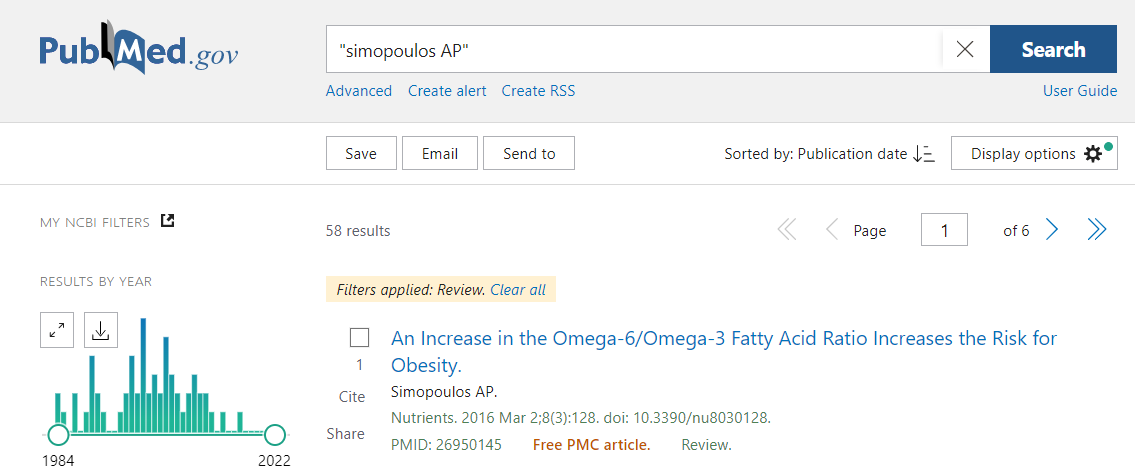
Simopoulos, the queen of the narrative reviews on fatty acids. There is nobody in the world of nutrition science who has written so many narrative reviews single-handedly without having really carried out primary research (observational or experimental) herself. She has been publishing scientific research since 1959 (and still is), but since the 1980s she has latched onto the omega-3/omega-6 subject. Not by doing research herself, but by writing extensive narrative reviews.
Oersterk, Naturafoundation and The Nourishing State all use her studies as evidence for the pro-inflammatory effects of omega-6 fatty acids. Let's take a dive into the study.
"When the omega-3/omega-6 ratio tips towards omega-6, the immune system mainly produces pro-inflammatory substances and fewer substances that can suppress the inflammation again (Simopoulos, 2008)."
"Omega-3 fatty acids have an anti-inflammatory effect. If you get little omega-3 fatty acids through your diet – or if you get relatively much more omega-6 than omega-3 fatty acids – this increases the risk of cardiovascular disease, cancer and other autoimmune diseases (Simopoulos). It also increases the risk of chronic inflammation (Simopoulos)."
"An unhealthy lifestyle is currently the most important cause of death. People eat too little seafood (sea vegetables and fish) and relatively too much processed food. The result is a disturbed omega-6/omega-3 balance, which stimulates the occurrence of low-grade inflammation – and with it, of diseases of affluence. Make sure your omega-6/omega-3 balance is right and so give the immune system the right building blocks to do its job properly. It is a safety catch for your health."
Are omega-6 fatty acids pro-inflammatory?
Omega-6 = pro-inflammation and omega-3 = anti-inflammation is often the mantra. Certainly not always, but as you can see, the pro-inflammatory effect of omega-6 fatty acids is often placed in the context of omega-3 fatty acids. This makes the question much more complex right away, because it raises several questions:
-
Does lowering omega-6 intake lead to less inflammation when you do nothing with your omega-3 intake? (a high omega-6 intake is the problem)
-
Does raising omega-3 intake lead to less inflammation when you do nothing with your omega-6 intake? (a low omega-3 intake is the problem)
-
Does lowering omega-6 + raising omega-3 lead to less inflammation? (the ratio is the problem)
Let's see what answers Simopoulos gives to these questions.
Sidenote: A narrative review does not produce new results, but is a summary of other studies. That is why I will give a short description of the narrative (story) that Simopoulos sketches, pick out a few claims from the review and see whether the cited source supports this claim. This can never be done for all claims and studies in the review, as the review contains more than 150 references. The aim is to check the scientific integrity (have the interpretations of studies been handled properly) and thereby to establish the reliability of the conclusion.
The theory
The ratio of omega-6 and omega-3 fatty acids in our diet has become skewed since 1900. The ratio is said to have been 1 to 1 throughout the whole of human history (our omega-6 intake was thus just as large as our omega-3 intake). Now we get 15 to 20 times as much omega-6 as omega-3 (15 to 1 / 20 to 1). Meanwhile our genes barely differ from those of our ancestors, with all the chronic diseases we now see (diabetes, cancer, overweight, etc.) as a result. That is how Simopoulos reasons.
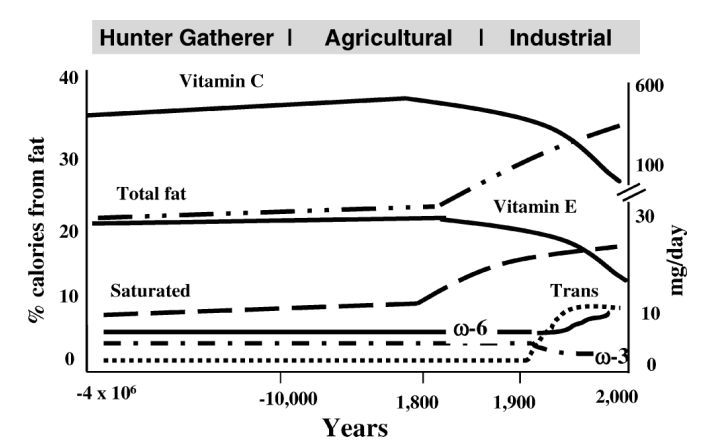
“It has been estimated that the present Western diet is ‘‘deficient’’ in omega-3 fatty acids with a ratio of omega-6 to omega-3 of 15–20/1, instead of 1/1 as is the case with wild animals and presumably human beings…. The rapid changes in our diet, particularly the last 150 years, are potent promoters of chronic diseases such as atherosclerosis, essential hypertension, obesity, diabetes, arthritis and other autoimmune diseases, and many cancers.”
“An absolute and relative change of omega-6/omega-3 in the food supply of Western societies has occurred over the last 150 years. A balance existed between omega-6 and omega-3 for millions of years during the long evolutionary history of the genus Homo, and genetic changes occurred partly in response to these dietary influences.”
The mechanism
What is a metabolite?
A metabolite is an intermediate or end product that arises in our metabolism. You can think of amino acids (building blocks of proteins), ATP (the end product that gives energy to our body) or ethanol (an alcohol that arises during fermentation of carbohydrates).
Simopoulos states that the inflammation caused by a high omega-6 fatty acid intake is an important cause of chronic diseases of affluence. The mechanism runs as follows: omega-3 fatty acids are broken down into eicosapentaenoic acid (EPA) and docosahexaenoic acid (DHA), while omega-6 fatty acids are broken down into arachidonic acid (AA). These fatty acids are then built into our cell membranes.
During this process metabolites are released, and according to her the metabolites from the breakdown of AA could cause inflammation in large amounts. She bases this statement on source number 8: a review that she wrote herself -- Omega-3 fatty acids in health and disease and in growth and development (Simopoulos, 1991).
“Because of the increased amounts of omega-6 fatty acids in the Western diet, the eicosanoid metabolic products from AA, specifically prostaglandins, thromboxanes, leukotrienes, hydroxy fatty acids, and lipoxins, are formed in larger quantities than those formed from omega-3 fatty acids, specifically EPA (8). The eicosanoids from AA are biologically active in very small quantities and, if they are formed in large amounts, they contribute to the formation of thrombus and atheromas; to allergic and inflammatory disorders, particularly in susceptible people; and to proliferation of cells. Thus, a diet rich in omega-6 fatty acids shifts the physiological state to one that is prothrombotic and proaggregatory, with increases in blood viscosity, vasospasm, and vasocontriction and decreases in bleeding time.”
BUT both in 2008 and in her review from 1991 she mentions that omega-3 and omega-6 compete with each other to be broken down. They use the same enzymes. With omega-3 getting priority over omega-6. A very important caveat, because it means that when people eat more omega-3 fatty acids, omega-6 fatty acids in our cells are replaced by the omega-3 fatty acids. (The ratio of fats in our cells (walls) is determined, among other things, by the ratio of fats that we eat, I already discussed this earlier in my series on vegetable oils and cardiovascular disease) As a result, fewer omega-6 fatty acids would be broken down into the pro-inflammatory metabolites. So says Simopoulos.
“Competition between the two different classes of PUFAs occurs in prostaglandin formation: EPA competes with AA for prostaglandin and leukotriene synthesis at the cyclooxygenase and lipoxygenase level. When humans ingest fish or fish oil, the EPA and DHA from the diet partially replace the w6 fatty acids, especially AA, in the membranes of probably all cells but especially in the membranes of platelets, erythrocytes, neutrophils, monocytes, and liver cells. As a result, ingestion of EPA and DHA from fish or fish oil leads to (1) a decreased production of prostaglandin E2 (POE2) metabolites; (2) a decrease in thromboxane A2, a potent platelet aggregator and vasoconstrictor; (3) a decrease in leukotriene B4 formation, an inducer of inflammation and a powerful inducer of leukocyte chemotaxis and adherence; (4) an increase in thromboxane A3, a weak platelet aggregator and a weak vasoconstrictor; (5) an increase in prostacyclin PGI3, leading to an overall increase in total prostacyclin by increasing PGI3 without a decrease in PGI2. Both P012 and PGI3 are active vasodilators and inhibitors of platelet aggregation; and (6) an increase in leukotriene B5, a weak inducer of inflammation and a weak chemotactic agent (63, 64).” (1991)
The claims
From this you can draw two claims:
1. Omega-3 takes priority over omega-6. When you eat more omega-3 fatty acids, these replace omega-6 fatty acids in our cells.
2. The metabolites that arise from omega-6 breakdown are pro-inflammatory.
Simopoulos bases these two claims on two sources: 63 and 64. The interesting thing is that she does not refer to two scientific studies, but to two chapters from a book. This book contains a summary of a conference called: "The health effects of polyunsaturated fatty acids in fish and shellfish."
Because these fatty acids possibly have important positive effects on our health, the American government and the fish industry sponsored a conference in 1986 to bring together the best omega-3 fatty acid scientists and discuss the science of the time. The book, which was written by none other than Simopoulos herself, is one big argument for the benefits of omega-3 fatty acids from fish and shellfish. Super interesting! But let's now focus on the chapters that Simopoulos refers to.
(I was able to download the book, so if you find it interesting, you are always welcome to send me a message.)
Source 63: Weber PC, Fischer 5, von Schacky C, Lorenz R, Strasser T. Dietary omega-3 polyunsaturated fatty acids and eicosanoid formation in man.
Source 63 is chapter 3 ‘Dietary omega-3 polyunsaturated fatty acids and eicosanoid formation in man’ in which German researchers summarise the results of their studies on the intake of omega-3 and the formation of metabolites from fatty acid metabolism. In the first study they show that omega-6 in the cell walls of blood platelets is largely replaced by omega-3 when you let seven men eat almost nothing but carbohydrates and mackerel for three weeks (7 to 10 grams of omega-3 per day). Omega-6 fell from 25.5% to 15% (AA) and omega-3 rose from 1% to 5.1% (DHA) and 1.5% to 6% (DHA) in the cells. In the second study they show the same but in eight men whom they give 40ml of cod liver oil (about 10 grams of omega-3), although the participants here kept eating just as much omega-6 as they already did. Here too omega-6 was replaced by omega-3 in the cell walls of blood cells. Omega-6 fell from 20% to 14%(AA) and omega-3 rose from 1% to 5%(EPA) and 2% to 5.5% (DHA) in the cells. Both studies also show that the number of metabolites from omega-6 metabolism fell, which went together with less platelet aggregation (blood clotting), lower blood pressure and less narrowing of the blood vessels. (Most fish oil supplements contain less than 1 gram of omega-3 per capsule).
“Taken together, we found clear-cut cellular differences in the in vivo cyclooxygenation and lipoxygenation of EPA and, in addition, different effects of incorporated omega-3 fatty acids on the formation of eicosanoids from endogenous AA in various cells.”
Source 64: Lewis RA, Lee TH, Austen KF. Effects of omega-3 fatty acids on the generation of products of the 5-lipoxygenase pathway.
Source 64 refers to chapter 12: "Effects of omega-3 fatty acids on the generation of products of the 5-lipoxygenase pathway". In it, American scientists summarise their studies on the metabolism (breakdown) of omega-3 and omega-6 fatty acids and the effects of the metabolites that result from it. To be honest, fully understanding the metabolism and the associated products is beyond me.
To keep it simple: fats are broken down by enzymes (proteins). Polyunsaturated fatty acids, such as omega-3 and omega-6, are broken down by an enzyme that contains iron: 5-lipoxygenase. When omega-3 and omega-6 fatty acids are broken down, various metabolites arise, including leukotrienes. Some leukotrienes are pro-inflammatory, and according to the authors these are mainly the leukotrienes that are produced when omega-6 is broken down by the arachidonate 5-lipoxygenase enzyme.
The scientists investigated the effect of omega-3 intake on omega-6 fatty acid metabolism via the 5-lipoxygenase pathway. From several studies that they cite it turns out that omega-3 has priority on this pathway, which implies that the number of metabolites from omega-6 fatty acids decreases. This would have an anti-inflammatory effect.
What they have not investigated, however, is whether the metabolites from omega-6 breakdown are actually pro-inflammatory. For this conclusion they refer to ten other references. They have never investigated this directly themselves.
“LTB4, LTC4, LTD 4, and LTE 4 are potent proinflammatory mediators with effects at nanomolar concentrations. LTB 4 promotes PMN Chemotaxis, degranulation, aggregation, and endothelial adherence and has immunoregulatory effects on lymphocyte populations. LTC 4 and LTD 4 cause arteriolar constriction; and LTC4, LTD 4/ and LTE 4 mediate venular permeability and constriction of nonvascular airway smooth muscle (reviewed in refs. 1 and 10).”
The ten sources that are cited are, in turn, all (mechanistic) studies in animals or narrative reviews. So Simopoulos refers, in support of her claim “the metabolites from omega-6 metabolism are pro-inflammatory”, to studies that did not investigate this themselves, but in turn refer to other studies. This creates an incredibly complex web of references: a narrative review that refers to a book, which in turn refers to reviews, which again refer to mechanistic animal studies.
If you ask me, this is not hard evidence that the metabolites from omega-6 metabolism actually cause inflammation in humans. In addition, the rule is that you should cite studies that are closest to the source of your claim. That is clearly not the case here.
A short summary
Simopoulos made two claims:
- Omega-3 takes priority over omega-6. When you eat more omega-3 fatty acids, these replace omega-6 fatty acids in our cells.
- The metabolites that arise from omega-6 metabolism are pro-inflammatory.
The sources show that omega-3 certainly takes priority over omega-6. This means that a higher omega-3 intake leads to fewer metabolites from omega-6 breakdown. However, many questions remain unanswered. Does this effect also apply if you supplement, for example, an extra 1 gram of omega-3 per day? In the studies, participants had to eat mackerel all day or supplement 10 grams of omega-3 — these are enormous amounts.
How much omega-6/omega-3 did the participants get before they took part in the study? How much omega-3 is needed for an optimal effect? Would reducing omega-6 intake bring extra benefits? We have no idea.
In addition, no hard evidence was provided for the pro-inflammatory effects of the metabolites from omega-6 breakdown. When referring to sources, it is essential to refer to the original sources.
Fatty acids and inflammation in our blood
Fortunately Simopoulos also has a chapter in which she goes into the relationship between omega-6 and omega-3 fatty acids and inflammation in our blood: “Plasma Omega-6/Omega-3 Ratio and Inflammatory Markers.”
Here she quotes the study by Ferrucci et al.:
“Ferrucci et al. studied the relationship of plasma PUFA to circulating inflammatory markers in 1123 persons aged 20–98 years in a community-based sample (66). The total omega-3 fatty acids were independently associated with lower levels of pro-inflammatory markers [IL-6, IL-1ra, tumor necrosis factor-a (TNFa), CRP], and higher anti-inflammatory markers [soluble IL-6r, IL-10, transforming growth factor-a (TGFa)] independent of confounders. The omega-6/omega-3 ratio was a strong negative correlate of IL-10. The authors concluded: Omega-3 fatty acids are beneficial in patients affected by diseases characterized by active inflammation.’’
In this study by Ferrucci and his colleagues, blood samples were taken in Tuscany, Italy, from about 1200 people, and measurements were carried out on health and diet. Fats and inflammation markers were analysed in the blood.
The first raw correlations show that both omega-3 and omega-6 were negatively associated with cardiovascular disease. In other words, the more of these fats in the blood, the lower the number of cardiovascular diseases. In addition, both omega-3 and omega-6 were associated with anti-inflammatory substances.
The fascinating thing is that Simopoulos only quotes what is said about omega-3. The full story is complicated, however, because there are various inflammatory substances that can act as both promoters and inhibitors. Nevertheless, both omega-3 and omega-6 in this study show almost only significant associations that point to less inflammation.
The results therefore suggest that omega-6 can have an anti-inflammatory effect, but also that a higher omega-3 intake — and with it a lower omega-3/omega-6 ratio — is beneficial.
“We found some evidence that n-6 fatty acids may be anti-inflammatory with no evidence of the proinflammatory activity previously suggested by many authors. However, our data suggest that the immunomodulatory effect of PUFAs may be influenced by the n-6 to n-3 ratio, which in our study was the strongest negative correlate of IL-10 and TGFβ, two powerful antiinflammatory cytokines.”
So it is true, as Simopoulos claims, that omega-3 fatty acids in the blood were associated with less inflammation. But omega-6 fatty acids were too. The fact that she leaves this out is misleading.
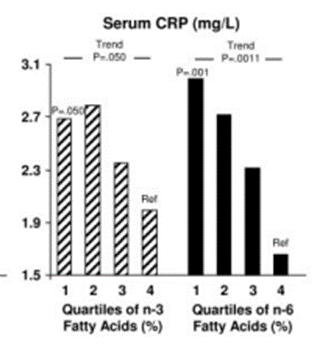
An important caveat: this is a cross-sectional study -- so you have no idea which way the association goes and a causal link cannot be shown. Simopoulos might well have mentioned that too.
Genetic predisposition and omega-6
Both Ferrucci and Simopoulos cite interesting evidence for the effect of genes in this story. The theory is that inflammation is at the root of atherosclerosis (cardiovascular disease). So people who have a predisposition to more inflammation would also have more atherosclerosis.
“As discussed above, leukotrienes are inflammatory mediators generated from AA by the enzyme 5-lipoxygenase. Since atherosclerosis involves arterial inflammation, Dwyer et al. hypothesized that a polymorphism in the 5- lipoxygenase gene promoter could relate to atherosclerosis in humans, and that this effect could interact with the dietary intake of competing 5-lipoxygenase substrates (75). Increased dietary AA significantly enhanced the apparent atherogenic effect of genotype, whereas increased dietary intake of omega-3 fatty acids EPA and DHA blunted this effect. Furthermore, the plasma level of CRP of two variant alleles was increased by a factor of 2, as compared with that among carriers of the common allele. Thus, genetic variation of 5- LO identifies a subpopulation with increased risk for atherosclerosis. The diet-gene interaction further suggests that dietary omega-6 fatty acids promote, whereas marine omega-3 fatty acids EPA and DHA inhibit leukotriene. Oxidative metabolism of arachidonic acid and eicosapentaenoic acid by the cyclooxygenase and 5-lipoxygenase pathways. 5- HPETE denotes 5-hydroperoxyeicosatetranoic acid and 5-HPEPE denotes 5-hydroxyeicosapentaenoic acid mediated inflammation that leads to atherosclerosis in this subpopulation.”
In a study with 470 participants, Dwyer and his colleagues show that people with a 5-lipoxygenase gene variation (that is, a genetic predisposition to an enhanced 5-lipoxygenase pathway and with it an increased fatty acid breakdown) show an inflammatory response twice as high when their omega-6 intake is high. There is a big difference in how often this predisposition occurs within groups of different ancestry. Almost 20% of people of Asian ancestry and 24% of people of African ancestry have this predisposition, compared with 3.6% of people of Spanish ancestry and only 3.1% of people of other white European ancestries. This could mean that your ancestry makes an enormous difference in the story of omega-6 and inflammation.
The researchers followed the participants for about three years, carrying out various measurements of dietary intake, atherosclerosis and both fat and inflammation levels in the blood. People with the genetic predisposition showed more atherosclerosis, which correlated strongly with a high omega-6 intake. This increased inflammation and atherosclerosis did not occur in people without the genetic predisposition, however; in them omega-6 turned out not to be a problem.
Simopoulos does not mention this detail. Interestingly, it also turns out that in people with the genetic predisposition a high omega-3 intake counteracts the negative effects of omega-6. This effect is already reached at an intake of 0.05 grams of omega-3 per 1,000 kcal.
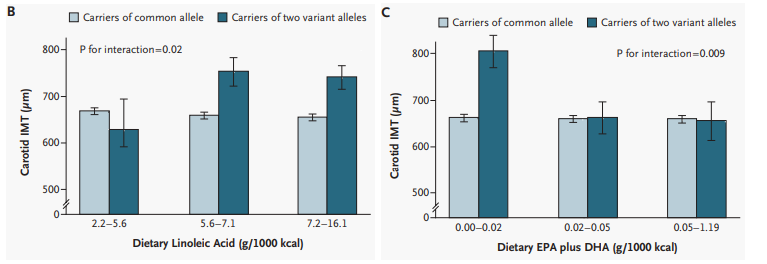
“The diet–gene interactions we observed suggest an effect of genotype on atherosclerosis mediated by the 5-lipoxygenase pathway. Increased dietary intake of omega-6 fatty acids (arachidonic acid and its metabolic precursor, linoleic acid) was associated with increased severity of atherosclerosis only among carriers of two variant alleles… We also found that increased dietary intake of marine omega-3 fatty acids blunted the apparent atherogenic effect of the variant genotypes. This interaction was also suggestive of a leukotriene-mediated effect, since eicosapentaenoic acid (omega-3 – EPA) is a competing substrate for 5-lipoxygenase.”
Experimental research
Finally Simopoulos comes up with a gigantic chapter on experimental research. It is far too deep water, in which every reader just gets lost. That is why I dive into three studies with remarkable findings.
The first is the Lyon Heart Study, an experimental study from 1994 in which people who had already had a heart attack were put on a Mediterranean diet (with a high omega-3 intake). This was compared with a diet based on the standard dietary guidelines of the American Heart Association.
The results were astounding: after five years the group on the Mediterranean diet had 70% lower mortality from cardiovascular disease.
What did the advice for the Mediterranean diet look like?
- More bread, more (green leafy) vegetables, more fish.
- Less meat (and if meat, mainly chicken).
- Fruit every day.
- Butter and cream replaced by margarine enriched with omega-3.
This meant that this group got fewer omega-6 fatty acids and more omega-3 fatty acids, which resulted in a ‘better’ omega-3/omega-6 ratio. In addition, the diet contained less saturated fat and more fibre, vitamins, minerals and antioxidants.
This makes it difficult, however, to find out exactly what caused the improvement. How much of the improvement is due to the omega-3/omega-6 ratio, the lowering of saturated fat, or the higher intake of fibre, vitamins, minerals and antioxidants?
These are nuances that Simopoulos does not include in her interpretation — something I personally find rather bizarre. The people who cite Simopoulos as evidence also often leave out these important details. I can still hear Noor from The Nourishing State say in Arie Boomsma's podcast: "There is nothing wrong with saturated fat, we have been lied to, it is carbohydrates."
Yet this study shows that a diet aimed at lowering saturated fat, combined with eating bread, can produce impressive results.
Finally Simopolous comes up with a gigantic chapter of experimental research. Far too deep water in which every reader just gets lost. So I take a dive into three studies that had remarkable findings.
“The Lyon Heart Study was a dietary intervention study in which a modified diet of Crete (the experimental diet) was compared with the prudent diet or Step I American Heart Association Diet (the control diet) (76–79). The experimental diet provided a ratio of LA to ALA of 4/1. This ratio was achieved by substituting olive oil and canola (oil) margarine for corn oil. Since olive oil is low in LA whereas corn oil is high, 8% and 61% respectively, the ALA incorporation into cell membranes was increased in the low LA diet. In the Lyon Heart Study, the ratio of 4/1 of LA/ALA led to a 70% decrease in total mortality at the end of two years (76).”
Finally I want to explain two Japanese studies that investigated the effect of a higher omega-3 intake, both through supplementation and through an increase in fish intake.
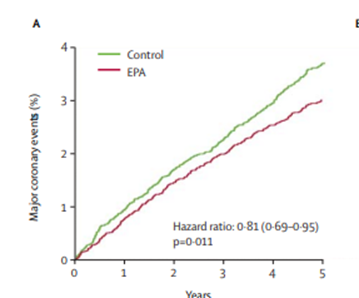
Source 87: Yokoyama and his colleagues divided more than 19,000 people with high cholesterol over two groups: a medication group and a medication plus omega-3 group (1800 mg EPA). The participants were followed for five years. In addition, they received standard care, including dietary advice.
After five years the medication group had an absolute risk of 3.5% of cardiovascular disease, while the medication plus omega-3 group had a risk of 2.8%. This means that adding omega-3 to the medication led to a 19% relatively lower risk of cardiovascular disease.
According to Simopoulos this is an important finding, because Japanese people naturally already have a high fish intake. Yet this study shows that omega-3 supplementation (in a high dose of EPA only – most supplements contain both EPA and DHA) still has a positive effect on top of that.
Another group of Japanese scientists (source 88) show with their research that in a group of 50 thousand people, who were followed for about 10 years, people with a fish intake of on average 180 grams (2.1 grams of omega-3) per day compared with an intake of 23 grams (0.3 grams of omega-3) per day had a 40% (relative risk) lower risk of cardiovascular disease.
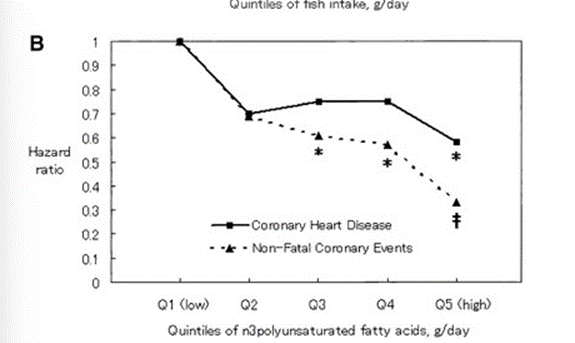
“Yokoyama et al. investigated the effects of EPA on major coronary events in hypercholesterolemic patients in a randomized open label, blinded analysis (87). Patients were randomly assigned to receive either 1800 mg of EPA with statin or statin only in a 5-year follow up. The results showed that EPA is a promising treatment for prevention of major coronary events, and especially nonfatal coronary events, in Japanese hypercholesterolemic patients. This is a very important finding because the Japanese already have a high fish intake. These findings further support the data from the study by Iso et al. that showed, compared with a modest fish intake of once a week or about 20 g/d, a higher intake was associated with substantially reduced risk of coronary heart disease, primarily nonfatal cardiac events, among middle aged persons (88)”
But here too Simopoulos gives no critique of the study's content. And that is needed. The group with the highest fish intake had an omega-6/omega-3 ratio of 4:1, compared with 22:1 in the group with the lowest fish intake. Great, good to know. But this was not the only difference between the groups.
The group with the highest fish intake ate on average 2700 kcal per day, while the group with the lowest fish intake consumed only 1500 kcal. In addition, the intake of meat, chicken, egg, fruit, vegetables and dairy was twice as large in the group with the highest fish intake. That is a bizarre difference. This perhaps suggests that the group with the lowest fish intake is a very poor group of people, who have less food and food of poorer quality at their disposal in the first place. Or another factor is at play — but it makes the results difficult to interpret in any case.
Yet Simopoulos reports these results as if there is not a cloud in the sky. Bizarre.
Conclusion
First I want to stress that this narrative review by Simopoulos once again shows why I hate narrative reviews. As far as I am concerned they are at the bottom of the pyramid of evidence. Because both a systematic approach and transparency are missing (you have no idea why an author cites or leaves out certain studies, and studies are not assessed on their content), you do not know whether the review was written with scientific integrity or as propaganda for a conviction. Simopoulos fires a machine gun of studies at you, as it were; the overview disappears, and you can no longer see the forest for the trees.
She does not assess studies on quality, does not mention strong and weak points, and lets the reader get lost in the literature. As if she does not want you to check what she claims. It is also unthinkable that a reviewer for the journal verified everything. In addition, a ridiculous number of the references are her own work (30 of the 150): even more narrative reviews. This makes verifiability impossible. The fact that she interprets the results of some studies selectively and leaves out results here and there makes me lose trust in the scientific integrity of Simopoulos. Maybe confirmation bias plays a role here? Either way, this does not contribute to the credibility of narrative reviews.
The theory about fatty acid metabolism that Simopoulos describes is a widely accepted mechanism that few scientists or biologists will deny. It is clear that omega-6 and omega-3 are broken down by the same enzymes, which creates competition. In addition, the studies that Simopoulos (indirectly) cites show nicely that omega-3 gets priority in the body. This means that a higher omega-3 intake leads to fewer metabolites from omega-6 metabolism. However, we do not know at which dose of omega-3 this is optimal, and many questions remain unanswered.
What the studies do not show is whether the metabolites from omega-6 metabolism actually cause more inflammation in the body. So the mechanism is clear, but the outcome is still uncertain.
When we look at the study by Ferrucci and Dwyer, it turns out that the mechanism does not show up at all in living people. At least, it is complicated. A higher omega-6 intake shows almost no pro-inflammatory effects. A higher amount of omega-6 fatty acids in the blood is in fact associated with less cardiovascular disease and less inflammation. Genetic predisposition plays an important role here. The study by Dwyer and colleagues shows that omega-6 fatty acids have pro-inflammatory effects only in people with a certain genetic variation. People with an overactive 5-lipoxygenase enzyme show more cardiovascular disease and inflammation. But in this group too the effect is counteracted by an adequate omega-3 intake.
So the question remains: is a high omega-6 intake, a low omega-3 intake, or the ratio between the two the problem?
Let me state up front that nowhere in the review did I read a study in which omega-6 intake was lowered while omega-3 intake stayed constant. In other words: on the basis of this review you cannot say that omega-6 fatty acids are really the problem. What does come out clearly is that a higher omega-3 intake has a positive effect on inflammation. It also turns out that a lower omega-6/omega-3 ratio can have positive health effects. But this has always been proven by raising omega-3 intake, not by lowering omega-6 intake.
When your omega-3 intake is too low, this causes a skewed distribution of omega-6/omega-3 fatty acids in your cells, with an increased omega-6 metabolism as a result. Especially in people with a certain genetic predisposition this can lead to inflammation. It is far from certain, however, whether this applies to everyone. This review seems to suggest the opposite.
But let it be clear. This narrative review by Simopoulos is not strong scientific evidence. She has shown no critique at all of the content of the studies she cites. She adopts conclusions, thats it. Then you are not a scientist. Then you are a journalist who works at Menshealth.
Part 2 you can find on my Instagram, where I go into another frequently cited review on this subject.
What did you think? Let me know in the form of a comment or an email: [email protected]
Have you come across a claim on the internet or social media and are you curious about an assessment of the evidence behind it, let me know and I will dive into it!
Do you want to support me and my nutrition science adventure? Share my articles or the podcast on your socials!
Everything you read on this website is my opinion based on knowledge and experience. Chances are that I sometimes overlook something, or that something could be better. I would love to hear it! We do science together.
Follow me or connect with me on:
Instagram: https://www.instagram.com/coenfirmation_bias/
Linkedin: https://www.linkedin.com/in/coen-dros/