
39 min read
Saturated fat, cholesterol and cardiovascular disease: Was Ancel Keys a fraudster or a pioneer?
We were wrongly made afraid of butter. It is not responsible for cardiovascular disease (CVD) and actually protects against disease. The idea that saturated fat and LDL cholesterol cause cardiovascular disease comes from anti-fat and anti-cholesterol propaganda, which all started with one man: Ancel Keys. At least, that is what Lars van den Nieuwenhoff believes. And he is not the only one. For several decades now, a campaign has been run against the work of Keys, and with it against the worldwide dietary guidelines. Those guidelines limit saturated fat to reduce the risk of cardiovascular disease. This campaign was first run mostly on the internet and social media, but it has now reached the big stage: the Trump administration wants to remove the limit on saturated fat from the dietary guidelines. They too are convinced that there is no good scientific basis for it and that the work of Keys was fraudulent. What are these sceptical voices based on? Is the work of Keys really no good? Have we been misled for the past seventy years?
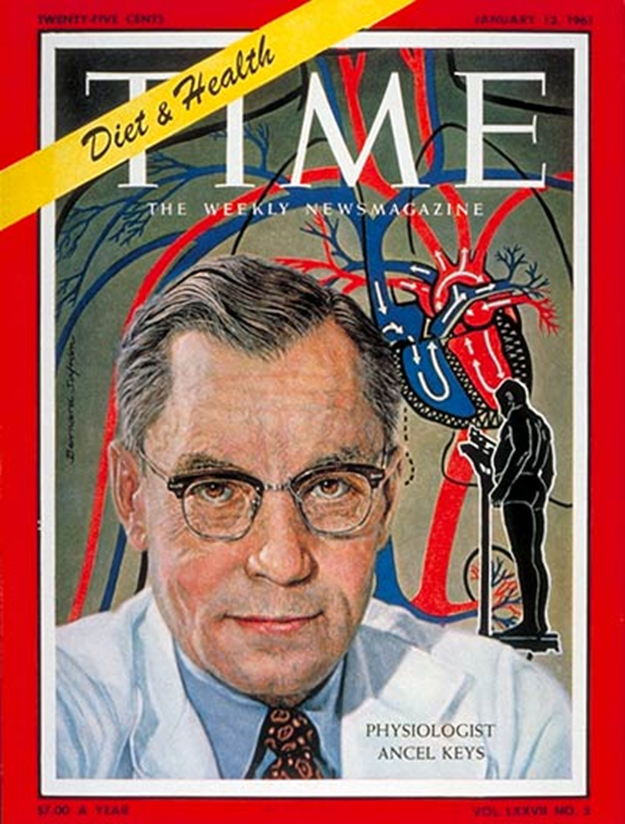
Ancel Keys on the cover of the famous magazine Time Magazine (1961) (translated from Dutch)
Lars's response: I contacted Lars and asked whether he wanted to respond on the substance. For that I sent him a part of the blog (the summary). He said he wanted to do this, but I have not (yet) had a response.
Introduction
It is all supposed to have been part of a big plan with the aim of selling seed oils and statins: scientific research that portrays saturated fat and cholesterol as the bogeyman, the American Heart Association that started to promote this, and the American government that put it in the dietary guidelines. This was adopted by almost all scientists and dietary guidelines worldwide. Paid for by Big Food and Big Farma. And it all began with Keys in the fifties, with his Seven Countries Study (SCS).
Seven Country Study
The Seven Countries Study is an epidemiological longitudinal study led by Keys at what is now the University of Minnesota Laboratory of Physiological Hygiene & Exercise Science (LPHES). The study started in 1956 with an annual grant of 200,000 dollars from the U.S. Public Health Service and was first published in 1978. The participants were then followed every five years. As the world's first epidemiological study in several countries (America, the Netherlands, Greece, Japan, Finland, Italy and Yugoslavia), the study systematically investigated the relationships between lifestyle, diet, coronary heart disease and strokes in different population groups from different parts of the world. The study focused on the causes of coronary heart disease and strokes, but also showed that the risk of an individual can be influenced.
It is a fascinating subject. If you ask people who follow the mainstream view (read: you should replace saturated fat with unsaturated fat), they will say that Keys is a hero and a pioneer in the field of CVD.
Martijn Katan: “Nutrition research of the past 70 years has protected many people from a heart attack or stroke. Yet no Nobel Prize has ever been awarded for it. That would have been fine, and I even have a candidate: the American Ancel Keys.”
Jean-Piere Montani: “Ancel Keys was an accomplished physiologist, a meticulous scientist, and a leader who could motivate his colleagues to undertake carefully conducted epidemiological studies. He will remain as one of the giants in the history of medical sciences of the 20th century.”
If you ask the same question to people who believe in an alternative view (read: saturated fat is healthy), they will say that Keys is a fraud and a swindler. This view has existed for longer than I have been on the internet (about 15 years), but it is now really gaining ground. The commissioner of the Food and Drugs Administration, Marty Makary, appointed by JFK jr, said recently that “since Keys in the 1960’s decided to demonize saturated fat with a hypothesis that was supported with data that was incomplete and methodologically flawed in his SCS… that dogma still lives large and you see remnants of it in the food guidelines we are now revising.”
I have been hearing it for years in the Netherlands too. On the podcast Lotgenoten, Joep Rovers said that “the cholesterol hypothesis, 1956 I think, was thought up by a, not even a scientist, but a journalist, Keys. He had come up with the idea that cholesterol would be the driver behind CVD. Made a nice hypothesis and “totally by accident” shared a number of countries in his final research report, which showed that cholesterol is the driver behind CVD.”
Many a “Oergezond page” on social media that promotes products rich in saturated fat will tell you that Keys lied to you. And Lars van Nieuwenhoff too states in his blog “the cholesterol myth” that Keys is the source of the cholesterol myth and the reason why your parents or grandparents told you not to eat butter and to eat only 1 egg a day.
Oersterk also states, as early as 2014, that Keys “took a wrong turn” when he presented saturated fat as a contributor to raised cholesterol. “In the sixties Keys came out with the publication that saturated fatty acids contribute to a raised cholesterol level. He saw, namely, that heart attacks occurred less in Mediterranean areas. This hypothesis is now strongly doubted by The International Network of Cholesterol Scepsis, in which this claim is flatly contradicted. Since then, however, the myth has arisen that saturated fat raises cholesterol and that this in turn is at the root of cardiovascular disease.”
That makes it, just like the discussion about seed oils, such an incredibly interesting subject. Let's take a dive into the story of Keys, his work and the stories that are going around about it. As always, we start with the evidence from people who hold different beliefs about this than I do. To begin with, we take two claims that are made about his work:
-
The work of Ancel Keys is the cause of the anti-fat and anti-cholesterol propaganda, and
-
In his Seven Countries Study, Ancel Keys used data selectively (cherry-picked) to prove his theory.
The blog of Lars van den Nieuwenhoff will be the guide here, because it is typical of the criticism I often read on this subject. If you are interested, we can certainly also take a dive into other claims, so do let me know.
My bias:
My beliefs about saturated fat, cholesterol and cardiovascular disease have changed over the years. When I started my studies in Nutrition and Dietetics in 2016, I listened to an enormous amount of Joe Rogan. I was sceptical about the guidelines. I thought there had been tampering and that the work of Keys was not right. Now, almost ten years later, and with an understanding of nutrition science, I see it differently. I now believe that my distrust was mainly based on stories and not on facts. That means I started out on this subject with a bias. Despite that, I have tried to look at the claims and the literature as objectively as possible.
My dislike of narrative reviews: You will come across many narrative reviews in this story. Keys wrote a great many of them. I checked as many of the sources used in these reviews as I could, to see whether Keys made good interpretations of the sources he cites. In general I am negative about narrative reviews, because they have been tampered with a lot over the last twenty years. It is not strong evidence. The big difference I found between the reviews of Keys and those of, for example, Simopoulos (whom I have been very critical of, by the way) is the quality of the interpretations of sources and the strength of the conclusions. As you will see for yourself, Keys is careful in his conclusions. I can appreciate that!
Important terms:
Hardening of the arteries / cardiovascular disease
In this blog I often talk about cardiovascular disease. By this I mean the whole process, from hardening of the arteries to (death from) cardiovascular disease. Cardiovascular diseases are a group of conditions that affect the heart and the blood vessels. One of the most important underlying causes is hardening of the arteries, also called atherosclerosis. Hardening of the arteries develops when fatty particles, cholesterol and other substances build up in the inner wall of the arteries. This process slowly causes a thickening, or plaque, which makes the blood vessels narrower and makes them lose their elasticity.
Cholesterol
In this blog I will often mention cholesterol, and cholesterol in the blood. This covers all forms of cholesterol, such as LDL, VLDL and HDL. It is important to realise that the different forms of cholesterol in the blood were only discovered from 1950. Because of this, research up to that time mainly looked at total cholesterol in the blood. Only later were the different forms discovered, together with their different relationships with hardening of the arteries and cardiovascular disease.
Summary
Claim 1: Ancel Keys' work is the cause of the anti-fat and cholesterol propaganda.
As many claim, Keys with his SCS would be the cause of the advice to limit fat and cholesterol, and so of the “anti-fat and anti-cholesterol propaganda”.
“Let's start at the beginning. How is it that your parents or grandparents already told you not to eat more than 1 egg a day because of cholesterol? To find the source of the cholesterol myth we have to go quite a way back in time. 1958 to be exact. That was when Ancel Keys released his ‘Seven Countries Study’. In it he claimed that there was a positive correlation between the amount of fat a population took in through the diet and the number of cases of cardiovascular disease that occurred. In other words, he claimed: the more fat on your plate, the more clogged vessels.” (translated from Dutch)
The problem with this claim is that the SCS was not the first (and not the only) study that made this link at the time. Let alone that Keys was the first or only scientist who investigated this. Before the SCS was carried out, there was already a gigantic body of evidence that had been built up over fifty years. It consisted of different research groups that studied
(1) the role of cholesterol in the blood in the development of hardening of the arteries,
(2) the relationship between fat intake (and the different types of fats) and cholesterol in the blood,
and (3) the differences in fat intake and CVD between different populations.
In addition, Keys wrote as early as 1953 that cholesterol from food (and so also eggs) was not an important factor in CVD, because experiments showed that it had almost no effect on cholesterol in the blood. The concept of a low-fat diet as a treatment or prevention of CVD did not come from him either. He was even a proponent of a Mediterranean eating pattern, high in (unsaturated) fat.
Keys was, however, the first, together with his research group, to bring these different lines of evidence together in reviews. Besides doing a lot of research himself on fats, cholesterol and CVD, he stayed nuanced and careful in his statements about this relationship for a long time – at least until the SCS. He also stated clearly what the limitations of his research were and that there were several risk factors for the development of CVD. This was underlined by other important studies, such as the Framingham Heart Study, started in 1948. An American study with more than 6,000 participants, which is still running. The first results appeared in 1957 and showed that, besides cholesterol, blood pressure, smoking and overweight are also possible risk factors for CVD. The SCS only began in 1958 and the first results were only published around 1970.
So it is not for nothing that Finland started a gigantic project in the seventies (after taking part in the SCS), in which they set up a national intervention aimed at these risk factors. With it they achieved an 80% drop in deaths from CVD in 40 years.
The SCS arose from the demand, from the work of Keys as well as that of other scientists and the American Heart Association, for more and better research on the relationship between fat intake and CVD.
In short: Keys and the SCS are not the cause of the "anti-fat and anti-cholesterol propaganda". Without a large body of evidence from other research groups in America and Europe on fats and cholesterol in the blood and the relationship with CVD, he could never have carried out his work and the SCS.
Then we come to the next claim: Keys is said to be a cherry-picker and the SCS a bad study – all to prove his hypothesis. Let's take a dive into claim number 2.
Claim 2. Ancel Keys cherry-picked in his Seven Country study to prove his theory.
That Keys cherry-picked to prove his theory is cited by many people. Lars does so too: “What he did not mention is that the ‘7 countries study’ was first the ‘22 country study’. The disadvantage of the average data that came out of the 22 countries, however, was that there was no longer any significant correlation at all between the amount of fat someone took in and the risk of CVD.”
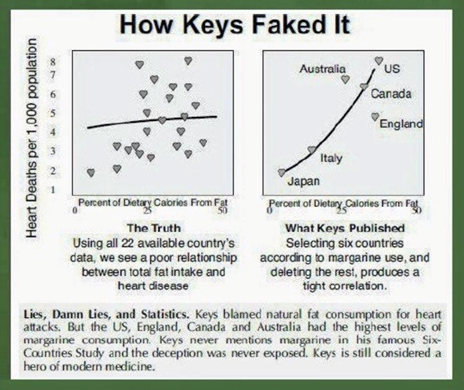
They originally come from the book Deep Nutrition (I think). No source is given. I have already made a video before with a small review of this book.
These graphs are published incredibly often as evidence that Keys is a cherry-picker. There are just a few problems with this picture:
- This is not about the SCS at all. The right-hand graph comes from a (kind of) narrative review by Keys called “Atherosclerosis: a problem in newer public health (1953)”. The left-hand graph is from a response paper by Yerushalmy & Hilleboe (two statisticians) called “Fat in the diet and mortality from heart disease: A methodologic note (1957)”. The figures are based on databases of countries from the years 1948/1949. For deaths from CVD, “National vital statistics from official sources” were used, in other words, government figures. For fat intake, “national food balance data for 1949 supplied by the Nutrition Division, Food and Agriculture Organization (FAO) of the United Nations” were used, so data from the UN based on production, export, import and non-human use of products.
- There were many problems with this data at the time (besides the fact that FAO data are not a direct way to measure dietary intake anyway). For example, the diagnosis of CVD was not well organised in all countries and FAO data were not properly kept everywhere. Keys explains why he chose the other six (in the right-hand graph): these had the best comparable data. “So far it has been possible to get fully comparable dietary and vital statistics data from 6 countries.” You could call this cherry-picking, but you could also simply call it good science. Because the fact that the diagnoses of cardiovascular disease differed between countries means that differences you see between countries may be due to differences in diagnosis and not to literal differences in the number of people who die from CVD. That is why it seems logical to me to use only data from countries where CVD is measured in as similar a way as possible.
-
The critical people are cherry-picking themselves. According to the picture, the left-hand graph would show that there was “no longer any significant correlation at all between how much fat someone took in and the risk of CVD.” (See the almost horizontal line through the dots.) In addition, Keys is said to have ignored that many people were already eating unsaturated fat from margarines at that time.Lars: “Cherry-picking aside, the set-up of the study was falling apart on all sides anyway. It only looked at total fat consumption through the diet. That means no distinction was made between someone who got his fat from grass-fed steaks and someone who slurped up bottles of sunflower oil through a straw. You understand that your conclusion is then worthless anyway.”
Yerushalmy used all available data for the left-hand graph. But they too state that there are many problems with the data:
“It is necessary, therefore to bear in mind that association between such variables (FAO data en hvz data) may be only apparent and may reflect the differences in definition and reporting patterns among the countries under study.”
The graph cited in the picture tries, with the almost straight line, to make it look as if there is no correlation between the two factors. Keys, by the way, never calculated the correlation (more on this in point 4), but Yerushalmy did. Then you see the following correlations:
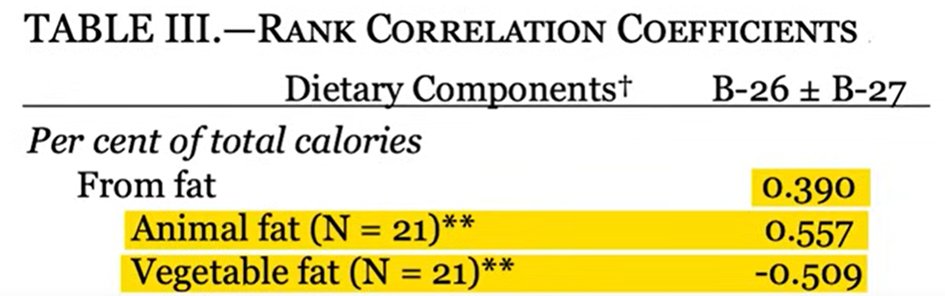
A non-significant correlation of 0.390 for total fat intake, 0.557 for fat from animal products and -0.509 for fats from plant sources. So it is true that if you include all 22 countries, the correlation between total fat intake and CVD is moderate (up to 0.3 is weak, between 0.3 and 0.5 is moderate, between 0.5 and 0.7 is fairly strong). But if your criticism is that Keys cherry-picks, it is important not to start cherry-picking yourself and to include exactly the correlations for saturated fat and unsaturated fat. If you include those correlations, the association is stronger and the line should actually be drawn as follows (the picture is an example generated by AI):
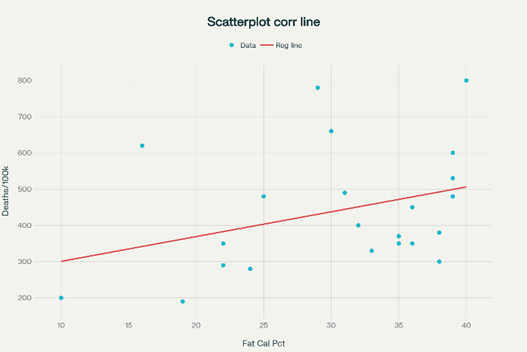
In short, saturated fat has a fairly strong positive correlation with CVD, while plant fats show a fairly strong negative (protective) correlation with CVD. A non-significant correlation.
-
Keys never claimed that it was significant. The criticism often suggests that Keys based a strong conclusion on the paper and the figure “fat causes CVD”. But when I read the full paper, I get a different idea. The work was mainly aimed at the current evidence (at that time) for the relationship between cholesterol and CVD, fat intake and cholesterol, and fat intake and CVD. He states very clearly in the discussion of his study that much is still unclear:
“The argument and evidence assembled here make a consistent picture which holds promise of a preventive hygiene but many details are lacking. The mechanism of the action of the diet on the blood cholesterol concentration has not really been examined… Moreover, there is much reason to believe that other factors besides the blood concentration (cholesterol) are important in the actual development of arteriosclerotic heart disease… It may be hoped that efforts to discover and to understand mechanisms will be pursued vigorously. There is, however, obviously a fruitful field for epidemiological research as yet scarcely touched. And it is not too soon to begin the application, by educational means, of epidemiological findings.”
One of those unclear points was that at that time the role of trans fats in food was not yet clear. Only later did we find out that within the cohorts of the SCS too there was a clear association between trans fatty acid intake and cardiovascular disease.
So the paper by Keys was not a “fat is the cause of CVD, full stop,” but rather a call for more and better research. And that is what eventually happened. By himself and by many other scientists, for example through the SCS, in which both dietary intake and CVD were measured directly. In doing so they looked very carefully at the different types of fats in the diet and where they came from. On the basis of all these data they eventually found a strong correlation between saturated fat intake, cholesterol in the blood and CVD.
As far as I am concerned, the picture with the two graphs and the text with it is therefore incorrect and misleading.
For the full story about the work of Ancel (and others), with all the sources, I send you on to the next chapter. Enjoy the dive!
The whole story
Ancel Keys was not a journalist
Born in 1904 in Colorado, United States, he began his career as a scientist in 1927 (so no, he was not a journalist, as Joep Rovers would have you believe). In 1928 he earned a master's degree in zoology and finally, in 1930, a doctorate (PhD) in oceanography and biology in Berkeley, after a research grant at the Scripps Institute. His interest in physiology grew during a stay in Copenhagen, where he worked with Nobel Prize winner August Krogh, and later during a stay in the laboratory of Joseph Barcroft at King's College in Cambridge, United Kingdom, to study animal physiology for a second doctorate (PhD). You can also simply find this work on PubMed.
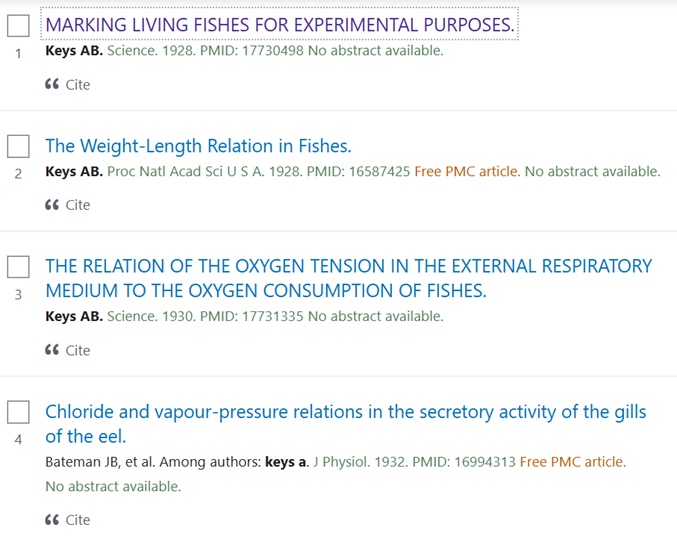
Ancel Keys and cardiovascular disease
On his return to the United States in 1933 he went to work at the Fatigue Laboratory of Harvard University (a laboratory for exercise physiology), where he did research on cardiovascular health at high altitude. In 1934 he was promoted to assistant professor at Harvard University, and in 1936 he started work as assistant professor of biochemistry at the Mayo Foundation in Rochester. In 1937 he joined the University of Minnesota in Minneapolis, where in 1939 he founded the Laboratory of Physiological Hygiene for quantitative research on human biology. He stayed there as director for 33 years, until his retirement in 1972.
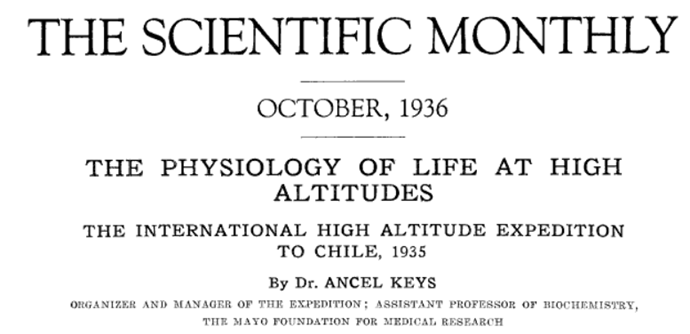
Ancel Keys the nutrition scientist
It was in Minnesota that Keys carried out his first nutrition research. The Second World War broke out and the American army needed better food rations. Because of Keys' work on health at high altitude, the American government hoped he was the right man to develop food rations for paratroopers. The result: K-rations. In the end these were used to feed the entire American army. In addition, Keys carried out various studies on sport, cardiovascular health, nutrition and human biology.
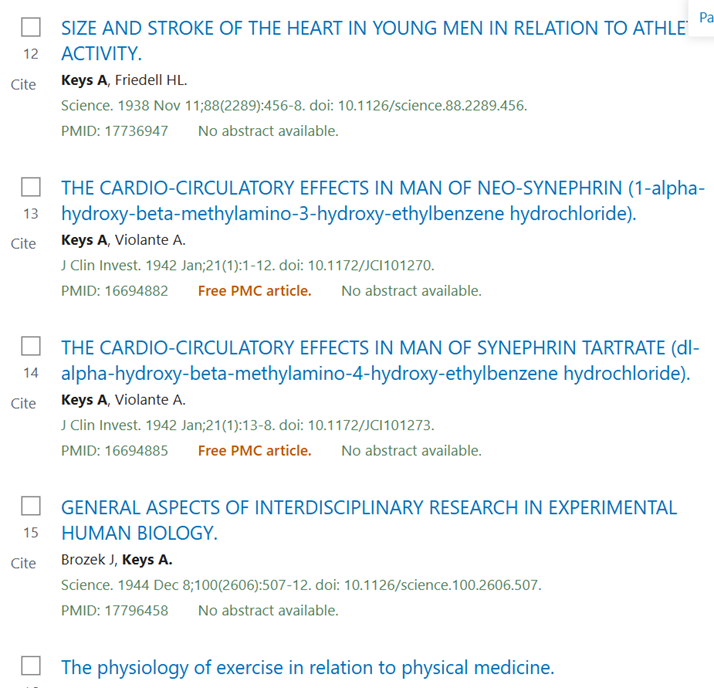
Towards the end of the war there were more and more problems with famine. In many places in the West there was a shortage of food for the population. At that time no research had yet been done on refeeding people who have been starved. That is how the idea of the Minnesota Starvation Experiment was born. Keys led a study of 36 men who voluntarily starved themselves, and were then allowed to eat more again in several phases. During the phase in which they were allowed to eat without limits again, some of them even ate themselves into hospital. A book has been written about this unique study and its results.
One thing is at least clear now: Keys was not a journalist or an ordinary scientist. Before he started doing research on nutrition and CVD, he had already built up an impressive CV as a scientist. one that many a critic of his could learn a thing or two from.
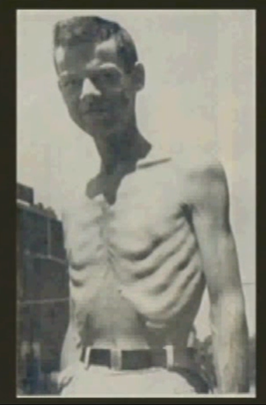
https://en.wikipedia.org/wiki/Minnesota_Starvation_Experiment
Claim 1: Ancel Keys' work is the cause of the anti-fat and cholesterol propaganda
And then we come to nutrition and CVD. In the forties and fifties there was an enormous rise in CVD. The American president Franklin D. Roosevelt also died early, of a stroke. There are even figures going around that at the time almost 50% of all deaths among men were caused by heart attacks and strokes. By now that has been halved.
This is where Keys is said to have struck, and according to some the “unjustified anti-fat and anti-cholesterol propaganda” began. If you believe the internet, that propaganda started with the Seven Countries Study of Ancel Keys. However, when you dive into the literature, that turns out not to be true. For example, in 1948 the American government was the first to set up an observational study aimed at risk factors for CVD: the Framingham Heart Study (named after the town where it was carried out). This study is still running. It started with more than 6,000 participants (55% women) between 28 and 62 years old. In the 65 years since, descendants of these people have been included in the study. The first results were published in 1957. This study identified three factors that often occurred in people with CVD: high blood pressure, overweight and serum cholesterol.
“High blood pressure and hypercholesteremia in this group clearly have some independent association with risk of disease. The role of obesity, which is also associated with heart disease, is not as clear in view of the demonstrated association of high blood pressure and obesity. The demonstration of the association of these clinical attributes with ASHD should encourage the search for common factors and explanatory mechanisms. This search should be a prime function of epidemiological studies of heart disease.”
While the team in Framingham was busy with this, Keys was not standing still either. He set up a long-running observational study of his own: Minnesota Business and Professional Men.
Keys and his team ran a campaign at various companies to find healthy men between 45 and 55 years old, so without underlying diseases. From the 1,000 applications, 50 men with overweight, 50 with underweight and 50 men from athletics clubs (so with a very active lifestyle) in the area were selected. The other 150 men were chosen at random. In total, 280 men completed the study. They were followed for fifteen years and got a health examination every year (measurements such as blood pressure, blood sampling, weight and fat mass). After fifteen years 32 men had died, of whom at least seventeen from cardiovascular disease. That was a low mortality compared with the average population. The participants also came from a higher socio-economic class:
“They were drawn from men in the upper socioeconomic class in the metropolitan area of St. Paul-Minneapolis; one fourth are (or were) presidents or vice-presidents of substantial corporations; more than half of the group were college men.”
Then the results of the health checks were compared between the healthy men who were still alive and those who had died of CVD. The study is an extensive description of all factors, the relationships between them, the differences between groups and which factors were associated with death from CVD. In the end, both blood pressure and serum cholesterol turned out to have a significant relationship with CVD. A small number of men died of CVD with a low serum cholesterol, but they did have a high blood pressure. That was the first indication that CVD is multifactorial (which, by the way, is still the consensus): “Average data over all pre-disease years showed significantly reduced risk among the men in the bottom quartile for diastolic as well as for systolic blood pressure, while the cholesterol level was significantly prognostic over the entire range of that variable. The few men who developed coronary heart dis-ease with low cholesterol values tended to be in the top 20 per cent of the distribution of blood pressure or relative weight or both.”
These results matched the outcomes of both Framingham (although they also found a relationship between overweight and CVD) and the Albany study (published in 1957). The Albany study followed almost 2,000 men for about three years and found a strong association between cholesterol and CVD:
“Thus, above a level of 275 mg/100 ml the risk of ischemic heart disease was six times greater than at a level of 200 mg/100 ml or less.”
So in the fifties, in America alone, there were three research groups that independently of each other found comparable results.
Keys, together with other scientists in his research group, also began to write about the role of cholesterol and CVD:
Keys et al. The concentration of cholesterol in the blood serum of normal man and its relation to age. (1950)
Keys. Giant molecules and cholesterol in relation to atherosclerosis. (1951)
But he was certainly not the only one. The evidence on serum cholesterol (and its possibly different forms) in the blood and CVD began as early as the early 1900s and slowly built up over the hundred years after that. This was the work of different scientists and research groups, too many to describe here. If you want to read more about that, you can do so here and here:
As more and more became known about the risk factors of CVD, including cholesterol (both in food and in the blood), Keys began to focus on nutrition and CVD. This eventually led to the setting up of the SCS, but before that a lot had already been published about this relationship. Here too he was not alone.
For example, there were scientists in Scandinavia who published several studies on fat and cholesterol intake, cholesterol in the blood and CVD. They showed that during the Second World War people in different countries started to eat fewer products rich in cholesterol and fat, so that the death rate from CVD fell. Such as Malmros. The relation of nutrition to health. A statistical study of the effect of the war-time on arteriosclerosis, cardiosclerosis, tuberculosis, and diabetes. (1950)
In 1952, in his article "human atherosclerosis and the diet", Keys concluded that at that moment there were four possible relationships between nutrition and CVD, about which he said the following:
- Excess calories and overweight: probably not the most important factor, because many people without overweight get CVD anyway.
- Cholesterol in the diet: probably not an important factor, because it has a very small effect on the serum cholesterol in the blood. That applies at least until you take in very high amounts.
- Animal fats in the diet: probably an important factor.
- Total fats in the diet: probably an important factor.
According to Keys, animal fats and total fats would probably be important because of their effect on cholesterol in the blood. And serum cholesterol, as I mentioned earlier, already had a solid body of evidence behind it at that time for seeing it as a risk factor for CVD. If you want to know more about that, especially the work of Gofman, look here.
In 1952 the difference in effect on serum cholesterol between unsaturated fat and saturated fat was still not entirely clear. In the years after, this became more than clear. So says Keys:
“The ensemble points strongly to the conclusion that, other things being equal, the serum cholesterol level in adult man is independent of the cholesterol intake over the range of zero to at least 700 mg. daily. But the fat intake is quite another matter and appears to have great importance. However, there is not the slightest evidence for a difference between animal and vegetable fat in this regard.”
In the fifties, many research groups worldwide did research on this relationship. They showed that saturated fat causes an increase in cholesterol in the blood (published in, among others, the leading journal The Lancet) and unsaturated fat a decrease.
Malmros et al. The effect on serum-cholesterol of diets containing different fats. (1957)
“The effect on serum-cholesterol of diets containing various fats was studied in experiments on healthy subjects. Each subject received the various fats in a quantity of about 150 g. per day, supplying about 40% of the calories. Of the vegetable fats, corn oil and safflower-seed oil had a markedly depressing effect on the serum-cholesterol, rape-seed oil a moderate effect, and olive oil a slight effect. Coconut fat (hydrogenated and non-hydrogenated) has had no such effect. Of the animal fats studied, milk fat was found to have an enhancing effect on the cholesterol level. Whale oil was found to depress the level; but this fat can hardly be used for human consumption in non-hydrogenated form, and if it is hydrogenated it loses its depressing effect.”
See also:
Keys et al. Prediction of serum-cholesterol responses of man to changes in fats in the diet. (1957)
Bronte-steward et al. EFFECTS OF FEEDING DIFFERENT FATS ON SERUM-CHOLESTEROL LEVEL.(1956)
Research groups that worked on this relationship (and found the same results):
- Research group in Oakland, America: Kinsell et al. Effects of High-Fat Diets on Serum Lipids. Animal vs. Vegetable Fats. (1954)
- Research group in the Netherlands: Groen et al. The Influence of Nutrition, Individuality and Some Other Factors, Including Various Forms of Stress, on the Serum Cholesterol; an Experiment of Nine Months Duration in 60 Normal Human Volunteers (1952)
- Research group in New York: Ahrens et al. (1954, 1955, 1957)
- Research group in Cape Town: Gordon et al. (1957)
- And others: Beveridge et al. (1955, 1956), Friskey et al. (1955), Bronte-Stewart et al. (1956)
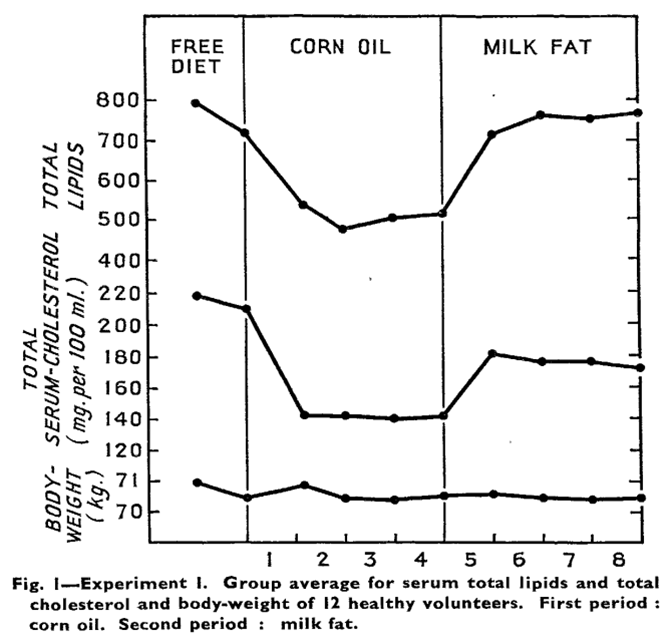
Keys. Prediction and prevention of coronary disease. (1953)
Keys. Atherosclerosis: a problem in newer public health (1953)
In 1953 Keys published two reviews in which he brings together work from different fields on the relationship between nutrition, cholesterol and CVD. With that he was one of the first to show how a causal relationship is now demonstrated in nutrition science. I cite here the eight points that he discusses, with an example. These points are described at length in the articles on the basis of various examples with data and sources.
(1) The biochemical and pathophysiological role of cholesterol deposits in the coronary arteries. Keys states that cholesterol is "the main intruder in the actual lesions of the coronary arteries" and shows that atherosclerotic plaques consist for 40-70% of cholesterol that comes directly from the blood. He also documents that patients with angina pectoris or a heart attack consistently have high cholesterol and lipoprotein concentrations.
(2) Experimental evidence from animal studies that cholesterol-rich diets raise blood cholesterol levels. Although Keys warns about the limitations of animal models, he cites animal experiments in which "high cholesterol diets and thyroid suppression" also produce atherosclerosis. He stresses, however, that rabbit experiments often use 15 grams of cholesterol per day, "fantastically far above anything that occurs in any natural human diet."
(3) Epidemiological data showing differences in fat intake and cholesterol levels between populations. Keys systematically compares different populations and shows that Minnesota men (40% fat calories) have on average 260mg cholesterol, against 218mg for Naples men (20% fat calories) at the age of 50-60. In Madrid he documents large differences between poor men (22% fat calories) and rich professionals with a high-fat diet comparable to the US.
(4) International death rates showing a link between high cholesterol-related mortality and diet (this comes back under claim 2 about cherry-picking). Keys presents his analysis in which he shows that the American death rate for degenerative heart disease in men aged 50-54 is more than four times that of Italy and more than ten times that of Japan. Figure 2 demonstrates a linear relationship between the percentage of fat calories (from Japan ~10% to the US ~40%) and heart disease mortality.
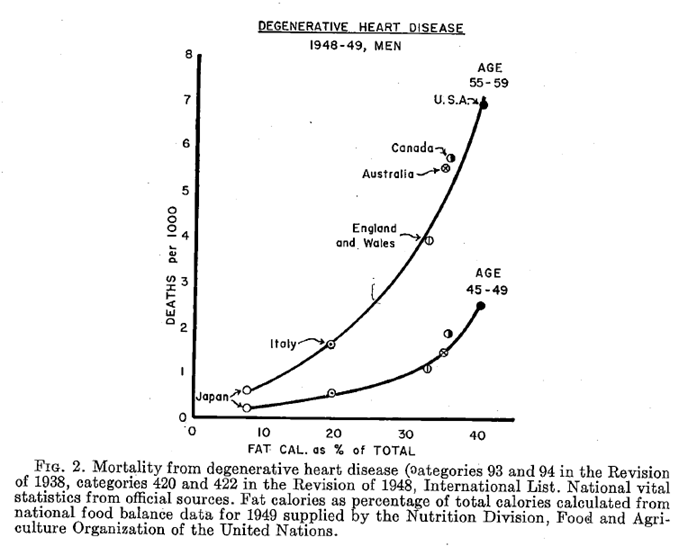
(5) Trends in American dietary history with rising fat intake. Keys documents that fat consumption rose from about 30% of calories in 1910 to more than 40% in 1950-1952, a rise of more than 25% in 40 years.
(6) War experiences that offered natural experiments with reduced heart disease reduction. Keys refers to Norway during the Second World War, where “not long after the national dietary change began there was a marked decline in mortality from circulatory disease” when food rationing reduced fat intake. These changes were also visible in diabetes mortality, which is “notoriously related to atherosclerosis”.
(7) Age-related rises in cholesterol that match autopsy findings. Keys shows that cholesterol values rise from 180mg at age 20 to 260mg at 50-60 in Minnesota, and states that “this age trend in serum cholesterol is very similar to the findings on the incidence of marked atherosclerosis at autopsy.” Crucially, after the age of 30 serum cholesterol becomes “increasingly dependent on the amount of total fat in the diet”.
(8) Methodological considerations discussing the strength and limitations of the evidence. Keys acknowledges that cholesterol measurements have “very little practical value for individual diagnosis or prognosis”, with a predictive value of only 20%, but stresses that group statistics are reliable. This was also because little was yet known about the different forms. He warns against extrapolating from animal experiments (such as the results on cholesterol in food and hardening of the arteries) and acknowledges that other factors, such as physical activity, may be involved.
With as conclusion that much more research still needs to be done:
“The argument and evidence assembled here make a consistent picture which holds promise of a preventive hygiene but many details are lacking. The mechanism of the action of the diet on the blood cholesterol concentration has not really been examined… Moreover, there is much reason to believe that other factors besides the blood concentration (cholesterol) are important in the actual development of arteriosclerotic heart disease…. It may be hoped that efforts to discover and to understand mechanisms will be pursued vigorously. There is, however, obviously a fruitful field for epidemiological research as yet scarcely touched. And it is not too soon to begin the application, by educational means, of epidemiological findings.”
In the years after, Keys carried out several studies on nutrition, cholesterol and health in countries such as England, Italy, South Africa and Spain. He investigates the effect of cholesterol in food on blood cholesterol (where he finds no effect) and the effect of fasting on health.
Keys & Keys. Serum cholesterol and the diet in clinically healthy men at Slough near London. (1954)
Keys et al. Studies on serum cholesterol and other characteristics of clinically healthy men in Naples. (1954)
Keys et al. Studies on the diet, body fatness and serum cholesterol in Madrid, Spain. (1954)
Keys et al. Diet and serum cholesterol in man; lack of effect of dietary cholesterol. (1956)
Keys et al. Some effects of acute starvation with hard work on body weight, body fluids and metabolism. (1954)
Bronte-stewart et al. Serum-cholesterol, diet, and coronary heart-disease; an inter-racial survey in the Cape Peninsula. (1955)
In 1956 he summarised his work, together with that of others, in his paper “The diet and the development of coronary heart disease”:
“The data from Slough, combined with other evidence from England, the United States, Denmark, Italy and Spain, show that in healthy young men the serum cholesterol value is substantially independent of the diet but that in middle-aged men on relatively high-fat diets, as in England and the United States, the serum cholesterol concentration is significantly higher than in men on relatively low-fat diets, as in Italy and Spain.”
The introduction is interesting to read (how they looked at CVD):
“The prevention of coronary- heart disease, as a hope to be seriously entertained, is a relatively new concept. Not long ago, it was commonly held that atherosclerosis and “degeneration” of the coronary arteries depend primarily on the “constitution” and the passage of the years. However, granted that age and heredity may be final limiting factors, at least in some cases, there are compelling reasons to believe that for most of mankind the mode of life must, somehow, determine whether extensive and irreparable changes in the coronary arteries come early or late. Serious search for the responsible factors in the mode of life has hardly begun, but conjectures and theories about the role of the diet extend back half a century and the diet continues to be the first factor for consideration in the mode of life. Recently, the argument about diet in regard to atherogenesis tends to be less about whether it has an effect and more about the magnitude of the effect, what dietary elements are involved, and how they act. The evidence to be considered comes from a wide variety of sources-experiments on man and animals, biochemical theory, clinical observations, and epidemiologic studies, including vital statistics, insurance experience, hospital surveys, and studies of population samples. Each of these has its limitations, and proper understanding must depend on the simultaneous evaluation of many pieces of evidence. So far, these fit together to form a reasonably consistent picture.”
He cites almost the same lines of evidence as in 1953, this time with even more data and sources. So I will not go through all of it again here, but only highlight a few important points. As evidence for the relationship between fat intake and CVD he cites two important lines of evidence:
- The relationship between fat intake (and especially also different types of fat) and serum cholesterol in experiments with humans.
- The differences in fat intake and CVD between countries such as Japan, South Africa and Spain, where people with a more American eating pattern (high in fat) also have CVD more often and people with a more traditional eating pattern (low in fat) have CVD less often.
But perhaps the most important point: the first clinical study with humans in which a low-fat eating pattern lowered the risk of death from CVD.
“A variety of clinical evidence could be offered in support of the view that maintenance on a low-fat, restricted calorie regimen is associated with an improved prognosis in patients with angina pectoris or in those who have had myocardial infarctions. The eight-year statistics of Morrison are impressive; but in this series as in others, a variety of vitamins and special food preparations were used in conjunction with the low-fat diet so that identification of the contribution of one or another factor to the outcome is difficult.”
Doctors were already experimenting in the forties with a low-fat eating pattern in CVD patients. For example, the doctor Lester Morrison started his “Nutritional program for prolongation of life in coronary atherosclerosis”. in 1946.
The results he published in 1955 in The Journal of the American Medical Association. Morrison divided 100 patients who had survived a heart attack over a control group and an intervention group. The intervention group was advised to limit fat intake to 20 to 25 grams and cholesterol intake to 50 to 75mg. Both groups received medication and a multivitamin. The control group kept following their eating pattern rich in fat and cholesterol. The group was measured again after three and eight years, and deaths were recorded. The intervention group (together with their families) was guided by dietitians and consistently advised to keep following the diet.
The intervention group lost 9kg on average after three years, the control group lost no weight. Serum cholesterol fell from 840 to 570; this was not reported for the control group.
“After eight years of observation, of the 50 patients in the control or nontreated group, 12 patients had survived, a survival rate of 24%. Of the 50 patients treated through the above nutritional program, 28 patients had survived, a survival rate of 56%.”
The risk of death was halved for the intervention group compared with the control group.
The study was far from perfect: there is little information on how the groups were formed (random?), there was no blinding (people knew whether they were getting the intervention), many results (such as those of the control group) were not published, but it was the first experiment with a low-fat diet in CVD.
The research group of Maurice Bruger (New York University) also published on low-fat diets, cholesterol and hardening of the arteries. In 1951 they summed up once more why cholesterol is seen as a causal factor in hardening of the arteries.
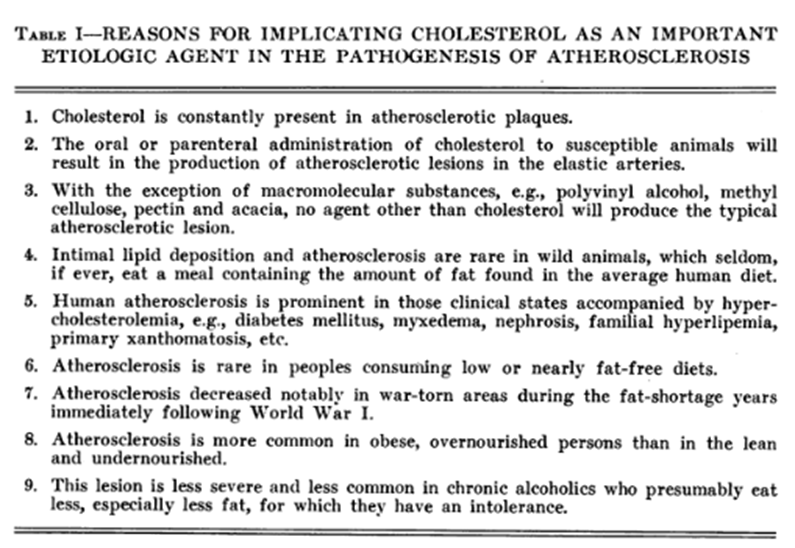
His work was a source of inspiration for Frederick Urbach and his research team at the University of Pennsylvania to apply low-fat diets in people with Familial xanthomatosis. This is a group of hereditary conditions in which xanthomas form: build-ups of cholesterol and other lipids in the skin, tendons and/or organs. The most common forms are related to disorders of lipid metabolism, such as familial hypercholesterolaemia and cerebrotendinous xanthomatosis.
Most of the children and young people who died of CVD at that time had familial hypercholesterolaemia. Urbach and his team concluded that cholesterol from food had no effect on blood cholesterol, but fat intake did. That is why they put people on a low-fat diet based on the principles of Hildreth et al., a fellow researcher at the same university, who wrote the paper “Principles of a low-fat diet” in 1951.
The study contains meal plans and alternatives for various products.
Back to Urbach: in total the scientists put nine participants on the low-fat diet. In all participants cholesterol fell, and in the three participants with a worsened heart function an improvement was seen there too. An extensive report was written on each participant, interesting to read, but too much to discuss it all here.
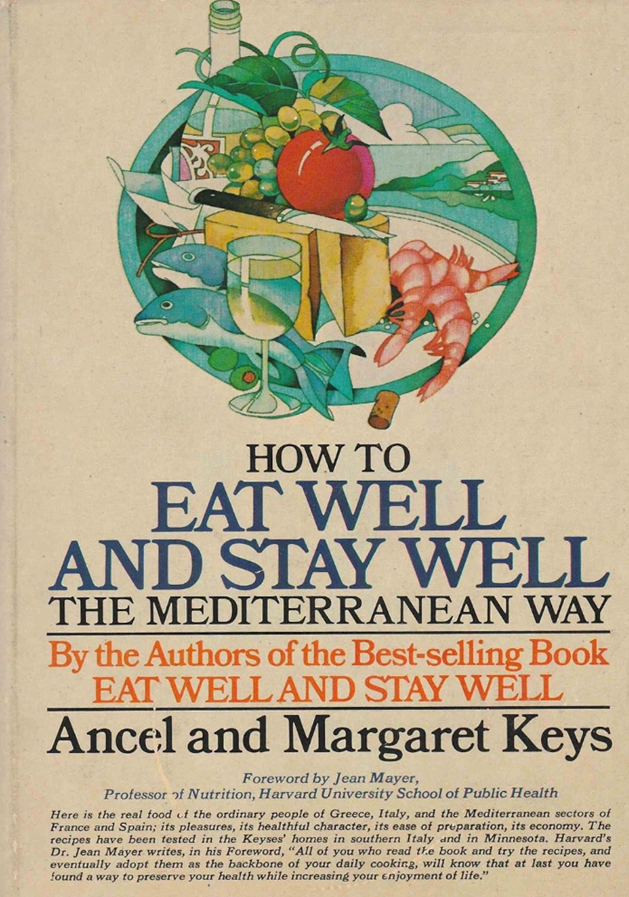
In short, Keys was not the inventor or cause of the low-fat diet, nor was he necessarily a supporter of it. Later in his career he even published a book (1970) with his wife about the Mediterranean diet: an eating pattern rich in fat, mainly from (fatty) fish and olive oil, but also, for example, cheese.
In 1957 Keys again published two articles on the relationship between nutrition and CVD, in which he once more stressed the relationship between fat intake and cholesterol.
Keys et al. Role of dietary fat in human nutrition. III. Diet and the epidemiology of coronary heart disease. (1957)
Keys. Diet and the epidemiology of coronary heart disease. (1957)
In these publications he formulated for the first time his famous lipid-diet-heart hypothesis:
“As it now stands, the hypothesis may be stated simply as follows: Though many factors of nature and nurture may be involved in the multiple etiology of coronary heart disease, the development of the majority of cases in populations that suffer most from it, for example, the United States, is dominated by the long-time effects of a rich fatty diet and innumerable fat-loading meals. Among the results of the fatty diet are hypercholesteremia, which promotes atherosclerosis, and changes in the coagulability and other characteristics of the blood that favor thrombosis and inhibit fibrinolysis. All food fats are not identical in promoting hypercholesteremia, but those most favored and abundant in almost all fatty diets are more powerful in this direction than are those food oils that have an opposing effect. Further, the differences between the fats in respect to their effect on the serum cholesterol level are not paralleled by differences in their influence on blood coagulation.”
With this he laid the foundation for much of the later research and the discussion around fat, cholesterol and cardiovascular disease.
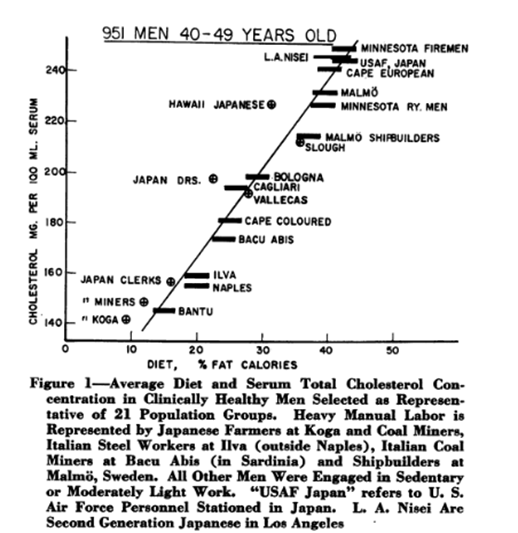
He ends his studies with a call for good scientific research on the relationship between fat intake and CVD:
“While dietary fat cannot be the sole responsible agent, the weight of accumulating evidence is such that the most extensive research on the question of the role of dietary fat in atherogenesis and thrombogenesis is warranted.”
And not only he. 1957 is also the first year that the American Heart Association publishes a paper on the relationship between fat and CVD. They were still cautious in it.
“To date there is no incontrovertible evidence for such a relationship; nevertheless, a strong case is developing to suggest that the nutritional status of an individual is an important environmental factor in the etiology of this disorder. The total fat and the type of fat in the diet are among the nutritional factors particularly involved.”
They too ask for better research, with their biggest criticism being the way dietary intake is measured and CVD is diagnosed. In many countries this is not done well. In addition, earlier research mainly used national statistics on dietary intake, which are often not reliable (more on this under claim 2):
“In the opinion of the authors of this review, there is not enough evidence available to permit a rigid stand on what the relationship is between nutrition, particularly the fat content of the diet, and atherosclerosis and coronary heart disease. We are certain of one thing: the evidence now in existence justifies the most thorough investigation. This should be done soon, thoroughly, and uncompromisingly.”
And that better research was to come. After the evidence on fat intake, cholesterol and CVD had been building up for some fifteen years, Keys decided to set up a gigantic project aimed at a reliable way of measuring dietary intake and diagnosing CVD. Later this became known as the Seven Country Study. In 1958 it got under way. More on this shortly, when we look at the second claim about Keys.
Conclusion claim 1: Ancel Keys’ work is the cause of the anti-fat and cholesterol propaganda.
As many claim, Keys with his SCS would be the cause of the advice to limit fat and cholesterol, and so of the “anti-fat and anti-cholesterol propaganda”.
“Let's start at the beginning. How is it that your parents or grandparents already told you not to eat more than 1 egg a day because of cholesterol? To find the source of the cholesterol myth we have to go quite a way back in time. 1958 to be exact. That was when Ancel Keys released his ‘Seven Countries Study’. In it he claimed that there was a positive correlation between the amount of fat a population took in through the diet and the number of cases of cardiovascular disease that occurred. In other words, he claimed: the more fat on your plate, the more clogged vessels.” (translated from Dutch)
The problem with this claim is that the SCS was not the first (and not the only) study that made this link at the time. Let alone that Keys was the first or only scientist who investigated this. Before the SCS was carried out, there was already a gigantic body of evidence that had been built up over fifty years. It consisted of different research groups that studied
(1) the role of cholesterol in the blood in the development of hardening of the arteries,
(2) the relationship between fat intake (and the different types of fats) and cholesterol in the blood,
and (3) the differences in fat intake and CVD between different populations.
In addition, Keys wrote as early as 1953 that cholesterol from food (and so also eggs) was not an important factor in CVD, because experiments showed that it had almost no effect on cholesterol in the blood. The concept of a low-fat diet as a treatment or prevention of CVD did not come from him either. He was even a proponent of a Mediterranean eating pattern, high in (unsaturated) fat.
Keys was, however, the first, together with his research group, to bring these different lines of evidence together in reviews. Besides doing a lot of research himself on fats, cholesterol and CVD, he stayed nuanced and careful in his statements about this relationship for a long time – at least until the SCS. He also stated clearly what the limitations of his research were and that there were several risk factors for the development of CVD. This was underlined by other important studies, such as the Framingham Heart Study, started in 1948. An American study with more than 6,000 participants, which is still running. The first results appeared in 1957 and showed that, besides cholesterol, blood pressure, smoking and overweight are also possible risk factors for CVD. The SCS only began in 1958 and the first results were only published around 1970.
So it is not for nothing that Finland started a gigantic project in the seventies (after taking part in the SCS), in which they set up a national intervention aimed at these risk factors. With it they achieved an 80% drop in deaths from CVD in 40 years.
The SCS arose from the demand, from the work of Keys as well as that of other scientists and the American Heart Association, for more and better research on the relationship between fat intake and CVD.
In short: Keys and the SCS are not the cause of the "anti-fat and anti-cholesterol propaganda". Without a large body of evidence from other research groups in America and Europe on fats and cholesterol in the blood and the relationship with CVD, he could never have carried out his work and the SCS.
Then we come to the next claim: Keys is said to be a cherry-picker and the SCS a bad study – all to prove his hypothesis. Let's take a dive into claim number 2.
Claim 2: Ancel Keys cherry-picked in his Seven Country Study to prove his theory.
Now that we have a picture of the history of this subject, we have arrived at the SCS. It was a gigantic project and unique for its time. Principal investigators with their research groups from seven countries (America, Greece, Finland, Italy, Japan, the Netherlands and Yugoslavia) eventually took part.
Keys et al. EPIDEMIOLOGICAL STUDIES RELATED TO CORONARY HEART DISEASE: CHARACTERISTICS OF MEN AGED 40—59 IN SEVEN COUNTRIES (1966) https://edepot.wur.nl/385221
Keys et al. Seven countries: A Multivariate Analysis of Death and Coronary Heart Disease. (1980)
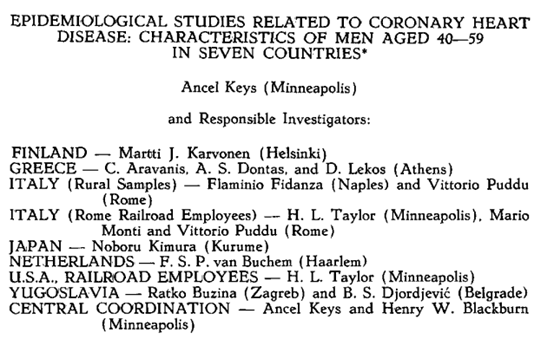
There were several funders: in every country government bodies and foundations were involved. In the Netherlands these were the Voedingsraad (now the Gezondheidsraad and the Voedingscentrum), together with TNO and the Ministry of Health (ministerie van Volksgezondheid). From America there was one large donor, David Winton with his Winton Companies Fund. Striking names are also the California State Olive Advisory Board (CSOAB) – today the Olive Oil Commission of California – and Elais Oil Co. CSOAB is an association of olive oil producers, and Elais Oil Co. is a Greek food company that also produces olive oil. Finally there were also “anonymous donors”, something that would no longer be possible now because it is completely non-transparent. The advantage of a mixed stream of funding (government and industry) is that industry cannot fully steer the research, because accountability has to be given to many parties. As I always say, funding in itself is not a problem, it is important that we look at the content of the study and judge that.
It is also important to realise how many people worked on this project. In the foreword alone I read almost twenty people who focused on carrying out the fieldwork, checking blood values, the analysis of electrocardiograms (CVD), and the statistical analysis. So Keys certainly did not do the work alone.
The SCS was a study of about 12,000 men (between 40 and 70 years old) from seventeen cohorts, studied by nine research groups in seven countries. The study was set up so that in all countries the data would be well comparable (and of high quality). That is why everything was measured in the same way: diet, body composition, blood pressure, blood cholesterol, electrocardiographic data and smoking habits. This was crucial, because until then there had been many problems with the data from different countries. Data on diet, health and CVD were often measured indirectly and in different ways, which caused a lot of uncertainty about the associations between diet and CVD that had been found earlier (more on this in claim 2).
“Great efforts were made to assure comparability of methods and procedure in the several areas. Except at Zutphen and in the two areas in Japan, the locally responsible team was aided in the field by professional experts from the teams in other countries. Electrocardiograms were independently classified by two or more electrocardiographers, at least one of whom was from another country. The general procedure for the examinations in the field, developed at Nicotera and Crete in 1957, was applied thereafter in the programs elsewhere.”
Dietary intake was measured with a short questionnaire and by analysing meals. Of all the meals the participants ate in seven days, a duplicate was analysed in the lab to measure the composition. Those seven days were repeated several times in different seasons.
Once again, it was really a gigantic project. When I think about how much work goes into my own research (200 participants) in terms of recruitment, logistics and execution, then 12,000 people is really bizarre.
“In general it was found to be efficient to organize schedule and staff so as to ‘process’ from 150 to 200 men per 6-day week; this required making effective arrangements to have the subjects available on schedule.”
I can certainly go deeper into the set-up of the SCS in another blog. If you want to learn more about the study and the different cohorts per country, then this is a recommendation. Or if you really want to take a deep dive into the SCS, you can read the book that Harvard published when the first follow-up results came in:
“Seven Countries is not to be read in a hurry, since the approach and treatment of data are of necessity highly sophisticated. Tentative conclusions, as often as not, are offered as questions or statements that do no more than emphasize the differences, startling in some instances, between population groups. They also serve as strong suggestions for further investigations by future workers. But they cannot safely be lifted out of context. Of the traditional risk factors, only two seemed to be positively related to the incidence of coronary disease in all the populations studied: arterial blood pressure and dietary intake of saturated fatty acids and cholesterol. This is not to say that other risk factors, such as heavy cigarette smoking, may safely be ignored for all populations and social conditions.”
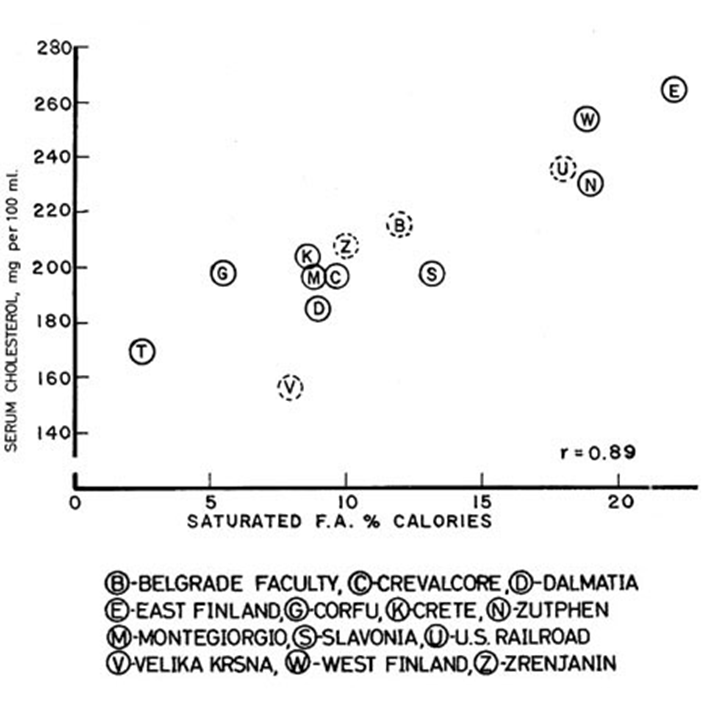
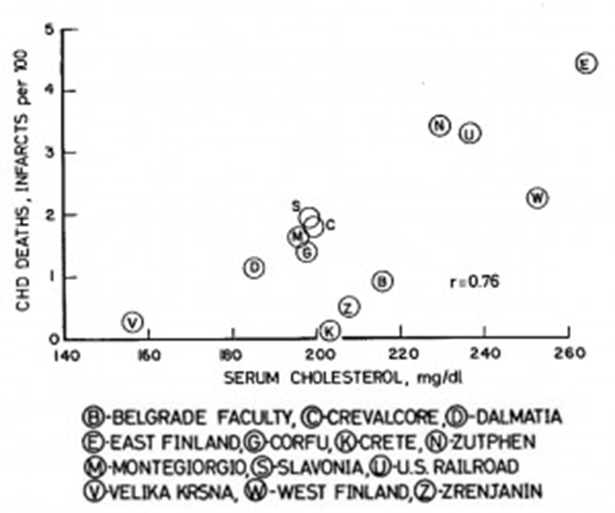
The most important results of the SCS were that there was a strong correlation (above 0.7) between
(1) Saturated fat intake and cholesterol in the blood
(2) Cholesterol in the blood and CVD
(3) Saturated fat intake and CVD
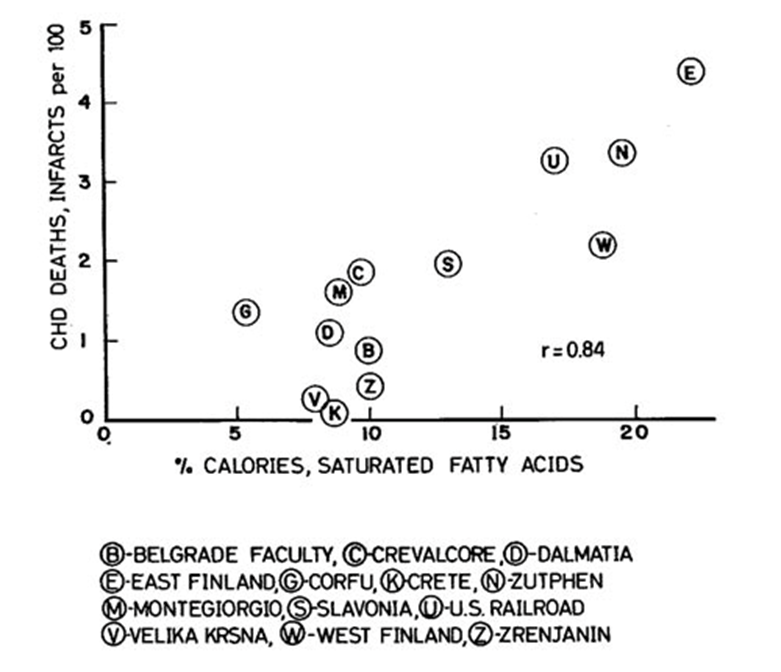
That is a nice bridge to claim number 2. The idea that Keys cherry-picked to prove his theory is cited by many people.
Conclusion claim 2: Ancel Keys cherry-picked in his Seven Country Study to prove his theory.
So too by Lars: “What he did not mention is that the ‘7 countries study’ was first the ‘22 country study’. The disadvantage of the average data that came out of the 22 countries, however, was that there was no longer any significant correlation at all between the amount of fat someone took in and the risk of CVD.”
They originally come from the book Deep Nutrition (I think). No source is given. I have already made a video before with a small review of this book.
These graphs are published incredibly often as evidence that Keys is a cherry-picker. There are just a few problems with this picture:
- This is not about the SCS at all. The right-hand graph comes from a (kind of) narrative review by Keys called “Atherosclerosis: a problem in newer public health (1953)”. The left-hand graph is from a response paper by Yerushalmy & Hilleboe (two statisticians) called “Fat in the diet and mortality from heart disease: A methodologic note (1957)”. The figures are based on databases of countries from the years 1948/1949. For deaths from CVD, “National vital statistics from official sources” were used, in other words, government figures. For fat intake, “national food balance data for 1949 supplied by the Nutrition Division, Food and Agriculture Organization (FAO) of the United Nations” were used, so data from the UN based on production, export, import and non-human use of products.
- There were many problems with this data at the time (besides the fact that FAO data are not a direct way to measure dietary intake anyway). For example, the diagnosis of CVD was not well organised in all countries and FAO data were not properly kept everywhere. Keys explains why he chose the other six (in the right-hand graph): these had the best comparable data. “So far it has been possible to get fully comparable dietary and vital statistics data from 6 countries.” You could call this cherry-picking, but you could also simply call it good science. Because the fact that the diagnoses of cardiovascular disease differed between countries means that differences you see between countries may be due to differences in diagnosis and not to literal differences in the number of people who die from CVD. That is why it seems logical to me to use only data from countries where CVD is measured in as similar a way as possible.
-
The critical people are cherry-picking themselves. According to the picture, the left-hand graph would show that there was “no longer any significant correlation at all between how much fat someone took in and the risk of CVD.” (See the almost horizontal line through the dots.) In addition, Keys is said to have ignored that many people were already eating unsaturated fat from margarines at that time.Lars: “Cherry-picking aside, the set-up of the study was falling apart on all sides anyway. It only looked at total fat consumption through the diet. That means no distinction was made between someone who got his fat from grass-fed steaks and someone who slurped up bottles of sunflower oil through a straw. You understand that your conclusion is then worthless anyway.”
Yerushalmy used all available data for the left-hand graph. But they too state that there are many problems with the data:
“It is necessary, therefore to bear in mind that association between such variables (FAO data en hvz data) may be only apparent and may reflect the differences in definition and reporting patterns among the countries under study.”
The graph cited in the picture tries, with the almost straight line, to make it look as if there is no correlation between the two factors. Keys, by the way, never calculated the correlation (more on this in point 4), but Yerushalmy did. Then you see the following correlations:
A non-significant correlation of 0.390 for total fat intake, 0.557 for fat from animal products and -0.509 for fats from plant sources. So it is true that if you include all 22 countries, the correlation between total fat intake and CVD is moderate (up to 0.3 is weak, between 0.3 and 0.5 is moderate, between 0.5 and 0.7 is fairly strong). But if your criticism is that Keys cherry-picks, it is important not to start cherry-picking yourself and to include exactly the correlations for saturated fat and unsaturated fat. If you include those correlations, the association is stronger and the line should actually be drawn as follows (the picture is an example generated by AI):
In short, saturated fat has a fairly strong positive correlation with CVD, while plant fats show a fairly strong negative (protective) correlation with CVD. A non-significant correlation.
-
Keys never claimed that it was significant. The criticism often suggests that Keys based a strong conclusion on the paper and the figure “fat causes CVD”. But when I read the full paper, I get a different idea. The work was mainly aimed at the current evidence (at that time) for the relationship between cholesterol and CVD, fat intake and cholesterol, and fat intake and CVD. He states very clearly in the discussion of his study that much is still unclear:
“The argument and evidence assembled here make a consistent picture which holds promise of a preventive hygiene but many details are lacking. The mechanism of the action of the diet on the blood cholesterol concentration has not really been examined… Moreover, there is much reason to believe that other factors besides the blood concentration (cholesterol) are important in the actual development of arteriosclerotic heart disease… It may be hoped that efforts to discover and to understand mechanisms will be pursued vigorously. There is, however, obviously a fruitful field for epidemiological research as yet scarcely touched. And it is not too soon to begin the application, by educational means, of epidemiological findings.”
One of those unclear points was that at that time the role of trans fats in food was not yet clear. Only later did we find out that within the cohorts of the SCS too there was a clear association between trans fatty acid intake and cardiovascular disease.
So the paper by Keys was not a “fat is the cause of CVD, full stop,” but rather a call for more and better research. And that is what eventually happened. By himself and by many other scientists, for example through the SCS, in which both dietary intake and CVD were measured directly. In doing so they looked very carefully at the different types of fats in the diet and where they came from. On the basis of all these data they eventually found a strong correlation between saturated fat intake, cholesterol in the blood and CVD.
As far as I am concerned, the picture with the two graphs and the text with it is therefore incorrect and misleading.
If there are other claims about the work of Ancel Keys that I should take a dive into, I would love to hear it!
What did you think? Let me know in the form of a comment or an email: [email protected]
Have you come across a claim on the internet or social media and are you curious about an assessment of the support for it, let me know and I will dive in!
Do you want to support me and my nutrition science adventure? Share my articles or the podcast on your socials!
Everything you read on this website is my opinion based on knowledge and experience. There is a good chance that I sometimes overlook something, or that something could be better. I would love to hear it! We do science together.
Follow me on:
Instagram: https://www.instagram.com/coenfirmation_bias/
Linkedin: https://www.linkedin.com/in/coen-dros/