
49 min read
The link between whole grains, lectins and inflammation
"Why I avoid whole grains as much as possible," wrote Joep Rovers, orthomolecular therapist and self-proclaimed biohacker/health freak, in one of his posts on Instagram. Whole grains are wrongly preached and presented as healthy. In fact, they are a culprit if you want a healthy lifestyle. According to Joep, they would actually cause inflammation. I made a video about this post in which I took a dive into the scientific support that was cited. My conclusion was that the opposite is true: a diet high in whole grains actually causes less inflammation. Nothing turned out to be less true; I was completely wrong. That is why I removed the video, and in this blog I will take the space to explain my mistake and to rectify it. I will also take another dive into the subject, but this time with the attention it deserves. Is it better to avoid whole grains? What is the effect of lectins on our gut? Do they cause inflammation?

Whole grains contain the lectin agglutinin, which is called wheat germ agglutinin (WGA). The function of this lectin (a protein) is to protect the plant against insects, fungi and bacteria. Various plants have lectins to protect themselves, and so you also find them in grains, beans, nightshade vegetables, nuts and seeds. These are, however, different kinds of lectins. According to Joep, WGA would not only protect the plant against insects etc., but also against us. Our body would also react badly to WGA, and this would cause damage to the gut wall and inflammation. As scientific evidence, he cited a study by Leo Pruimboom.

Leo is someone I know; I have come across him more than once in the orthomolecular corner. He is the founder of Klinische Psycho-Neuro-Immunologie (clinical psycho-neuro-immunology, kPNI), he was closely connected to the Natura Foundation (a training institute for orthomolecular therapy) and he was the teacher of Richard de Leth. I have taken a dive before into a review of his about the balance between omega-6/omega-3 and inflammation. You can find this dive on my Instagram. In short, this review claimed that studies with people show that too high an intake of omega-6 compared to omega-3 would cause inflammation. The studies that were cited for this did not support it. I sent several emails about this to him and to the scientific journal, but unfortunately I never got a response to the substance.
For this blog I will go through the argumentation of De Punder & Pruimboom, with as the main question: Do whole grains cause damage to the gut wall and inflammation in humans? Along the way I will point out where I went wrong in my video, so that I can rectify this mistake. My apologies to Joep here as well. It is not my intention to misinterpret anyone's support and thereby falsely accuse someone of misusing science. That was the introduction. Put on your diving mask, because this is going to be a deep dive.
Rectification
To be clear, I want to state the following: my rectification (and the apologies that go with it) is purely about my wrong conclusion in the video. My "new dive" and conclusion are separate from that.
My bias / disclaimer
In my own video I drew a conclusion too quickly and I did not dive deep enough into the study. Chances are this is because of my bias, which says that whole grains are healthy. I learned this during my training, it is part of the guidelines for a healthy diet, and it is somewhat ingrained in me.
The dive
Let us start at the beginning: the study by De Punder & Pruimboom. It is a narrative review about the role of grains in inflammation. According to the authors, the study focuses on anti-nutrients: gluten and lectins. These are found in all grains and could be the cause of chronic inflammation and autoimmune diseases by increasing intestinal permeability (permeability / leaky gut) and initiating a pro-inflammatory immune response. They base this on evidence from in vitro (laboratory) studies, studies with animals, and humans (in vivo).
Frustration: Let me get my frustration about narrative reviews out right away. As far as I am concerned, narrative reviews are not a good scientific source. Over the past years I have come across too often that sources are fiddled with in this type of science. On top of that, a narrative review does not assess the quality of the studies it cites and is not transparent about its search methods. Together this means that you have to check the sources well (there are usually at least a hundred), and as far as I am concerned you also have to go looking for studies on the question yourself. You simply have no idea whether the authors left out studies.
In this blog I will mainly focus on studies with humans that have looked at the effect of WGA (whole grains) on inflammation and gut permeability. Here, however, we immediately run into problems. According to the authors, at the time the review was written, there are no studies that have looked at whether WGA can cause inflammation and/or gut permeability in humans.
“Human data showing the influence of WGA intake on inflammatory markers are lacking, however, antibodies to WGA have been detected in the serum of healthy individuals (56).”
Source 56: Tchernychev B. & Wilchek M. Natural human antibodies to dietary lectins. (1996)
Still, antibodies to WGA would have been found in healthy people. The fact that antibodies are found means that WGA has caused an immune reaction. However, we make antibodies to very many products: dairy, eggs, shellfish, peanuts, nuts etc. The fact that you find antibodies is not in itself directly a health problem.
The study is a mechanistic study. In a laboratory, the authors investigated antibodies to various lectins, including WGA. I am not able to assess the method, since it is very technical. But one thing seems clear: antibodies to WGA were found in the blood of humans. Who those people were is not clearly stated. In addition, the researchers did not look at whether the concentrations were high or low or what the possible health consequences of the concentrations might be.
“In summary, human serum contains natural antibodies to lectins commonly present in human diets.”
What evidence do De Punder and Pruimboom (further) cite for the relationship between WGA and inflammation/gut permeability?
Well, actually only mechanistic laboratory research. I will highlight the argumentation with a few examples.
First, they state that the highest concentrations of WGA are found in the grain germ.
“The highest WGA concentrations are found in wheat germ (up to 0.5 g/kg [39]).”
They cite several studies that found amounts of 0.1 to 0.5 mg per gram of WGA in grain germs. I will just assume that the scientists behind these studies know what they are doing; that is not really something I can check. The fact that WGA is mainly in the grain germ means that the more heavily processed the grains are, the less WGA they contain. This can decrease by a factor of 5 to 10. Whole grains, in which the grain germ is still intact, therefore contain the highest concentration of WGA.
It is remarkable how low the amounts of lectins are in products such as cooked pasta: virtually 0. Lectins are on the outside of the membrane, are water-soluble and do not tolerate heat well. Together this means that when you cook products with lectins or process them in water, the amount of lectins drops drastically. It is just not clear how this works in the process of bread. Since the flour is of course not cooked there. I cannot really find anywhere how many lectins remain in bread, whereas De Punder and Pruimboom are clear about the low concentrations in pasta. It is therefore possible that the concentrations also drop after bread is made from flour.
Pro-inflammatory
Next, the authors go into various ways in which WGA has a pro-inflammatory effect.
“WGA induces inflammatory responses by immune cells. For example, WGA has been shown to trigger histamine secretion and granule extrusion from non-stimulated rat peritoneal mast cells [48], induce NADP-oxidase activity in human neutrophils [49] and stimulate the release of the cytokines IL-4 and IL-13 from human basophils [50].”
The researchers took peritoneal mast cells from male rats. Mast cells are inflammatory cells that sit in various tissues, such as the lungs (asthma), mucous membranes (hay fever), but also the mouth (food allergies). These cells come from the peritoneum, which is another word for the abdominal lining. Mast cells release granules, which are a kind of packages with mediators, in this case histamine.
A mediator is, in medicine, a substance made by the body itself that is released during a defence reaction of the body. When a foreign substance that is regarded as harmful enters, the mediator is discharged from granules or vesicles, which are located in mast cells and granulocytes. (translated from Dutch)
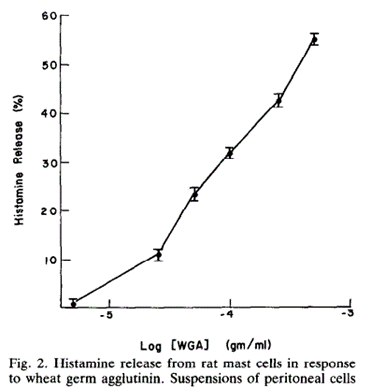
It is clear that when the researchers expose the cells to WGA, there is a release of histamine in the cells. The greater the exposure to WGA, the greater the release of histamine. And certainly, even though histamine plays an important role in the immune system, too much histamine in the body is harmful. However, there is another result that stands out to me. WGA never comes alone. It comes in the grain germ and in a whole meal together with other nutrients, such as carbohydrates. And the researchers also looked at the histamine release when WGA comes together with carbohydrates.
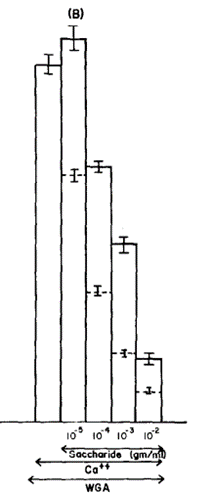
And then you clearly see that as the amount of carbohydrates goes up (saccharide), the release of histamine (the bars) goes down. The authors also state this in the conclusion:
“In summary, we have found that the lectin wheat germ agglutinin (WGA) stimulates granule extrusion and histamine release from isolated rat mast cells…. This secretory response to WGA is also prevented by energy deprivation or by the sugars, NANA or NAG, to which WGA specifically binds.”
The sugars in question are N-acetylglucosamine (NAG) and N-acetylneuraminic acid (NANA). These sugars bind to WGA, which inhibits its effect on the cells. You find these sugars in low amounts in whole grains and in higher amounts in animal products such as shellfish, meat, fish and dairy.
De Punder & Pruimboom do not mention this, but I find it an important finding. It shows how misleading laboratory research can be when you translate it to people in real life. You never eat these substances, such as WGA, in isolation. It ALWAYS comes with other substances, which again can interact and have effects, including an inhibiting effect in this case. From this study we cannot tell to what extent this happens in the body of humans, but let us remember this as we go through the other studies.
This laboratory study also looked at the immune response to WGA. This time it looked at human neutrophil cells, in other words the granules of white blood cells.
A neutrophil granulocyte, or neutrophil for short, is a granular white blood cell that forms an essential part of the immune system. Neutrophils form the largest group of leukocytes and make up about 60% of the total number of white blood cells present in a healthy body. Neutrophil granulocytes are short-lived cells that form the primary immune response with which infections are quickly controlled.
Even more specifically, it looked at the NADPH-oxidase activity of the white blood cells. NADPH-oxidase helps to make reactive oxygen species (ROS), also called free radicals. Free radicals are often portrayed in a negative light because they would cause oxidative stress (certainly when too few antioxidants are present), but the body also uses free radicals to fight infections. So we need them. This also means there are indications that too high an intake of antioxidants, such as with supplements, can actually have negative effects. But that is a dive for another time.
“WGA induced an extensive oxidative response in exudate neutrophils giving rise to superoxide anion production both extra- and intracellularly, while no significant superoxide anion production was detected in the peripheral blood cells.”
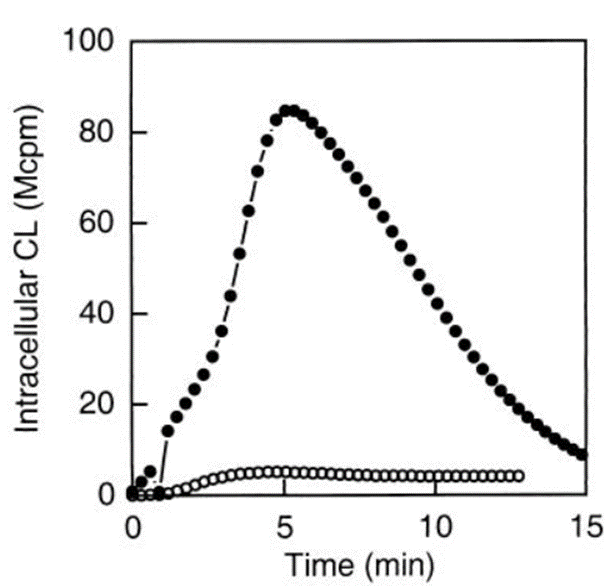
When the cells are exposed to 2 μg/ml WGA, you see a significant rise in NADPH-oxidase activity for almost 15 minutes. If we then look further, we see that WGA causes a significant reaction in granules. Now they did this under various conditions: different temperatures and with a synthetic peptide called fMLP (N-formylmethionyl-leucyl-phenylalanine (fMLP)). This is derived from bacterial proteins and plays an important role in the activation of inflammatory reactions, in particular in attracting and activating neutrophils, a type of white blood cell.
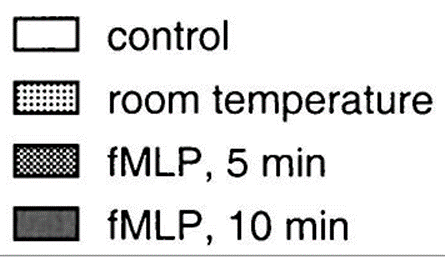
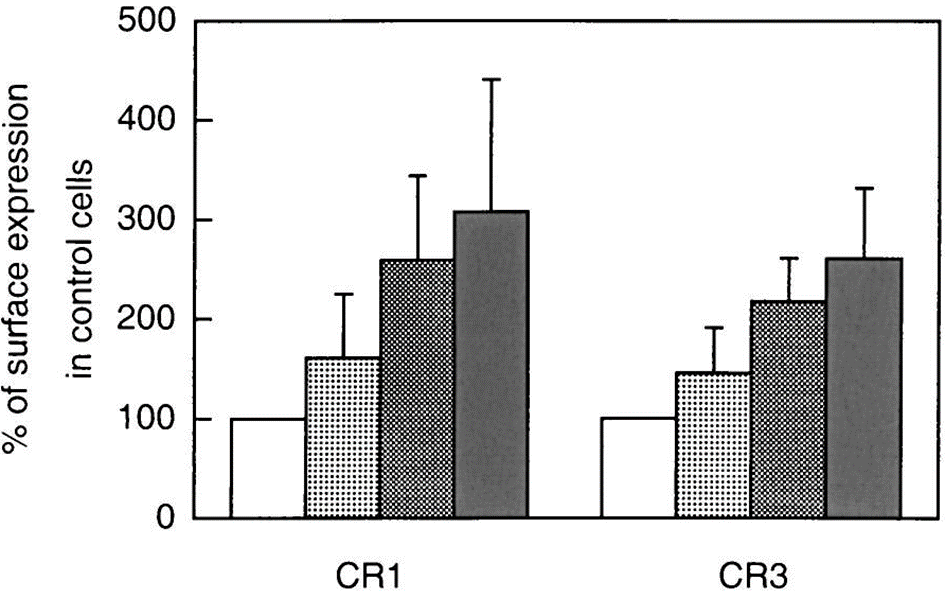
So in this study too, it seems that WGA in isolation causes an immune response and thus a pro-inflammatory effect.
“This study shows that the binding of WGA to glycoconjugates on human neutrophils isolated after in vivo exudation results in an activation of the superoxide anion and hydrogen peroxide-generating NADPH-oxidase"
But just like the study before, this study looked at what happens when WGA comes together with N-acetylglucosamine (NAG). Since, as the authors say, WGA has a carbohydrate-specific interaction. And this study too shows that the presence of NAG completely inhibits the pro-inflammatory effect of WGA.
“The WGA-induced response was determined in the presence of free N-acetylglucosamine (GlcNAc; 10 mM). The GlcNAc totally inhibited both extra- and intracellular CL (data not shown), indicating that WGA indeed interacts with the neutrophils in a carbohydrate-specific manner.”
And De Punder and Pruimboom did not mention this either
In this third, and last, study that I take a small dive into, the researchers looked at whether lectins cause an inflammatory reaction in human basophils. A basophil is a type of white blood cell that plays a role in allergies and inflammation. This too is a granulocyte.
According to the researchers, IgE-mediated (food) allergies arise through an early release of IL-4 and IL-13 (inflammatory proteins) by various cell types, such as basophils. IgE-mediated reactions are characterised by the occurrence of specific symptoms, normally within 1-2 hours after ingestion of or exposure to the food allergen.
“Dietary lectins, present in beans and other edible plant products, pose a potential threat to consumers due to their capacity to induce histamine release from basophils. In this study, we analyzed the capacity of 16 common, in particular dietary, lectins to induce human basophils to secrete IL-4 and IL-13, the key promoters of Th2 responses and IgE synthesis.”
To see whether WGA can have this effect, they exposed human basophils to WGA. For this they used nine different donors.
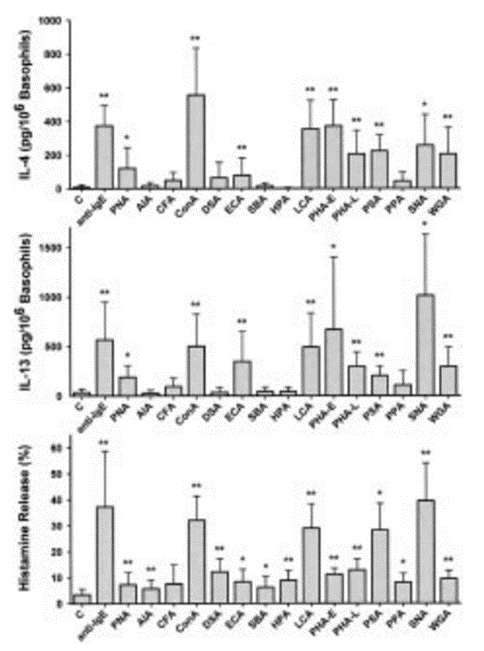
The results show that exposing these basophils to WGA (in isolation) in a laboratory did indeed cause the basophils to release histamine, IL-13 and IL-4.
Conclusion pro-inflammatory
An important argument for the pro-inflammatory effects of whole grains is that the grain germ agglutinin (WGA) has pro-inflammatory effects. According to De Punder and Pruimboom there is no scientific research that has examined the relationship between WGA intake and inflammation values in humans. Their review is therefore entirely based on in vitro (laboratory) research that suggests that WGA can cause inflammatory reactions in cells (of animals and humans). And this is correct. It is clear that the studies that are cited show that WGA in isolation causes the induction of inflammation (histamine and interleukins) in cells. The problem, however, is that WGA is never consumed in isolation. The studies that are cited also clearly show that various carbohydrates (sugars) can bind to WGA, so that the inflammatory reactions decrease or disappear. De Punder and Pruimboom do not mention this.
It is true that the various sugars to which WGA binds are also called amino sugars and are also found in human cells. An argument could therefore be that precisely because of this WGA can bind to gut wall cells and cause gut permeability and inflammation. But these amino sugars are also found in products we eat, such as to a high degree in animal products.
How this carbohydrate-binding property translates to the real world in which people eat whole grains is not yet clear to me. For example, I have no idea how the amounts used in the studies translate to the amounts in whole-grain bread or a slice of bread with chicken breast, for instance. Let us move on to the next argument that De Punder and Pruimboom give for the relationship between WGA and gut permeability.
Gut permeability
WGA would not only be pro-inflammatory, but would also increase gut permeability. An increase in gut permeability is a problem, because the gut wall (besides its function of absorbing nutrients) has to protect the body against the outside world. Yes, technically the contents of the gut are still the outside world. Only when substances pass through the gut wall do they enter the inside world of the body. When the gut wall starts to let through more substances than necessary, this causes inflammation and other harmful consequences. This is also called a leaky gut. According to De Punder and Pruimboom there are several ways in which this happens:
“After ingestion, WGA is capable of crossing the intestinal barrier. In animal models, WGA has been shown to reach the basolateral membrane and walls of the small blood vessels in the subepithelium of the small intestine [36].”
The first evidence they provide here is that WGA can get through the gut wall. This would have been proven in studies with animals.
In this animal study they fed rats a diet high in WGA for ten days, after which they examined the effect on the gut. The reason for this is super interesting. According to the scientists, WGA could possibly be used as an insecticide
“Thus, expectations have been raised that by utilizing differences in reactivity of the gut epithelia between species from higher and lower animals, the insect-resistance of major crop plants could be safely improved by the introduction of suitable lectin genes into the plant genome.”
Since research has shown that WGA is highly toxic to insects, it could be possible to add lectin genes to plants. This way the plant can produce extra WGA and protect itself against insects. It is of course important that these plants are then still safe for humans to eat, and for that they first want to investigate the effect of WGA on the gut in larger animals, such as rats.
The rats' diet consisted of six grams of food per rat per day, which contained seven grams of pure lectins per kg. So the rats took in about 42 mg of WGA per day. On the last day the rats received fourteen grams of WGA and were then killed, so that the entire stomach and intestines could be removed.
Rectification: Here I made the first mistake in my video. I cite this study and conclude from it that WGA can cause harmful effects on the gut in rats. I then state that it would involve 14 mg of WGA per day. This is incorrect. It is in fact 42 mg of WGA per day, which is a significantly higher amount.
If we look at the results, we see first of all that the rats on the diet high in WGA had significantly less weight gain (10 versus 15 grams), even though they ate as much as the control group of rats. They also pooped a lot more. In addition, the small intestine (45%) and pancreas (18%) were heavier and the thymus (20%) lighter than those of the control group of rats.
If we then look further at gut health, the researchers found that a large part of the WGA could bind to the gut wall, and that even after 2 hours 60% of the WGA was still present. They also found WGA bound to the basolateral membrane, which is the inner gut wall on the side of the blood vessels and lymph vessels. This confirms that, as Punder and Pruimboom state, WGA can increase the permeability of the gut and find its way into our inside world, where it could then cause inflammation.
According to Pusztai et al., these results mean that WGA has negative consequences for the growth of the rats. This is probably because the binding of WGA to the gut wall causes disturbed absorption of proteins and disturbed growth of organs.
“The nutritional evaluation of the effects of pure WGA at the dietary inclusion of 7 g/kg clearly showed that the lectin reduces the utilization of dietary proteins, induces wasteful growth of both the small intestine and the pancreas, causes thymus atrophy and depresses the growth of rats.”
So yes, De Punder and Pruimboom are right. It seems that WGA can get through the gut wall, at least in rats. Is this worrying? Yes. Still, we have to place this study in an important context. First, it is not clear how this translates to the guts of humans. Second, and more importantly, as humans we never get WGA in isolation and we take it in at much lower amounts.
A grain germ contains about 300 mg per kilogram. If we look at whole-wheat flour, it contains about 29.5 to 50 μg/g of WGA (these are figures from the study by De Punder and Pruimboom). If you calculate this for a whole-wheat bread, and we take averages, that is about 1.2 mg per slice. So you would have to eat 35 slices of bread to get the same amounts. Few people do this.
Let us move on to another study that is cited as evidence for gut permeability. Dalla Pellegrina et al. is cited for several claims in the review. For example, the study would show that WGA causes the permeability of gut cells (enterocytes) by damaging the integrity of the gut wall and stoking inflammation.
“WGA itself has been found to affect enterocyte permeability. Investigations by Dalla Pellegrina et al. [54] showed, in vitro, that exposure to micromolar concentrations of WGA impairs the integrity of the intestinal epithelial layer, allowing passage of small molecules, like lectins. At the basolateral side of the epithelium, WGA concentrations in the nanomolar range induced the secretion of pro-inflammatory cytokines by immune cells [54]. This may further affect the integrity of the epithelial layer, heightening the potential for a positive feedback loop between WGA, epithelial cells and immune cells. “
The research aim of Dalla Pellegrina is interesting. In the introduction they state that the protein (WGA) is very stable, which means that it has a low pH value and does not break down quickly in the human body. This would make WGA an interesting candidate for oral medication (as a carrier of another substance). There is, however, a possible problem: the toxic effects of WGA on the gut wall of humans. They cite studies to support this, including the study with rats that I explained above. These would show that WGA can cause inflammatory reactions, but as I also noted, this was at concentrations that do not occur in our diet.
“Indeed, experimental work carried out in vivo has shown that within a huge range of concentrations WGA is non-toxic, its toxicity for the normal gastrointestinal tract occurring at doses much higher than those ingested in a regular human diet….. WGA does not bind the basolateral membrane of polarized epithelial cells, but it is known to bind all the various cell types of the immune system and to exert biological activities on immune cells… However, to the best of our knowledge all these effects have been observed at WGA concentrations much higher than those expected to reach the basolateral side of epithelium layers.”
Dalla Pellegrina has namely done earlier research which showed that 0.1% of the WGA intake gets through the gut wall.
“These experiments allowed us to estimate the WGA toxicity threshold which resulted to be in the micromolar range of concentrations when 0.1% of WGA molecules were also observed to reach the basolateral side of the epithelium layer (Dalla Pellegrina et al., 2005)”
In both studies (Dalla Pellegrina 2005 and 2009) the scientists used almost the same methods. They used existing cell cultures and human peripheral blood mononuclear cells (PBMCs), which they isolated from blood samples of healthy human donors.
"Existing cell lines" refers to cells that were isolated earlier and grown in laboratories. "Human peripheral blood mononuclear cells (PBMCs)" are a specific type of white blood cell that is found in the blood of humans. They include lymphocytes (T cells, B cells and NK cells) and monocytes. PBMCs play a crucial role in the immune system and are often used in research on immunology and infectious diseases. (translated from Dutch)
The gut cells that were used were Caco-2 cells, a human adenocarcinoma model that is widely used in gut research. The Caco-2 cells used in this study are derived from cells of a colorectal carcinoma (bowel cancer). Despite their cancer origin, Caco-2 cells show properties that resemble those of normal gut epithelial cells. They then exposed the cells to WGA that had been treated with ELISA. ELISA is a method in which antibodies are bound to the WGA so that the WGA can be tracked and you can see where it ends up. They also investigated the effect of the WGA on the integrity of the gut cells by means of the TEER method. In this method electrical resistance is used to measure the integrity of the gut wall. The higher the TEER, the lower the gut permeability.
I do not understand much of these techniques myself, so I trust the expertise of these scientists. I see no reason to distrust them. They summarise their results as follows: In 2005 they state that WGA can bind to the cells in the gut wall, which can lead to increased gut permeability. In the end 0.1% of the WGA went through the epithelium. In 2005 they state that WGA can bind to the cells in the gut wall, which can cause gut permeability. In the end 0.1% of the WGA went through the epithelium.
“The results of the present paper can be summarized as follows: the plant lectin WGA binds at the apical membrane of polarized enterocyte-like cells and alters the permeability of both the cells and the tissue layer. In the latter case, WGA appears to disorganize cell–cell contacts thus allowing small molecules (up to at least 3 kDa) to cross the epithelium layer. Transcytosis assays show that c0.1% of added WGA molecules at the apical side can cross the epithelium layer in an intact and active form–at least within the time range of our assays--although WGA is rapidly uptaken by cells.”
The authors emphasise an important aspect that has to be considered when translating these findings to the intake of WGA through food. Both Dalla Pellegrina and Pusztai (of the rat study) used high concentrations of pure WGA in their research. In food, however, WGA occurs in a complex structure with other substances, mainly in the grain germ. Moreover, food processing, such as heating, leads to a decrease of the WGA concentrations in products such as bread and pasta. The authors calculate that to get the amount of WGA that they used in their cell study, one would have to consume 1.25 kg of uncooked pasta.
“In a normal diet, however, WGA is not ingested pure but as a component of a complex matrix which is further transformed by technological processing of wheat products into edible food and by cooking. In whole meal pasta, the concentration of biologically-active WGA ranges between 5 and 40 Ag/g, but this concentration falls below detectable levels upon cooking (Matucci et al., 2004). In fact, the stability of WGA decreases as a function of temperature with a critical inflection point at 65 8C (Matucci et al., 2004). Thus, the concentration of active WGA into a normal meal (e.g., 100 g of whole meal pasta) is unlikely to reach unsafety levels, as in the present work the minimum concentration causing destabilization of the model epithelium is in the order of 1.4 AM. This concentration is equivalent to 50 mg/l, and if we assume that the volume of the stomach is 1 l, such a concentration would correspond to approximately 1.25 kg of uncooked whole meal pasta.”
However, after the results of 2009 Dalla Pellegrina does change tone a little. With this study they showed that WGA causes inflammatory reactions in the gut wall. Which in turn can cause extra gut permeability. So even though we take it in at much lower concentrations, and not pure, they do warn that WGA in products such as bread can possibly cause a downward spiral in which WGA in small concentrations can cause an ever higher gut permeability.
“At these concentrations, however, WGA can stimulate the biosynthesis of pro-inflammatory cytokines, and of other not yet identified molecular factors, by immune cells, though at a variable extent depending on the individual background. Cytokines, in turn, concur to alter the integrity of the epithelium layer itself. A sort of positive feedback might therefore be established among WGA, epithelial cells and immune cells and this might lead to further increase the effects of the lectin on gastrointestinal epithelia.”
And De Punder and Pruimboom thus adopt this as an argument for the pro-inflammatory and gut-permeability effects of whole grains.
De Punder and Pruimboom: “When combined, these mechanisms are likely able to significantly increase the percentage of consumed WGA that can cross the epithelial layer compared to the low percentage of WGA crossing by means of transcytosis (0.1%) alone [54]. This suggests that, together with gliadin, WGA can increase intestinal permeability, resulting in an increase of translocating microbial and dietary antigens interacting with cells of the immune system.”
Conclusion mechanistic research pro-inflammatory and gut permeability
It is clear that WGA can possibly have negative effects on the health of humans. So far I have only focused on mechanistic research. That is, studies with animals and cells that expose biological mechanisms. It seems that WGA in isolation and in high amounts can cause inflammation and gut permeability, which can in turn feed each other. You can speculate that chronic intake of WGA in low amounts also has negative effects, but this is purely speculation. Still, this can certainly be a puzzle piece in demonstrating a causal link between whole grains and inflammation in humans. It is just not enough evidence, because on this basis we cannot know whether you can translate this to the health of humans. Certainly because WGA can interact with other substances (in whole grains or the whole diet) that can possibly inhibit the negative effect. Let us look at research with humans. Does the intake of whole grains cause a damaged gut wall and inflammation in humans?
Research on inflammation in humans
When it comes to inflammation, De Punder and Pruimboom go into two lines of evidence: observational and experimental research.
Observational research shows a clear association between a higher intake of whole grains and less inflammation in the body (CRP). Only, say De Punder and Pruimboom, this association weakens or disappears when you statistically control for quite a number of confounders. These are important confounders related to healthy living, such as higher education or a healthy diet. This would be evidence that a higher intake of whole grains is not the cause of the lower inflammation levels at all, but an indication of the fact that someone lives healthier and is healthier in general.
“Inflammation is associated with these conditions and some studies have shown that associations between the intake of whole grains and decreased inflammatory markers (CRP, Il-6) are found [65]… It has been shown that the intake of whole grains is associated with healthier dietary factors and a healthier lifestyle in general…. Good quality epidemiological studies attempt to control these confounding factors, but with the consequence that associations are attenuated or become insignificant.”
However, you can interpret this in different ways. So I will take you through source 65.
Source 65: Lefevre & Jonnalagadda. Effect of whole grains on markers of subclinical inflammation. (2012)
They cite the review by Lefevre & Jonnalagadda. This review is a kind of incomplete systematic review that does show how they searched for literature, but did not assess the quality of this literature. They summarised both observational and experimental research that examined the relationship between whole grains and inflammation, looking at various inflammation values (CRP, interleukins, TNF). The greatest focus is on C-reactive protein (CRP). CRP is an inflammatory protein that is an acute reaction of the liver to the release of interleukin-6 (IL-6). IL-6 is a cytokine that is produced in case of damage or infections by various cell types, such as epithelial cells. That is why we already came across it earlier in research, such as with Dalla Pellegrina. That study showed that IL-6 is one of the cytokines that can increase gut permeability IL-6.
Dalla pellegrina: “This experimental model has been successfully used e.g. to investigate the molecular details of the cross-talk between epithelial and immune cells upon challenge of compartmentalized co-cultures with bacteria (Parlesak et al., 2004), and it has been shown that both cell types exchange molecular signals by means of synthesis and uptake of a plethora of cytokines among which IL1β, IL6 and IL8.”
Researchers mainly look at CRP, because it is easier to measure and gives a general indication of chronic inflammation. According to the authors of the review, both IL-6 and CRP are associated with cardiovascular disease, and IL-6 is also produced by fat tissue in the abdomen. This would mean that overweight also causes chronic inflammation (and gut permeability). As far as I am concerned this has consequences for the interpretation of these studies, but I will come back to that later.
Let us look at observational research on whole grains and inflammation.
There are four observational studies that specifically looked at the association between the intake of whole grains and CRP, and two studies that looked at IL-6. Five of the six (CRP + IL-6) studies show a (crude) association between a higher intake of whole grains and lower CRP and IL-6. However, when the studies control in statistical models for quite a number of lifestyle-related factors (BMI, waist circumference, insulin sensitivity and components of the diet such as fruit and vegetable intake etc.), the association weakens or disappears (no longer crude).
“Nonetheless, in all four studies, in the least-adjusted statistical model, increased consumption of whole-grain foods was associated with a significant reduction in CRP concentrations ranging from 11% to 29% in a comparison of the first and last quantiles of whole-grain intake. However, consistent with the dietary patterns analysis, individuals with higher whole-grain intakes generally had a healthier lifestyle, variably characterized by less smoking, lower body mass index (BMI), increased physical activity, increased fruit and vegetable intake, and decreased alcohol, saturated fat, and/or meat intake – not all of which were considered in the base statistical model. Consequently, after correcting for differences in BMI, waist circumference, and/or markers of insulin sensitivity or for other dietary components, including fruit, vegetables, refined grains, fiber, meat, and/or dietary fatty acids, the degree of association between whole-grain intake and CRP concentrations was substantially weakened or became statistically nonsignificant. Further, when both measures of adiposity/insulin resistance and confounding dietary variables were included in the model, no study revealed a significant independent effect of whole grains on CRP concentrations… Similar results were found with other markers of inflammation. Two studies examined the association between whole-grain consumption and IL-6 concentrations, of which one showed no association and the other showed a significant inverse association with the base model, but not for more fully adjusted models.”
They summarised the results of the studies in the following figure:
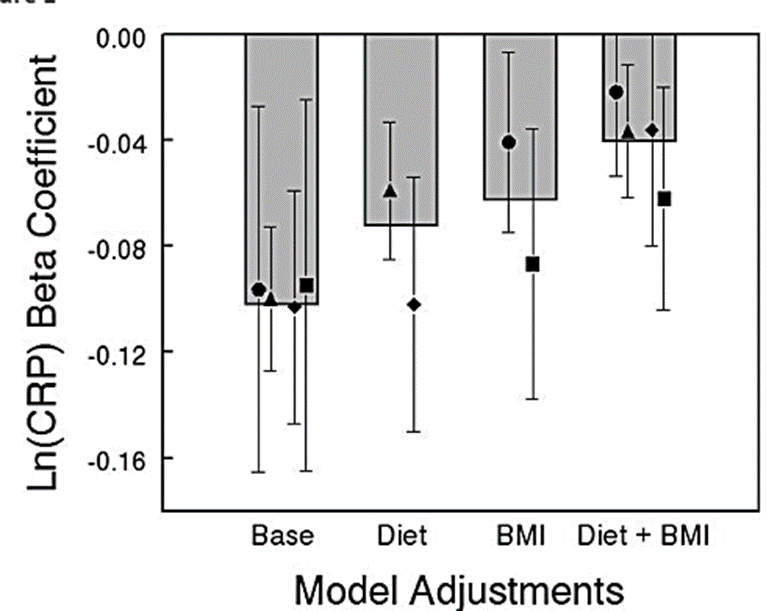
In the figure you see the decrease in CRP per 16 grams of whole grains. In the 'base' model the association is minimally corrected for confounders (what was corrected for: age, sex, race, education, smoking, energy intake, physical activity, and so on) and CRP falls by 10% per 16 grams of whole-grain intake. When you correct the association on top of that for diet-related factors (such as fruit, vegetables, processed grains, fibre, and so on), so the 'diet' model, this falls to 7% per 16 grams of whole-grain intake. If you correct the association for 'base' plus 'BMI' (factors such as BMI, waist circumference, insulin, insulin sensitivity and blood glucose), it falls to about 6%. If you correct the association for everything, only a 4% decrease in CRP remains.
According to van Levefre & Jonnalagaddda this shows precisely through which (biological) mechanisms whole grains cause less inflammation. They also indicate that it is logical that when you correct for other components in the diet the association weakens, since whole grains are not the only food that has an effect on inflammation. But the fact that correcting for factors such as insulin sensitivity makes the association disappear shows that whole grains cause less inflammation by positively influencing insulin sensitivity.
“As previously noted, whole-grain intake is associated with a healthier dietary pattern. Therefore, it is not surprising that after correction of any of a number of dietary covariates, the effect of whole grains is attenuated such that each additional serving is associated with a 7% reduction in CRP concentrations… However, unlike adjustments for dietary covariates that serve to isolate the “true effect” of whole grains on CRP concentrations, adjustments for measures of adiposity in combination with insulin resistance provide information regarding potential mechanisms.”
According to De Punder and Pruimboom this shows precisely why the pro-inflammatory effect of whole grains is not found in observational research: positive indirect effects mask the negative direct effect of whole grains on inflammation.
I will come back to this later. Let us first look at experimental research.
Experimental research on inflammation in humans
Both De Punder & Pruimboom and Lefevre & Jonnalagadda cite almost the same intervention studies. Both say the same about this. Most studies find no association between whole grains and inflammation.
Lefevre & Jonnalagadda: “In contrast to epidemiological studies, in which favorable effects of whole-grain consumption on inflammation are generally observed, data from interventional studies are much less conclusive. Of the five studies that specifically examined the effects of increased whole-grain intake, only one showed a significant favorable effect on CRP concentrations.”
There is, however, one study (source 71) that they do not cite, but De Punder and Pruimboom do. And that is the study in which I went completely astray with my interpretation in my video. So I would now very much like to rectify this. After that I will take a small dive into the other studies.
De Punder & Pruimboom: “To accurately estimate the causal relationship of cereal grain intake and inflammation, intervention trials provide us with better evidence. Wolever et al. [71] showed that a diet with a low glycemic index (containing whole grains) compared to high (containing refined grain products), resulted in sustained reductions in postprandial glucose and CRP levels on the long-term in patients with type 2 diabetes treated with diet alone”
Wolever and his colleagues investigated, in their one-year experiment, the Canadian Trial of Carbohydrates in Diabetes (CDD), the effect of different types of carbohydrate sources, compared with a diet low in carbohydrates, on various important blood values for people with type 2 diabetes, including inflammation (CRP). They divided carbohydrate sources on the basis of the glycaemic index (GI), which indicates how quickly the carbohydrates are absorbed into the blood when they are consumed in isolation.
Here I made a big mistake in my video. I state that this study looked at the effect of processed versus whole grains.
Coen: “Experimental research is needed. The review looked at that too, and here you see, for example, this study with people with type 2 diabetes (wolever et al.) in which they motivated people for a year to swap carbohydrates (as much as possible) with unsaturated fats, processed grains or whole grains (and beans).”
Here I blindly adopt the interpretation of De Punder and Pruimboom. They state that the low glycaemic index group contains whole grains and the high glycaemic index group processed grains. This is NOT true. As a result, because the low glycaemic index group had a decrease in inflammation after a year, I concluded that the study shows that whole grains actually caused a decrease in inflammation. This is also NOT true.
The fact is that both processed grains and whole grains fall in the high glycaemic index group. The low glycaemic index group contains carbohydrate sources such as rye bread, pasta, bulgur and legumes. This is the reason that Levefre & Jonnalagadda do not cite this study in their review. The study has no group that consumes only whole grains. How it is possible that De Punder and Pruimboom adopted this wrongly in their review is a mystery to me, just like why I blindly adopted this from the review.
Rectification of the interpretation of Wolever et al.: Wolever et al. put 160 adults with obesity and type 2 diabetes on three different diets for a year: high glycaemic index (GI) (low in fat), low glycaemic index (GI) (low in fat) and low carbohydrate (high in fat). The participants all received a list of products (key foods) that they had to eat as much of as possible for a year. They received these products free of charge. The participants were guided by a dietitian to make the changes in the diet and to keep them up.
“For subjects randomly assigned to the high-GI diet, the advice focused on following a healthy low-fat diet and avoiding low-GI foods. Subjects randomly assigned to the low-GI diet were given lowfat diet advice along with suggestions about to how to exchange high-GI foods for low-GI foods. Subjects randomly assigned to the low-CHO diet were given advice about how to reduce SFA intake and how to exchange carbohydrate-rich foods for the study key foods high in MUFAs. All subjects were given a list of the key foods for their respective study diet, and the list indicated the number of servings they were to consume each day. Subjects were advised on how to incorporate the key foods into their diet in exchange for others so as to avoid weight gain.”
The high GI group had to eat products such as (breakfast) cereals, white rice, bread, crackers and potatoes. The low GI group had to eat products such as cereals (oatmeal, branbuds), rye bread, spaghetti, bulgur, barley, parboiled rice and legumes (beans). The low carbohydrate group had to mainly replace carbohydrate-rich products with fat-rich products (rapeseed oil, olive oil, nuts, avocado, olives).
Every four weeks participants were seen so that their weight could be weighed, food diaries could be discussed and they received products that they had to eat. In addition, blood was drawn every three months.
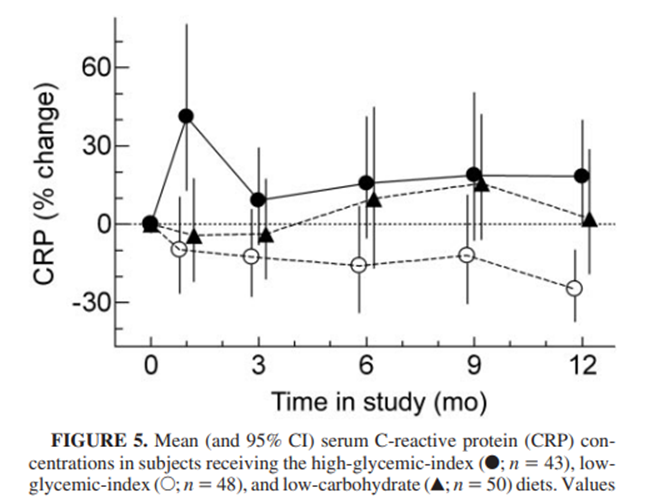
If we look at the results, we see that the low GI group had a significant decrease in inflammation, which was therefore NOT due to whole grains. In the low GI group the mean CRP fell by 20%. In the high GI group it rose by about 20%, while the low carbohydrate group remained stable.
Does this study prove that (whole) grains, and thus WGA, are pro-inflammatory in humans? Well, maybe. In principle the high GI group also had a diet high in WGA (because it consists of many grain products such as bread and crackers). Yes, the low GI group also had grain products that contain WGA, but these are products with lower WGA concentrations (such as spaghetti). This suggests that a diet high in WGA can cause inflammation. The question is only whether you can interpret it that way.
In total the high GI group ate on average 611 kcal of “key foods”. This was the vast majority of the carbohydrates they took in (869 kcal in total). But we have no idea how much of this were WGA-rich products. Lectins are namely not the subject of this study. That is why determining how much WGA people took in is guesswork. In addition, if we look at the low GI group, where we saw a decrease in CRP, we know that they ate 532 kcal of ‘key foods’. However, this group ate on average 918 kcal of carbohydrates. What did the 386 kcal of carbohydrates that did not come from key foods consist of? WGA-rich products? We have no idea. The low carbohydrate group, where CRP remained fairly stable, ate only 323 kcal of key foods. This while they were precisely supposed to choose fat-rich products, which contain many more kcal. The average carbohydrate intake also fell only from 43% of total energy intake to 39%. We have no idea how they filled in those 787 kcal of carbohydrates. WGA-rich products?
Because this study never did specific research into lectins, there is a lot of uncertainty about the intake of WGA-rich products. What we can say is that the people who had to eat a diet rich in products with a low glycaemic index had a decrease in inflammation. It is important to realise that this advice led to a decrease in saturated fat and an increase in fibre intake, which can also have an effect on inflammation.
Is there other experimental evidence for the pro-inflammatory effects of WGA? If I have to believe the two reviews, no. All the other studies namely compare diets that are both rich in grains, but processed versus unprocessed. This means that both groups take in WGA. Really you want a study that specifically compares a diet with WGA and a diet without WGA, with clear insight into how much WGA people take in, so that you can investigate the effect of the WGA.
De Punder and Pruimboom: “Most of the intervention studies mentioned above attempted to increase whole grain intake and were using refined grain diets as controls, thereby making it very difficult to draw any conclusions on the independent role of cereal grains in disease and inflammation.”
Despite that, most experiments show no difference in inflammation when people replace processed grains with whole grains or start eating extra whole grains. Still, that perhaps also says something. Let us take an example: the WHOLEheart study.
De Punder and Pruimboom: “Consistent with these finding are the results of Brownlee et al. [67], who showed that infrequent whole-grain consumers, when increasing whole grain consumption (including whole wheat products), responded with no improvements of the studied biomarkers of cardiovascular health, including insulin sensitivity, plasma lipid profile and markers of inflammation.”
Levefre & Jonnalagadda: “The WHOLEheart study (39) is the largest interventional study conducted to date to examine the effects of whole-grain supplementation. A total of 316 participants, with low habitual consumption of whole-grain foods and BMIs above 25 kg/m2, were randomized to one of three diet groups. The control group was asked to maintain their current dietary habits. The intervention groups were provided with a range of whole-grain products and were instructed to substitute the products for similar items in their habitual diet. One group was instructed to increase their consumption of whole grains to 60g/day for a total of 16 weeks, while a second group was instructed to increase their consumption of whole grains to 60g/day for the first 8 weeks and to 120 g/day for the final 8 weeks. At the end of the 16-week study, no significant differences were observed in the concentrations of either CRP or IL-6.”
The WHOLEheart study aimed to investigate the effect of an increased intake of whole grains, in participants who normally had a low intake of whole grains, on cardiovascular risk factors (including inflammation). In total 316 participants with overweight who ate less than 30 grams of whole grains per day were divided over 16 weeks into three groups: a group that had to keep following their usual diet (control), a group that had to replace processed grains with 60 grams of whole grains, about three slices of whole-grain bread (intervention 1), and a group that had to replace 60 grams during the first 8 weeks and 120 grams of whole grains, about six slices of whole-grain bread, during the last 8 weeks (intervention 2). The participants were given a varied selection of whole grains for free. With the help of questionnaires, at the starting point, week 8 and week 16 it was evaluated how many whole grains participants ate and what their diet looked like. These moments were also used to measure inflammation (measured on the basis of sialic acid, CRP, IL-6, fibrinogen and PAI-1).
If we look at the intake of whole grains in the study, we see a clear increase.
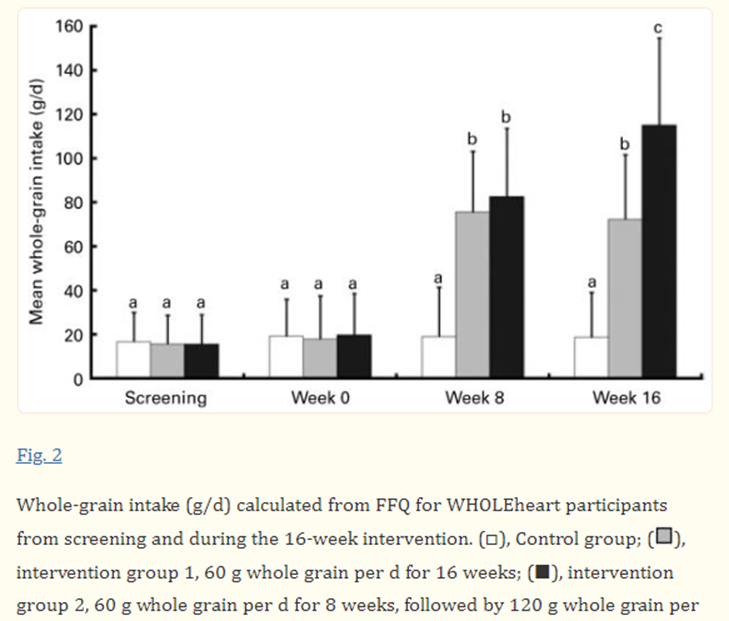
So it seems that the goal of 60 grams in the intervention 1 group and of 60 to 120 grams in the intervention 2 group was achieved. There is, however, a problem. It seems that the intervention groups did not start eating fewer processed grains. They only started eating more whole grains. The intervention 2 group did start eating less fruit. That was not the intention, however. As a result the researchers state that their goal, replacing processed grains with whole grains, was not achieved.
“Results from the dietary analysis suggested that the provision of specific foodstuffs and regular contact and motivation of participants by the research team resulted in good compliance to the prescribed intake levels of whole grain in each group. However, the participants appeared to include the wholegrain foods as a dietary addition as opposed to the dietary substitution that was explicitly requested in participant guidelines and investigator instruction. Therefore, the modality of whole-grain inclusion in the diet desired for the intervention may not have been achieved.”
But this makes the study extra interesting to me, in the context of the WGA question! This means that the intervention groups started eating extra WGA on top of their relatively low-WGA diet. They mainly ate processed grains, which contain less WGA, and on top of that started eating WGA-rich whole grains. If you hold to the hypothesis that WGA is pro-inflammatory, then you expect a rise in inflammation when you start eating extra of it on top of your current diet.
“Table 3 displays mean data for all outcome measures in each group at each time-point. Differences from the control group were very small and not significant (P>0·05) for any of the measured outcomes. Most markers were ameliorated in whole-grain consumers compared with non-whole-grain consumers, but in all cases the 95 % CI spanned zero change... . Approximately 70 % of all IL-6 measurements from the intervention period were below the minimum detectable value (0·8 pg/ml); therefore no statistical analysis was possible for this outcome measure only.”
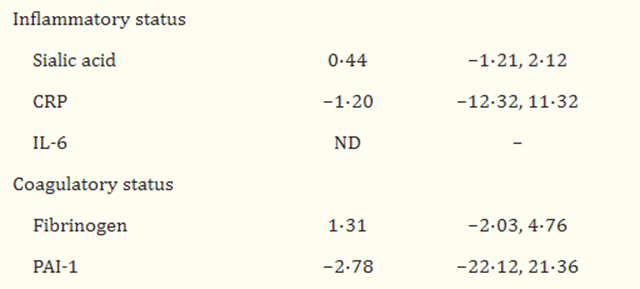
This is not what the researchers found. On none of the inflammation markers was a significant rise or fall seen. IL-6 (important for gut permeability) was even so low that it could not be measured. Another interesting fact is that the researchers included sialic acid in their measurements. When I read that, it occurred to me that this is a marker that De Punder and Pruimboom mention in their review and Joep in his post:
“WGA binds to N-glycolylneuraminic acid (Neu5Ac), the siaalzuur predominantly found in humans [44], allowing it to adhere to cell surfaces like the epithelial layer of the gut….. WGA binding to Neu5Ac of the glycocalyx of human cells (and pathogens expressing Neu5Ac) allows for cell entry and could disturb immune tolerance by evoking a pro-inflammatory immune response (discussed below).”
Sialic acid is a sugar acid that occurs on the surface of our cells and in the cell walls. It acts as a protective layer for epithelial cells in the gut wall. According to De Punder & Pruimboom, WGA can bind to sialic acid and thus cause gut permeability. However, we see no effect of a higher WGA intake on sialic acid in this study, which goes against the hypothesis of De Punder and Pruimboom. But honestly I am not sure whether this should actually be so. The fact that De Punder and Pruimboom say nothing about this and leave this aspect unmentioned I do find worrying. The difficult thing about this is also that sialic acid, just like the earlier sugars I mentioned, is also found in other animal products. So when you eat other animal products together with the grains, WGA could also bind with other sialic acids.
If we look at the body of evidence, consisting of more than 30 experimental studies, on the effect of whole grains compared with processed grains on inflammation, we see that most studies show no effect or even a lowering effect. These studies include both healthy and unhealthy populations (such as people with overweight, the metabolic syndrome, diabetes, prostate cancer, and so on), with a duration varying from 6 to 24 weeks. To date there is not a single study that has found a pro-inflammatory effect.
“This review of 31 RCTs found that consumption of whole grain foods had a moderate effect on reducing inflammatory markers, with five of the possible 15 crossover studies, and seven of 16 parallel studies demonstrating statistically significant changes. Within the population groups studied, the reduction in markers was most often observed in obese and overweight populations, and among those with pre-existing conditions, compared with studies of healthy populations, although there were only two studies in this category.”
Conclusion whole grains and inflammation
Let me state up front that De Punder & Pruimboom have no evidence with humans for their hypothesis. The only evidence they have is research in laboratories with cells and mice. This has shown that a high amount of WGA in isolation can cause inflammation and gut permeability. If we look at observational and experimental research, we see no evidence that whole grains are pro-inflammatory. But the explanation of De Punder and Pruimboom for this is that the observational studies are confounded by lifestyle factors and that the experimental studies are not adequate, because they set whole grains against processed grains. This would cause the pro-inflammatory effect of whole grains, and thus WGA, to be missed.
“Until now, human epidemiological and intervention studies investigating the health effects of whole grain intake were confounded by other dietary and lifestyle factors and, therefore, well-designed intervention studies investigating the effects of cereal grains and their individual components on intestinal permeability and inflammation are warranted.”
I both agree and disagree with this. First, it may indeed be that the pro-inflammatory effect of WGA is not found in observational research because of confounding factors. A fairly general marker is often used to measure inflammation: CRP. CRP is influenced by so many factors that it is possible that WGA does cause inflammation, but that this is overlooked because whole grains reduce inflammation through other factors (such as improving insulin sensitivity), so that at the bottom line you see no effect or a positive effect. Second, intervention studies are indeed often carried out in which whole grains are compared with processed grains. This can make it harder to draw firm conclusions about grains and inflammation. With this point, however, I do not entirely agree. Whole grains (29 – 50 µg WGA per gram) contain much more WGA than processed grains (4.2 µg WGA per gram). If the hypothesis is correct that WGA, and with it whole grains, are pro-inflammatory, you would expect these studies to show a rise in inflammation. This is especially relevant if no improvement is observed in those same studies in, for example, insulin sensitivity, as in the WHOLEheart study.
“Most of the intervention studies mentioned above attempted to increase whole grain intake and were using refined grain diets as controls, thereby making it very difficult to draw any conclusions on the independent role of cereal grains in disease and inflammation.”
Still, I am open to the suggestion that in experimental research too the pro-inflammatory effect of WGA, and thus of whole grains, is missed because of confounding factors that cause noise when you measure general markers of inflammation, such as CRP. This scenario suggests that whole grains can have both anti-inflammatory and pro-inflammatory effects.
“It should be noted that whole grains contain phytochemicals, like polyphenols, that can exert anti-inflammatory effects which could possibly offset any potentially pro-inflammatory effects of gluten and lectins.”
So it may be that WGA causes damage locally in the gut, while other substances in other places actually have anti-inflammatory effects. This can result in a net neutral or even positive effect on general inflammation markers in the blood.
"Nevertheless, because these studies are confounded by the presence or absence of other dietary substances and by differences in energy and macronutrient intake, factors that could all affect markers of inflammation, it is difficult to make a concise statement on the impact of cereal grains on these health outcomes.”
It struck me that in no observational or experimental study is the possible effect of lectins specifically discussed. They are also never taken as the focus of research. De Punder and Pruimboom therefore only refer to studies that actually just did not investigate what they want to prove. We know that WGA, certainly in isolation and at high concentrations, can cause increased gut permeability and inflammation in a laboratory setting. However, when we look at studies with humans, everything becomes much more complicated. There are so many intermediate steps between mechanistic research and the reality of people in real life that can influence the effect of WGA. Does WGA bind to other substances so that it no longer has a negative effect? Does it only have an effect in people whose guts are already affected? What else does a person eat? Without solid experimental research that really looks specifically at this question, I do not dare to take a firm position.
And in the end De Punder and Pruimboom do not do so either, even though Joep does on the basis of their review.
“Until now, human epidemiological and intervention studies investigating the health effects of whole grain intake were confounded by other dietary and lifestyle factors and, therefore, well-designed intervention studies investigating the effects of cereal grains and their individual components on intestinal permeability and inflammation are warranted.”
Research on whole grains and gut health
The review is fairly old and that is why I decided to dive deeper to see whether there are newer studies that examined the effect of whole grains on gut permeability and specific markers of gut inflammation in humans. After a thorough screening of all available literature, in which I applied various search methods, such as search terms in PubMed, AI and the snowball method, I am fairly sure that I have not overlooked a relevant study.
Let us start with an important question: how do you measure gut permeability? Gut permeability is an indicator of the health of the gut wall. Over the years various instruments have been developed that measure gut permeability indirectly. This is done indirectly because it is not possible to remove a piece of gut wall from humans to directly measure how healthy the gut wall is. That is why methods have been developed that can give an indication of gut permeability on the basis of urine and blood samples. One of the most widely used indirect measurements is the lactulose/mannitol ratio.
The lactulose/mannitol ratio is a test to assess gut permeability. Lactulose and mannitol are sugars that are taken orally. Lactulose is a large molecule that normally cannot pass through the gut wall, while mannitol is a small molecule that passes easily. By measuring the levels of these two sugars in urine after intake, their ratio can be determined. An increased ratio points to increased gut permeability.
The lactulose/mannitol ratio is, however, time-consuming because people have to collect their urine. That is why various blood values have been looked at. Two blood values that correlate fairly well with the lactulose/mannitol ratio are zonulin and LBP.
Zonulin is a protein that regulates the permeability of the gut wall. An increase in zonulin can indicate increased intestinal permeability, which can be associated with various gastrointestinal conditions, including inflammatory bowel diseases.
Lipopolysaccharide Binding Protein (LBP) binds to lipopolysaccharides (LPS), molecules in the outer membrane of gram-negative bacteria. Increased levels of LBP can indicate an increase of LPS in the bloodstream, which can point to intestinal dysbiosis or bacterial overgrowth.
Looking for research that examined the link between whole grains and these important markers of gut permeability, I found the following studies:
Let us start with the weakest evidence I could find. The study by Mokkala et al. examined 100 pregnant women with overweight. The reason pregnant women were looked at is that research has shown that during pregnancy women have a higher gut permeability. It is, however, not yet entirely clear why. Theories suggest that this can help let through more nutrients for the mother and the baby, or that it is due to changes in the mother's immune system that favour protecting the baby.
The study is cross-sectional, which means that they took measurements in the participants at one point in time in order to then make comparisons between certain groups. Here they did that between participants with low and high zonulin blood values, and thus gut permeability. They looked at the differences between these pregnant women in terms of diet by taking a 3-day food diary.
Now I have to say that little is known about the method of the food diary. It has not been validated in the target group, so it is unclear how reliable it is. You can also wonder how representative those three days are of the participants' whole diet. On top of that, cross-sectional research is the weakest observational evidence, which together means that this is not very strong evidence. Finally, with this study I break one of my own rules: the questions do not match (step 1 in the sciencecheck process). For example, the study never looked specifically at whole grains. They only report the intake of macronutrient groups. So once again, this is not strong evidence, but I did want to cite it because it gives a suggestion that is possibly informative. Fortunately this is not the only study I found. Let us look at the results
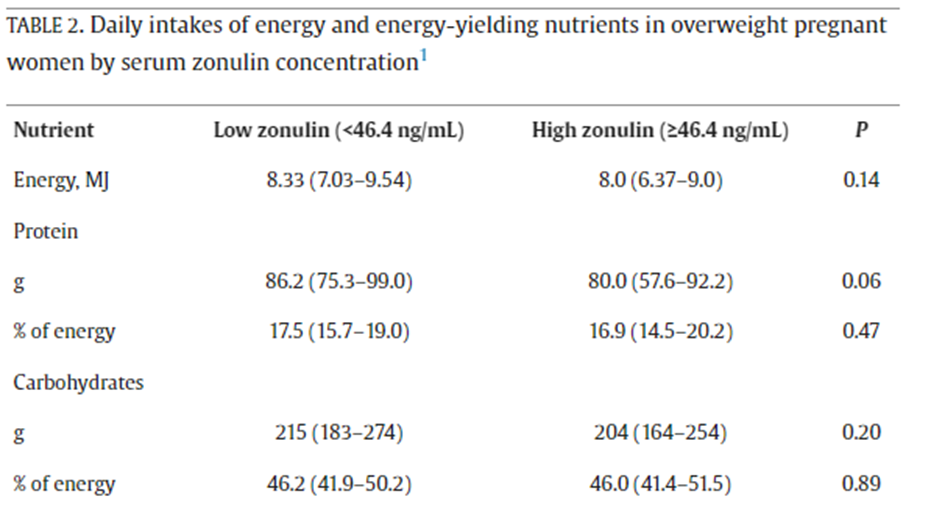

When we talk about grains, we are talking about carbohydrates and fibre. When we then look at the difference between the groups at macronutrient level, we see that the only difference between the two groups is the intake of fibre. The participants with a low zonulin value ate on average 22.2 grams of fibre, while the participants with a high zonulin value consumed 18.2 grams of fibre. The carbohydrate intake was almost equal.
Now I cannot say directly that this is because of choosing whole grains. However, there is a good chance that this difference is caused by choosing whole grains more often instead of processed grains. If the hypothesis that whole grains, and thus WGA, cause gut permeability is true, then you would expect that people with a higher fibre intake (and thus whole-grain intake) have a higher zonulin level. In this sample that at least does not seem to be the case.
Let us quickly move on to stronger evidence.
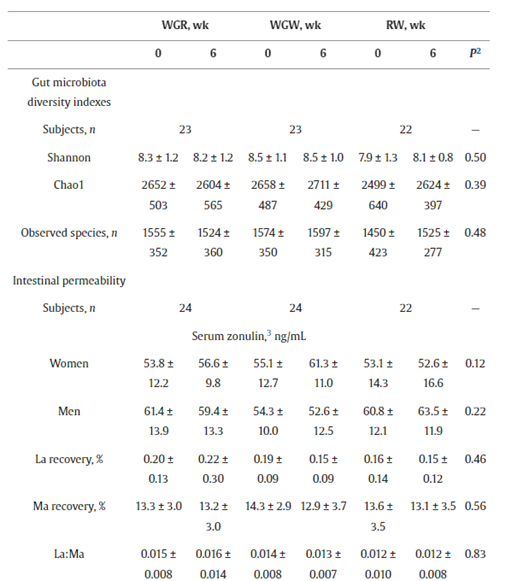
Stine et al. carried out an experimental study (RCT) for six weeks in which they investigated the effect of whole grains compared with processed grains on gut permeability. For this purpose 70 healthy adults, with a mean age of 51 years and a BMI of 28, were randomly divided into three groups: whole grains, whole-grain rye bread and processed grains group. The groups received different grain products, including breakfast cereals, pasta, crackers and bread, of which they were allowed to consume as much as they wanted, with the advice to replace all the grain products they normally ate with these.
The researchers checked the grain intake by means of food diaries and alkylresorcinols. Alkylresorcinols are fats that only occur in whole grains. By measuring these in the blood, the researchers got an indication of the consumption of whole grains. They then assessed the gut permeability of the groups at the start and after six weeks. This was measured on the basis of the lactulose/mannitol (lac/man) ratio and zonulin concentrations in the blood.
If we look at the results, we see that all groups consumed about the same amount of study products, namely about 230 grams per day. This resulted in an intake of whole grains of 145 grams in the whole-grain group, which was significantly more than in the processed grains group (5.4 grams per day). This was confirmed by the total alkylresorcinol concentrations. An important point is that there was no significant weight loss in the whole-grain group, since weight loss can also lead to a lower gut permeability.
When investigating gut permeability, it turned out that focusing on whole grains instead of processed grains did not lead to more or less gut permeability. Both the la/ma ratio and zonulin values showed no significant differences.
“In accordance, none of the intestinal permeability parameters correlated with plasma AR or whole-grain intake.”
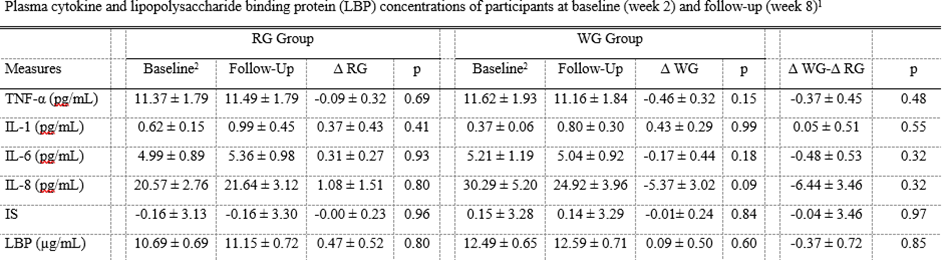
Vanegas et al. carried out an experimental study (RCT) for six weeks that looked at the effect of replacing whole grains with processed grains on gut health. LBP was chosen as the biomarker for gut permeability, as stated earlier, because of its specificity for gut permeability.
For this study 81 men and women, with a mean age of 55 years and a BMI of 26, were first put on a "Run-in" diet. This diet was western, with a high consumption of saturated fat, red meat, sugar, processed food, and a low consumption of vegetables/fruit, whole grains and fish/shellfish. They were then switched for six weeks to a diet that was high in either whole grains or processed grains. All food was provided to the participants, who received the same amounts of vegetables, fruit and protein sources.
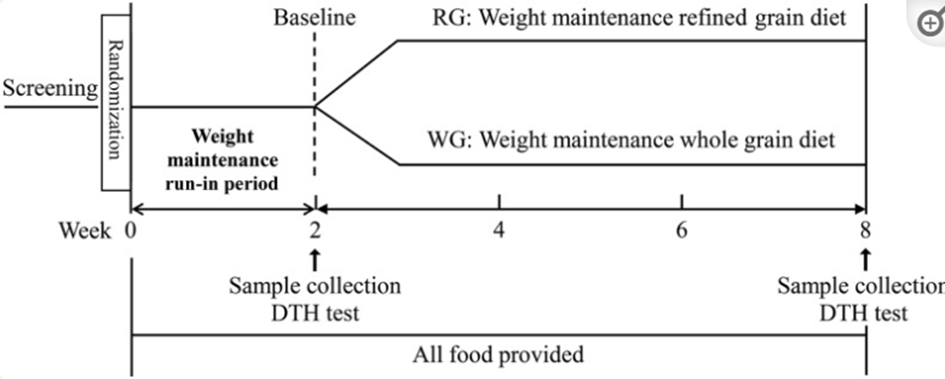
To check whether participants followed the prescribed diet, alkylresorcinol was measured. Blood samples were taken at the start (after two weeks) and at the end of the last week of the study.
When analysing the results it turned out that it had succeeded in keeping the participants at a stable weight. Moreover, the alkylresorcinol measurements showed a clear difference between the two groups, which confirmed that the intervention was effective. However, no significant effect was observed on the LBP concentrations in either group. The LBP levels stayed fairly stable and no difference was observed between the groups.
“WG intake had no effect on plasma concentrations of cytokines or LBP.”
And then finally! The last study I could find.
Kopf et al. carried out an experimental study (RCT) for six weeks in which they investigated the effect of whole grains and vegetables and fruit compared with processed grains on gut health. They evaluated various inflammation factors, including LBP.
For this study 49 adults with a mean age of 30 years and a BMI of 30, who consumed few whole grains and vegetables and fruit (at most 1 serving per day), were randomly divided into three groups: processed grains, whole grains or vegetables and fruit group. The participants were instructed to eat at least three servings per day of the relevant product groups. Every week they had to keep food diaries and hand these in during their weekly visit to the research institute, so that it could be checked whether the participants stuck to the instructions. Blood samples were taken at the start of the study and in week six.
Analysis of the mean consumption of the mentioned product groups showed a clear effect of the interventions.
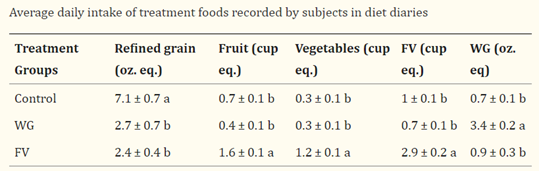
Participants in the control (processed grains) group consumed on average about seven servings of processed grains and at most one serving of fruit, vegetables and whole grains. Participants in the whole-grain group consumed more than three servings of whole grains, while the vegetable and fruit group consumed almost 3 servings per day of vegetables and fruit together.
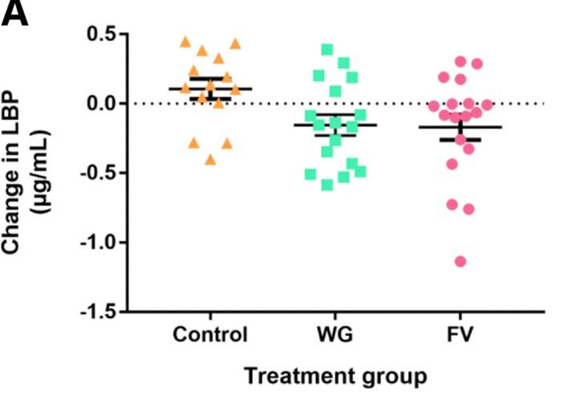
When we then look at LBP, as an indicator of gut permeability, we see that in both the whole-grain group and the vegetable and fruit group a significant decrease was observed. In the processed grains group it seems that most people had a (small) increase in LBP, but this was not significant.
Conclusion and caveats experimental research on whole grains and gut permeability
There is no (experimental) evidence that whole grains, and thus WGA, cause gut permeability. After thorough searching, these are all the studies I could find that looked at the intake of whole grains and gut permeability. This was often measured in different ways, but it is in any case a much better indication than looking at general inflammation markers such as CRP. If whole grains caused inflammation and gut permeability, you would expect to see that in these studies, but it seems that there is either no effect or even a positive effect. Less inflammation and gut permeability is in fact observed when you replace or compare products with a low WGA content, such as processed grains, with products with a high WGA content, such as whole grains. Especially in the experimental research there are various positive aspects: a good measurement of gut permeability (lac/mac ratio, Stine et al.), food that was provided in full (Vanegas et al.), or the use of biomarkers to measure whole grains and research among different populations in which gut permeability is often increased (for example people with obesity) or in fact not (healthy adults).
There are, however, also some caveats that I want to mention. For example, the studies are often short, for example six weeks. The negative effect could occur only after a longer period. However, we see that in some studies gut permeability improved, so you could also speculate that after a longer time gut permeability improves more and more. There are simply no indications that whole grains have a negative effect. In addition, no study has looked at a group that eats no grains at all. We did see a group that had to mainly eat vegetables and fruit, but they also ate processed grains. The effect you see is therefore always compared with people who also eat grains. Processed grains are, however, much lower in lectins. If the hypothesis were correct that WGA causes grains to cause inflammation and gut permeability, you would just as well expect an effect when people start eating far more whole grains compared with processed grains. We do not see this anywhere, however. The health status at the start could also be important, and then more specifically: the gut flora. For example, the study by Kopf et al. showed that especially the composition of the gut flora at the start of the study was associated with a decrease in LBP in the intervention groups.
“The significant decrease in LBP during the interventions suggested a link between the changes in inflammatory state and the gut microbiota. However, save for an increase in α-diversity in the FV group, we found no significant changes in gut microbiota composition by treatment group during the intervention. Rather, found that gut microbiota composition at baseline was more related to changes in LBP than changes in the gut microbiota during the intervention.”
A possible explanation for this is that the fatty acids that bacteria make from fibre can protect the gut wall, but for this you do need the right bacteria. So you could also say that the longer someone eats whole grains, the greater the protective effect of this becomes (because the right bacteria start to multiply). (source: Leaky Gut: Effect of Dietary Fiber and Fats on Microbiome and Intestinal Barrier)
Finally, I want to mention the funding of the various studies. All experimental studies had, through various authors, a link with the agricultural sector or the food industry. It is important to mention that it was never all authors, that there were always multiple funders, and that I found nothing striking in the study or in the registration of the study (which they all had). But please let me know if you do see something striking. The only influence of the funding that I see as a result is in which questions are asked. Possibly a deliberate choice is made not to include a control group that eats no grains in the studies, which is still a gap in my argumentation. Hopefully such a study will be carried out some day.
Summary / Final conclusion
Let me start with my rectification. The research with animals shows, as I said in the Instagram video, that WGA (the lectin in (whole) grains) can cause inflammation in isolation and in high amounts. However, WGA occurs in a complex structure of the grain germ and within the whole diet, so that it never comes in isolation and, in addition, in much lower amounts. Studies with cells also show that when WGA binds to certain sugars, this can cause the inflammatory reaction to decrease or not occur. Still, this could also be a route through which WGA can bind to our gut wall, so that it can possibly cause damage. This shows the complexity of food and our health. That is why we have to look at studies with humans for a conclusive answer. What happens with (whole) grains, WGA, inflammation, and our gut wall in research with humans in real life?
The experimental research that I highlighted in the video does show that when people follow a diet with a low glycaemic index, and therefore largely avoid grains in their diet, the inflammation values in the blood go down. My earlier conclusion, based on that study, that whole grains (compared with processed grains) actually caused less inflammation was therefore incorrect. Whole grains are also part of the high glycaemic index group in the study. De Punder and Pruimboom interpreted this study wrongly, and I adopted that interpretation wrongly. The problem with this study is only that they never looked at lectins, and you cannot tell from the study how many whole grains and WGA the participants took in. If we look at all the other research on whole grains and inflammation, we see consistently in observational research that people with a higher intake of whole grains have lower inflammation values in the blood. Possibly this is due to other lifestyle-related factors that these people have, such as better insulin sensitivity, less belly fat, and better blood glucose. But according to scientists who did these studies, these are precisely factors that whole grains influence positively, so that whole grains indirectly cause lower inflammation. De Punder and Pruimboom, on the other hand, are convinced that this masks the negative effect of whole grains on the gut wall and inflammation. Which is a fair point, since very general inflammation values are often studied, which are influenced by very many factors. This means that whole grains can cause inflammation locally in the gut, but because of other indirect effects can still reduce inflammation at the bottom line. Still, if we look at experimental research, we see that even when people start eating a lot of extra whole grains on top of their current intake of processed grains, nothing happens to inflammation values. We also see in experimental research, in the short term, consistently no effect on inflammation. This is the crux of the inflammation story.
Something I have increasingly come to realise: Terms such as “inflammation”, “anti-inflammatory” and “pro-inflammatory” are empty words. This is such a complex process, with causes and consequences, with so many factors that influence it, that labelling one substance or food as anti-inflammatory or pro-inflammatory is actually meaningless. It is an oversimplification of reality.
Take this subject as an example. If WGA causes damage to the gut wall and thereby inflammation, but meanwhile in that same grain germ you have phytochemicals that reduce inflammation in other places, then both things influence a widely measured blood marker for inflammation: CRP. If someone starts eating a lot of whole grains and sees a decrease in CRP, are they better off? The damage to the gut wall may still be there. Inflammation namely has a function. If you do nothing about the cause of the inflammation, what difference does a decrease in CRP make? In this respect, if you ask me, food can be anti-inflammatory and pro-inflammatory at the same time.
That is why I wanted to see experimental research aimed at gut health. I wanted to see evidence that there is damage to the gut wall from eating whole grains. This did not exist yet at the time that De Punder and Pruimboom wrote the review, but absence of evidence is not evidence of absence (or presence). So I went looking.
As you could see, all the studies I found show no negative effect on gut permeability from the intake of whole grains. So it seems that WGA in the context of the whole grain does not have the same effect on gut cells as when you expose cells or animals to high amounts of WGA in isolation. This is also one reason that nutrition scientists have said goodbye to reductionism in recent years. Focusing too much on individual substances, while food is so much more, causes you to miss the whole picture.
There is no evidence that whole grains are pro-inflammatory or increase gut permeability. The opposite is even true; there is evidence that whole grains reduce inflammation and decrease gut permeability. As De Punder and Pruimboom themselves also state, the grain germ contains so many more substances than WGA.
“It should be noted that whole grains contain phytochemicals, like polyphenols, that can exert anti-inflammatory effects which could possibly offset any potentially pro-inflammatory effects of gluten and lectins [73].”
And the source they cite for this also shows this very nicely.
“Whole-grain cereals, particularly wheat and/or wheat bran and germ, are also a source of n-3 fatty acids (especially α-linolenic acid), sulfur compounds (reduced glutathione (GSH), oxidised glutathione (GSSG), methionine and cystine), oligosaccharides (fructans, raffinose and stachyose), P, Ca, Na, K, B vitamins, flavonoids (for example, anthocyanins and isoflavonoids), alkylresorcinolen, betaine, choline, phytosterols, inositols, policosanol and melatonin.”
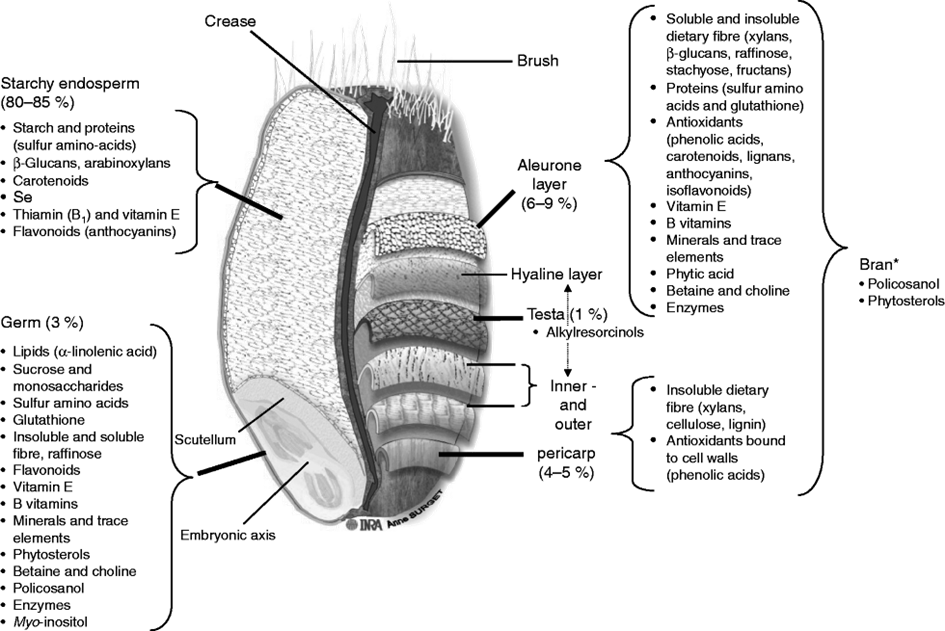
It looks as if the possibly harmful effect of lectins is absent either because of the low amounts (certainly after heating in water) in the products we eat or because of the complexity of substances that are in grains. In any case it comes down to this: avoiding whole grains is unjustified. Because if we look in practice (yes, science is also practice), we see no pro-inflammatory effects or damage to the gut wall in people who eat grains.
What did you think of it? Let me know in the form of a comment or an email: [email protected]
Did you come across a claim on the internet or social media and are you curious about an assessment of the support for it? Let me know and I will dive into it!
Do you want to support me and my nutrition science adventure? Share my articles or the podcast on your socials!
Everything you read on this website is my opinion based on knowledge and experience. Chances are that I sometimes overlook something, or that something can be done better. I would love to hear it! We do science together.
Follow me on:
Instagram: https://www.instagram.com/coenfirmation_bias/
Linkedin: https://www.linkedin.com/in/coen-dros/