
60 min read
The link between sprayed food and Parkinson's
It was one of the better social media discussions of 2023: Dokter Diederik claimed that sprayed food is associated with Parkinson's. Diederik was a guest at Sportpoeder, a large fitness channel on social media, where he mostly came to talk about healthy eating. A reel that was made from that was about Diederik pointing to the sharp rise in Parkinson's and saying that this must be due to environmental factors, including vegetables sprayed with pesticide. The reel stirred up quite a bit of dust, and I got the reel in my inbox with the question: fancy a dive? I actually wanted to let it go because of lack of time, but an episode of Zembla with a heart-breaking story about farmers and Parkinson's disease caught my attention. I wanted to know more about this: do pesticides cause Parkinson's? And glyphosate? And what about eating sprayed vegetables and fruit? Should I rather choose organic? There was only one thing for it: ask for a source and put on my diving goggles. What is Dokter Diederik's position? And does his source tell the same story?

Clarification of Diederik's Position
Let me start this blog with a clarification of Diederik's position. That way it is clear which claim the source actually has to support. In the reel it was clearly stated that there is an (epidemiological) association between sprayed food, such as vegetables and fruit, and Parkinson's disease. That is why choosing organic would be a sensible choice. However, after people asked him about it, it turned out that the reel had taken this out of context. The actual position is this:
“There is not yet a direct link between the sprayed vegetables and Parkinson's disease. But if the studies do show a clear association between exposure to these pesticides and herbicides and Parkinson's disease, and these pesticides are on sprayed vegetables and fruit, and consequently also in the groundwater, then you have been warned. Risks are of course greater with direct exposure, but with only people working in the agricultural sector you do not explain the rising epidemiological trend. Neurologists at the Radboud MC, among them Parkinson's expert Bas Bloem, have been making this link with ‘environmental junk’ for some time now and warn, just like me. So I would certainly want to avoid these substances as much as possible….. Vegetables are fantastic and a recommendation for everyone, but you have ‘good’ and you have ‘even better’. ” (translated from Dutch)
The position and the reel refer to the work of Bas Bloem, about which the NOS headlined in September 2023: “More and more people with Parkinson's, also people in their twenties and thirties.”
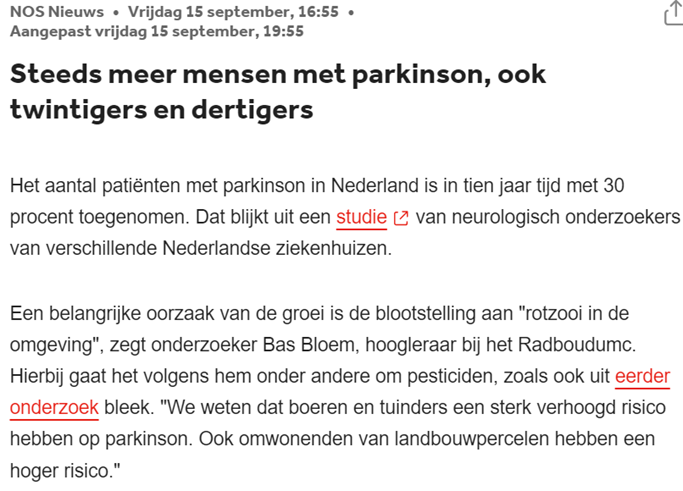
This is of course an incredibly worrying signal. Something I had no idea about yet. So even though there is no direct link between eating vegetables and Parkinson's (I cite evidence for this later in the blog), one question stuck with me: should I rather eat organic?
My bias / disclaimer
Let me say up front that I have never become very convinced of the health benefits of eating organic. It is also not something that is clearly mentioned in dietitian training (in my time, at least). But I also want to state, as a disclaimer, that I am not a toxicologist. Despite having some experience with the system around getting chemicals onto the market, through my tap water blog, it is difficult for me to draw hard conclusions about the effect of chemicals on health. This is not something for a nutrition scientist. So I will mainly focus on outlining the situation, so that you too have a neutral picture of the literature on pesticides and Parkinson's.
After I shared the discussion in my story on Instagram, I got an incredible number of questions, and above all comments and sources about the link between pesticides and Parkinson's. Among them a heart-breaking episode of Zembla, in which several farmers with Parkinson's have their say. This too made the news a number of years ago: “Agricultural poison can increase the risk of Parkinson's.”
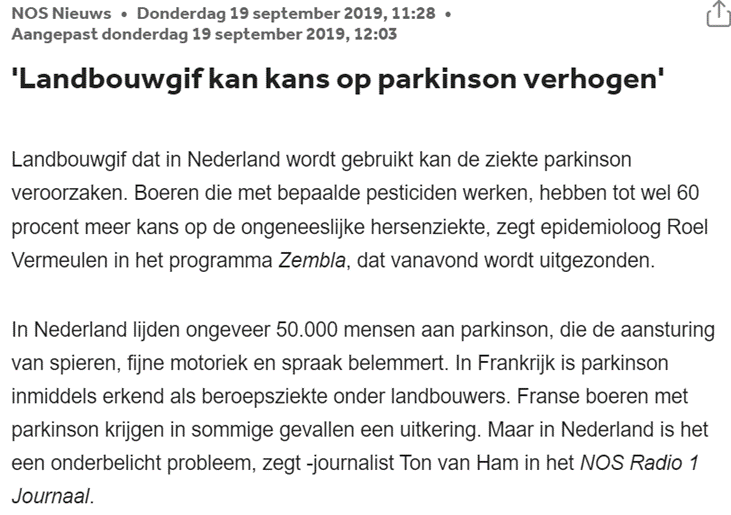
Despite all this, the European Union has nevertheless approved the use of the controversial pesticide glyphosate again, because countries such as the Netherlands and France did not vote against and the EFSA/ECHA declared the substance safe.


All in all a bizarre story if you ask me. Something I wanted to know more about. What is the evidence for the association between the use of pesticides and Parkinson's? And what does the evidence show about the intake of vegetables and the same disease? I looked it up for you. So put on your diving goggles.
Association between Pesticide Use and Parkinson's Disease
Let us start with the association between the use of, and (work-related) exposure to, pesticides and Parkinson's disease. As evidence for this relationship I got the following source from Dokter Diederik:
The study consists of two parts. 1. An observational study (case-control study) that looks at agricultural areas where pesticides are used and how often Parkinson's disease occurs there compared with areas without agricultural land. 2. A laboratory study in which they expose dopamine brain neurons to certain pesticides.
The American researchers used data from the California Pesticide Use Reporting (PUR) programme. This programme has existed for some 50 years and is based on legislation in California (USA) that requires companies and farmers to keep track of all details about the use of pesticides. The researchers linked this database to a case-control study that had been carried out in California. This allowed them to compare pesticide use in agriculture with the addresses of people who lived nearby, to see whether areas with more pesticide use also have more Parkinson's.
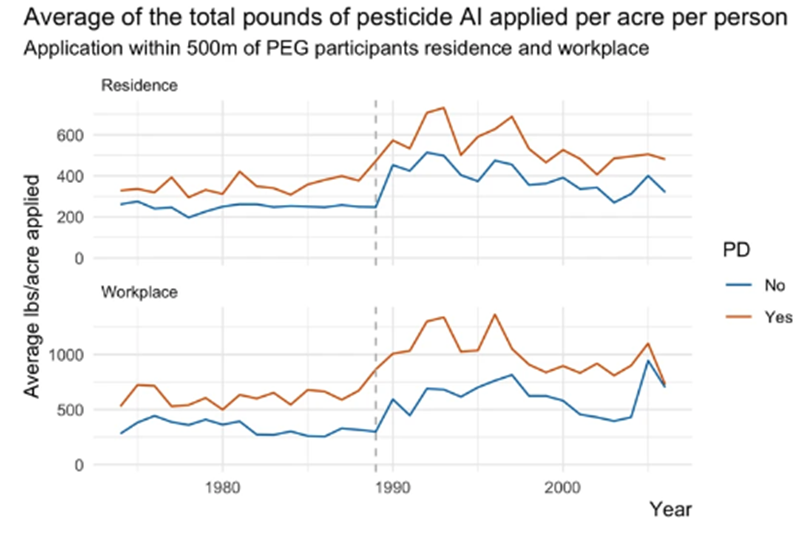
This brings out a fairly clear pattern: the greater the pesticide use, the greater the number of people with Parkinson's disease in that area (on average).
“On average, the PD patients in the study both lived and worked near commercial agricultural facilities applying more total pounds of pesticide per acre than controls (average annual mean difference: 133 more pounds of pesticide applied per acre per year near the patients’ residences versus controls’ and 343 more pounds near workplaces). Of the 722 different active ingredients applied within the study participants’ buffer zone, PD patients and controls on average lived near the application of 50 (SD = 44.4) and 45 (SD = 40.9) different pesticides, respectively, during the entire exposure window. The mean number near participants’ workplace was 50 (SD = 45.4) for patients and 38 (SD = 39.2) for controls.”
Of the 1,355 unique pesticides that were used according to the database, 68 were associated with Parkinson's disease. To give this association more evidential weight, the researchers looked at which individual pesticides had the strongest association with Parkinson's disease. They then exposed brain neurons from a patient with Parkinson's to individual pesticides or to a combination of different pesticides. Of the 39 pesticides that showed the strongest association with Parkinson's, 10 types of pesticides turned out to have neurotoxic effects, which means that they led to the death of the (dopamine) brain neurons. These were: propargite, copper sulfate (basic and pentahydrate), dicofol, folpet, naled, endothall, trifluralin, endosulfan, and diquat dibromide. These brain neurons produce dopamine, and Parkinson's arises because the brain neurons that make dopamine die off. According to the authors, the 29 other pesticides have other plausible biological mechanisms that could lead to Parkinson's.
Support for Dokter Diederik's Claim
To be honest, the biology and laboratory research part is beyond me. I will have to assume that these scientists know what they are doing. It is a very important study though, as will turn out later in this blog. A major criticism of the current approval system is that no research is done into the right outcome measure: dopamine brain neurons. This study did do that and clearly shows that there are several pesticides that cause the death of these neurons in humans. This makes this study strong support for the relationship between pesticides and Parkinson's, and thereby for Dokter Diederik's claim. It shows an association with a plausible biological mechanism, in other words a possible causal link. However, one case-case control study is never enough.
On top of that, it also immediately exposes a big problem. Some of the ten pesticides that seem to have neurotoxic effects in this study have long been banned in Europe: dicofol, propargite, trifluraline, endosulfan and diquat. Some of these substances were used for decades, since the 50/60s, and were eventually banned when they turned out to be toxic. That makes the concept of 'pesticide' very hard to study, since exposure has changed over the years. So yes, this source supports Dokter Diederik's claim, but if we want a good discussion about pesticides we will have to be more specific and more nuanced.
More evidence for the association
This study is not the only evidence for the association between exposure to pesticides and Parkinson's. The NOS article that I showed earlier is based on a publication by Bas Bloem, professor of neurological movement disorders at the Radboudumc in Nijmegen and Parkinson's expert, in the Nederlands Tijdschrift voor Geneeskunde (Dutch Journal of Medicine).
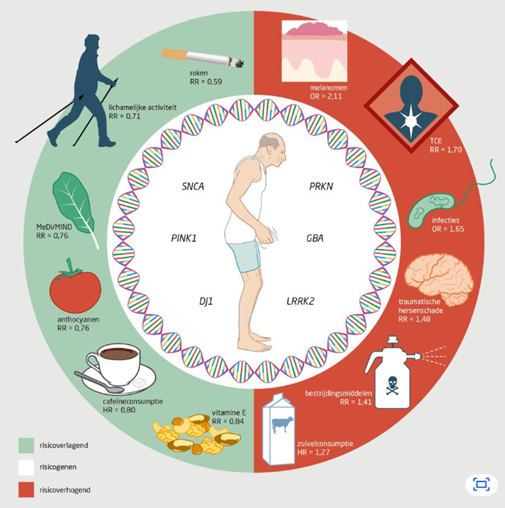
Source:Bram et al. Risicofactoren voor de ziekte van Parkinson. (2023)
It states there that increased work-related exposure to pesticides leads to a 41% higher risk of Parkinson's disease.
“In addition, non-genetic risk factors play a considerable role in the development of Parkinson's disease. Recent meta-analyses show an increased relative risk (RR) in people with increased work-related exposure to pesticides (RR: 1.41; 95% CI: 1.20-1.65).” (translated from Dutch)
However, it is also stated there that it is not yet clear whether there is a causal link.
“The reported effects of the risk factors above are possibly related to each other, in other words: it is therefore not clear whether a causal link exists between the individual factors and Parkinson's disease.” (translated from Dutch)
Source:Chambers-richards et al. Exposure to toxic occupations and their association with Parkinson’s disease: a systematic review with meta-analysis. (2021)
They refer to a systematic review with meta-analysis that looked at occupations working with toxic substances, including pesticides, and Parkinson's disease. It concerns longitudinal observational studies, which means that people were followed for many years without an intervention taking place.
(It is somewhat strange to write this part, since I only received this study later. It was behind a paywall. I discuss a number of the studies in this meta-analysis later in this blog.)
The researchers found twelve studies on the link between work-related pesticide use and Parkinson's. Six of the twelve studies found a significant association. The people with work-related pesticide use had a (pooled) 41% greater chance of Parkinson's than people without work-related pesticide use. There was, however, moderate heterogeneity between the studies, which indicates how different studies are from each other. This is usually due to different ways of measuring exposure (pesticide) and outcome (Parkinson's), but also differences in population etc. I will come back to this later.
The quality of the studies was as follows: Brouwers et al (7), Park et al (6), Ascherio et al. (5), Baldi et al. (8), Beard et al. (5), Engel et al. (5), Feldman et al. (6), Kamel et al. (6), Kenborg et al. (5), Petrovich et al. (5), Tuchsen et al. (6), Wastensson et al. (5).
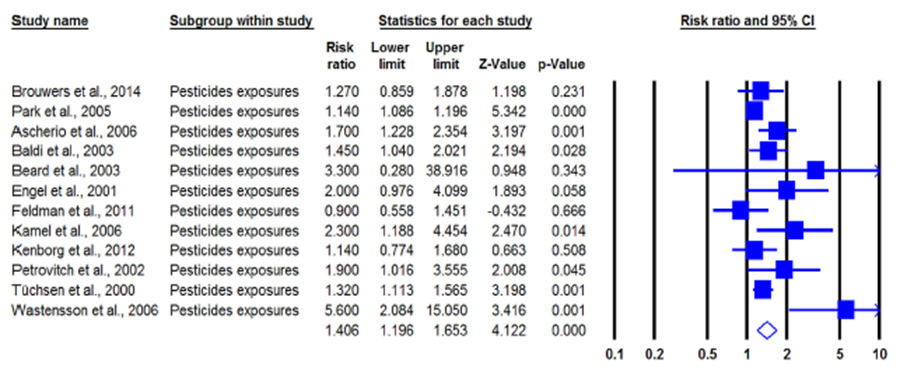
Zero to three points is low quality, four to six is moderate quality and seven and higher is high quality. This means that only Brouwers et al and Baldi et al. are of high quality. I would therefore like to highlight these.
Source: Baldi et al. Neurodegenerative diseases and exposure to pesticides in the elderly. (2003)
This study was part of the PAQUID cohort. The PAQUID followed almost four thousand elderly people (men/women, 65+) in France for five years. The aim was to investigate the brain health of the elderly by having a psychologist interview them after one, three and five years. Establishing Parkinson's was part of this. (After ten years the participants were only asked by the researchers whether he/she has Parkinson's.) At the last measurement (five years) the elderly filled in a questionnaire about which occupation they used to have.
Oops: at first I had written down that Baldi et al. had found no significant association at all. This is not true.
Occupations were classified by “exposure level” to pesticide. This ranged from, for example, technician in the agricultural sector (0.5 points) to grape grower (3 points). This level was determined by six experts. The study also looked at where people lived and whether that was near land where pesticides were used.
In the end the results show that there was only a significant association between work-related exposure to pesticide and Parkinson's in men. They had a relative risk of 5.6. However, when work-related exposure to pesticide was categorised into quartiles based on time (so how long people had done the occupation), they found that only men in the third quartile had a significantly higher risk of Parkinson's. But so only the men. I cannot find anywhere what exactly those quartiles mean, though. In addition, there were only 24 people in total who got Parkinson's; if you divide this into quartiles as well, you get very small groups. You can wonder how well this analysis still works.
Now this makes it very complicated, because this is not the result that the meta-analysis included. There it says a result of 1.45 (p-value: 0.028). I do see this listed, but that concerns an entirely different outcome: MMSE. The psychologists also administered a cognition test to the participants: the Mini-mental State Examination (MMSE). This tests how good someone's cognitive status is, not whether someone has Parkinson's.
So Chambers-Richards et al. (deliberately?) included a wrong result in the meta-analysis. A cardinal sin. This study, of good quality, therefore shows no clear significant association at all between work-related pesticide use and Parkinson's.
Source: Brouwer et al. Occupational exposures and Parkinson’s disease mortality in a prospective Dutch cohort. (2015)
This study by Dutch scientists from Utrecht University used the Netherlands Cohort Study on Diet and Cancer (NLCS). This cohort consists of more than one hundred and twenty thousand people (men/women, 55-69 years old). It started in 1986 and at that time people filled in a questionnaire about their occupational history. After that it was tracked who died of what. The researchers could use that follow-up from 1986 to 2003 (seventeen years).
Based on the questionnaire about occupational history, occupations were linked to exposure to pesticide. It was also looked at whether there was low or high exposure and how long the exposure had lasted. After that an association was looked at between exposure and dying from Parkinson's. Smoking, BMI, activity, education, alcohol, and coffee and tea consumption were taken into account as potential confounders.
In the end the researchers only show results for men. There are namely very few women in the cohort who had an occupation with high exposure to pesticide. The researchers found an association in men who are in the first tertile of cumulative exposure. They had a 1.89 times higher chance of death from Parkinson's, but men with a higher cumulative exposure had no significantly higher risk. There was also no trend. This means that more and longer exposure did not lead to a higher risk, which is of course strange. Men who had a high exposure in total compared with a low exposure also had no higher risk. This makes the association unclear. Looking at specific groups (herbicide, insecticide and fungicide) did not show a clearer association either.
The researchers therefore conclude that this study does not support the hypothesis that work-related exposure increases the risk of death from Parkinson's.
“In this large prospective population-based cohort study of Dutch men and women, with 17.3 years of follow-up, we found some suggestions for an association between PD mortality and occupational exposure to pesticides. However, the weight given to these findings is limited by the absence of a monotonic trend with either duration of exposure or cumulative exposure... This study does not support the hypothesis that the investigated occupational exposures increase PD mortality, although we cannot exclude that small risks do exist.”
Fortunately, this time Chambers did include the right result in the meta-analysis.
Conclusion
I am not at all convinced by the meta-analysis that Bloem cites. The fact that they include a wrong result for Baldi et al. is a cardinal sin. It does at least look as if the high-quality evidence shows no clear association between work-related pesticide use and Parkinson's. A trend you will see more often in this blog.
The evidence from the Dutch Parkinson association
For now it looks as if, when people who work with pesticides are followed, significantly more cases of Parkinson's disease are observed. This is confirmed on a website that I was sent after I paid attention to this subject on Instagram: the Nederlandse Parkinson Vereniging (Dutch Parkinson Association).
They too are of the opinion that there is a relationship between the use of pesticides and Parkinson's disease.
“Parkinson's and pesticides unfortunately have more in common than just the letter P. Not a week goes by without a member reporting who suspects a link between his or her Parkinson's and pesticides. We use these personal stories and link them to the latest scientific insights into how Parkinson's can arise.” (translated from Dutch)
I find it hard to judge the scientific value of an association's position, but they have an extensive theme dossier with many scientific studies. So I certainly took a look at it. They refer both to mechanistic studies with animals and cells to show that pesticides (such as Mancozeb and glyphosate, the two most used pesticides in the Netherlands) can be toxic, and to studies with humans. For now I focus on the studies with humans.
“If you are exposed to pesticides every day, that does not mean that you will get Parkinson's disease. Parkinson's is a complex disease that develops over the course of years, and the disease manifests itself through an interaction of genetic and environmental factors. Some people are more vulnerable to exposure to pesticides than others. Still, it is beyond any scientific doubt that the use of pesticides increases the chance that people get a neurodegenerative disease such as Parkinson's. A review of studies of people who are exposed to pesticides occupationally (read: for a long time and in relatively high concentrations) shows that this higher chance is at least 50%.” (translated from Dutch)
According to the association it is "beyond any scientific doubt that the use of pesticides increases the chance that people get a neurodegenerative disease such as Parkinson's." They support this with a systematic review and meta-analysis of observational research that looked at the relationship between exposure to work-related radiation, metals and pesticides and various neurodegenerative diseases.
Beforehand I want to say that I find the words "beyond any scientific doubt" very strong for an association based on observational research. The researchers did, however, assess the quality of all studies in advance, and only studies of adequate quality were included in the analysis. What strikes me is that none of the studies statistically corrects for dietary factors. The study by Bas Bloem shows that various dietary factors also influence the risk of Parkinson's, such as vegetable intake, coffee, vitamin E and dairy intake. Studies do correct for factors such as education and smoking.
Source: bram et al. (2023)
In the end, if you lump all the studies together, you find an increased chance of Parkinson's of 66% for people who work with pesticides. However, they also find a heterogeneity of 74% here, which means that there is too much difference between the studies to lump them together. This is not surprising, given that they included different types of observational research (case-control, cross-sectional and longitudinal) in the analysis, which all use different methods to measure exposure. This is not desirable. The authors say nothing further about this and do not try to solve it with extra analyses, which for me is quite a significant caveat.
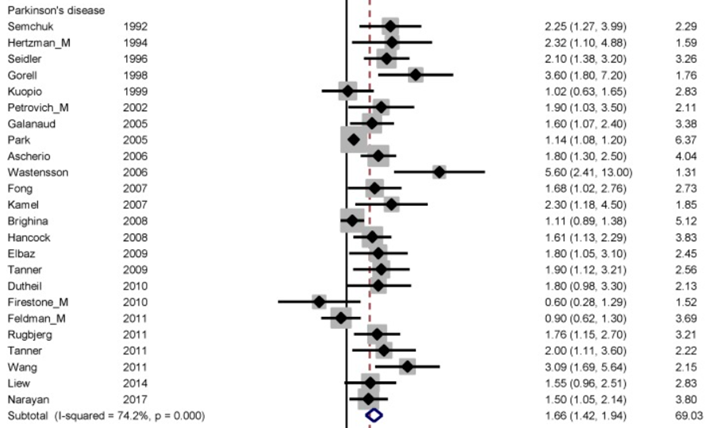
In the figure above you see a meta-analysis of studies. This means that on the left you see all the studies, with next to them a black line with a diamond. The black line with a diamond stands for the result from that study (next to it it is given in numbers). All lines with diamonds that do not touch the thick black vertical line are a significant result. Everything to the left of the line is a protective effect, everything to the right of the line is an increased risk. The bottom diamond is a summary of the results of all studies: the result of the meta-analysis. (translated from Dutch)
The study that Bas Bloem cites (Chambers-Richards et al.) focuses purely on longitudinal studies, in other words following people over a long period. This forms the strongest observational evidence and results in less heterogeneity. It is therefore stronger evidence. I have therefore taken the longitudinal studies out of this meta-analysis to give an overview of the results.
If I look at the most recent longitudinal study from the series above (Feldman 2011), we see in a cohort of more than 14 thousand Swedish male twins, who were followed for some 43 years, that exposure to pesticides is not associated with Parkinson's. This association was corrected for age, education and smoking. According to the authors this could be because in Sweden the use of pesticides has been strictly regulated since 1980, so that exposure may be lower than in other countries.
Other prospective studies in this meta-analysis:
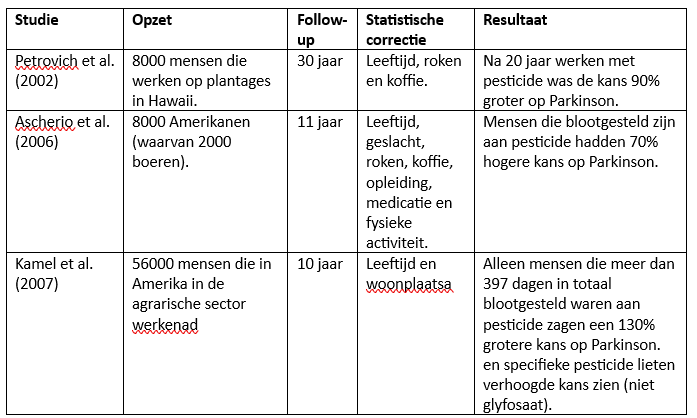
It stands out that Feldman et al. (2011) is the only one that finds no association; all the other longitudinal studies do show an association. They do all have a different way of measuring exposure. You can also see this in the comparison: ‘after 20 years of work’, ‘people who are exposed’ and ‘people who have been exposed for more than 397 days in total’. This shows you that they have all used different types of exposure measures.
Another observational study that is cited is based on the AGRICAN cohort.
Source:Pouchieu et al. Pesticide use in agriculture and Parkinson’s disease in the AGRICAN cohort study. 2017).
In this French study more than 180 thousand people who work (or have worked) in the agricultural sector were included, and they then had to state themselves, by means of questionnaires, whether they have Parkinson's and whether they have worked with pesticides. This is therefore a retrospective study, in which people look back in time and answer questions about it. This type of research is not as strong as studies in which people are followed over a long period, because there can be problems with memory, and so on.
The researchers found a 30% increased chance of Parkinson's for farmers who had used pesticides for life. What the association does not tell about the results of Kamel et al. (2007) and Pouchieu et al. (2017) is that specific pesticides were also looked at. Kamel et al. found no association for glyphosate and Pouchieu et al. found no association for Mancozeb. Yet on their website they name precisely these two pesticides as a cause of Parkinson's. When people selectively leave out results, I start to worry about the reliability.
Furthermore, the meta-analysis consists mainly of case-control studies that almost unanimously show an increased chance of Parkinson's for people who work with pesticides. However, little research has been done into specific pesticides.
The evidence from a Parkinson association from Canada
A Parkinson association from Canada, "Parkinson Quebec", has done considerably better work in assessing and highlighting the science on exposure to pesticides and Parkinson's. They cover all the literature of the past 30 years and answer questions such as:
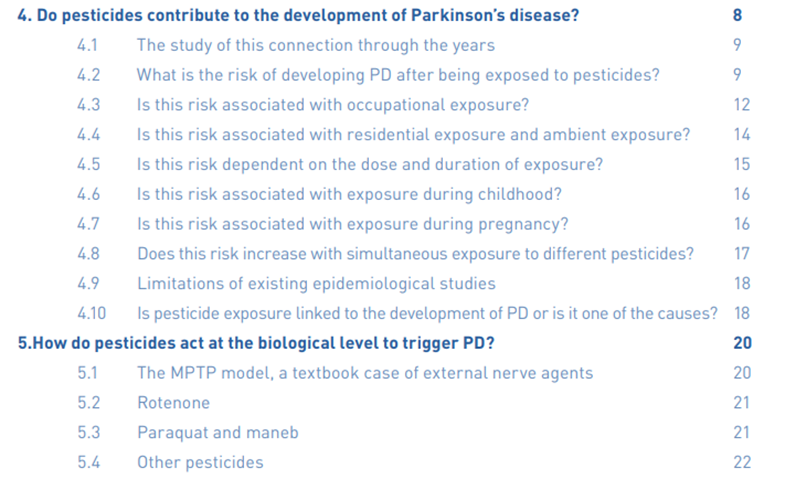
Their conclusion reads: "Additional research is needed to better understand the specific toxicity of pesticides, their interactions, dose-response relationships and specific windows of vulnerability in human life. However, there is now sufficient scientific evidence to conclude that there is indeed a causal link between pesticides and the development of Parkinson's disease, and this encourages the government to take concrete measures to protect its citizens."
A striking claim concerns studies that according to Parkinson Quebec "would stand out because of their relevance, methodological accuracy in assessing exposure and the analysis of specific pesticides."
"The case-control study by Elbaz et al., carried out in France in 2009, shows that the occupational use of pesticides almost doubles the risk of developing Parkinson's disease (OR = 1.8; CI95%: 1.1–3.1) and emphasises that this risk is dose-dependent. This risk is particularly high in people who use organochlorine or amide insecticides, as well as dithiocarbamate fungicides. People who have been exposed to these pesticides have 2.4, 3.1 and 2.1 times more chance, respectively, of developing Parkinson's disease than people who have never been exposed to these types of chemical compounds." (translated from Dutch)
Source:Elbaz A, Clavel J, Rathouz PJ, et al. Professional exposure to pesticides and Parkinson disease. Ann Neurol. (2009)
The study is a case-control study. This means that a group of people with the outcome one is interested in, Parkinson's in this case, is compared with people who do not have the outcome. Often the researchers make sure that the control group is a comparable group of people. In this study the researchers selected people who were members of the "Mutualité Sociale Agricole", which is a kind of health insurance for people who work in the agricultural sector. In other words, all participants in this study are or were farmers. In total 224 people with and 557 without Parkinson's were selected for the study. A strength of this study is that the health insurer had already established, through reliable diagnoses, who had Parkinson's, after which there was also contact with neurologists for verification. Other important data such as demographic information, smoking habits, family history, and so on were collected by means of a questionnaire. Diet or lifestyle was not included otherwise. Exposure to pesticides was measured in two steps. First people had to indicate, via a questionnaire, what work they did and whether they worked with pesticides (or gardened with pesticides). After that an expert visited the people who worked with pesticides for an interview to obtain a detailed history of pesticide use, including the farms where they had worked. Experts then visited the farms for verification.
“Participants were asked to list each farm where they had worked (start/end years). They were asked to describe each farm in terms of land size, crops (size), and animal breeding (number), and whether they had personally sprayed pesticides for each of them. For each crop/animal for which pesticides were used, detailed information was obtained: pesticides, frequency (days/year), duration (hours/ year), spraying method (portable device, tractor), and start/ end years. To use as many sources of information as possible, interviewers visited the farm, discussed technical issues, looked for old pesticide containers and packages, and reviewed bills and farming calendars.”
This explains why the association emphasises this study because of the accurate assessment of exposure.
If we compare people with Parkinson's with the control group we see a clear difference in pesticide use. Of the control group some 18% had used pesticides professionally, whereas among the people with Parkinson's this was 45%. For gardening with pesticides it was 18% versus 44%, respectively. The statistical analysis, controlled for cognitive function and smoking, showed that there was a 70% higher chance of Parkinson's for people who used pesticides professionally. The more often and the longer people had used pesticides, the more the risk of Parkinson's rose in proportion.
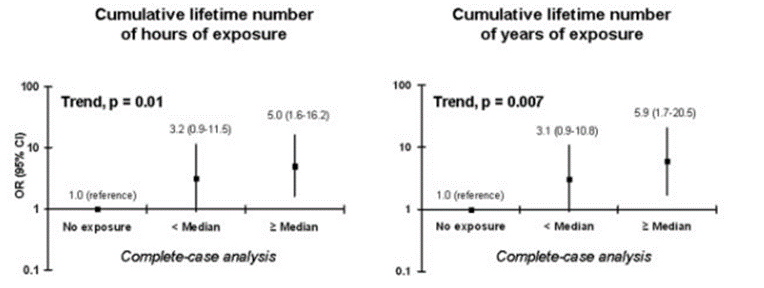
The study also looked at specific pesticides, but not at mancozeb and glyphosate. They found significant associations for: Organochlorine, Amide and Dithiocarbamate.
All in all, Parkinson Quebec emphasises several lines of evidence, both mechanistic and observational, to demonstrate the link between pesticide use and Parkinson's. They acknowledge that observational research suffers from methodological problems, such as accurately assessing exposure, the differences between studies and the diagnosis of Parkinson's. Still they are of the opinion that there is a causal link, among other things because of:
1. Strong associations (increased risks of 50% or more).
2. Consistency (all systematic reviews and meta-analyses show a positive association)
3. Time (exposure to pesticides always comes before the diagnosis of Parkinson's).
4. Biological plausibility (there are demonstrable mechanisms for how Parkinson's can arise from pesticides).
Conclusion
I can never check all the research, and I have too little technical understanding of pesticides and brains. It is therefore hard for me to assess the studies with animals. I do have to say that when I look at the amount of observational evidence (even though this is sometimes used too easily for strong claims, evidence about specific pesticides is left out and it has caveats), together with the fact that neurologists such as Bas Bloem acknowledge the evidence, this certainly comes across as convincing to me. It is just not clear which specific pesticides are involved, although mancozeb and glyphosate do not seem to have an association with Parkinson's. But before I form a judgement myself, I first want to see the evidence from the European Food Safety Authority (EFSA). According to LTO Nederland (interest group of agriculture and horticulture in the Netherlands) the EFSA has recently declared glyphosate safe. It seems good to me to shed light on both sides of the story, so that we can then come to a conclusion.
LTO, October 2023:
"Rightly the minister refers in his letter to the importance of independent, scientific assessment by competent bodies: EFSA and the Ctgb - and the high quality standard that these institutions maintain. And rightly Adema refers to the findings of EFSA, based on the most current state of science and assessment of 2,400 scientific studies, of which approx. 800 from independent scientific literature. This shows that no critical concerns arise from the re-assessment of glyphosate. Glyphosate is not classified as carcinogenic, mutagenic, toxic to reproduction or endocrine disrupting. Neither have unacceptable risks to humans been established, also not in the neurotoxic area. It has been established by EFSA that safe use in Europe is possible." (translated from Dutch)
Approval of the Use of Glyphosate
So, I thought I would quickly take a dive into the evidence of the EFSA. Jokes on me.
The approval of glyphosate rests on the work of several bodies. In 2019 the Glyphosate Renewal Group (GRG) submitted an application for the renewal of the approval of glyphosate with the European Union. If you have read my blog about tap water, you know how the approval of chemical substances works. For those who have not, it comes down to this: all chemical substances that companies work with must be approved by the European Chemicals Agency (ECHA). For this, companies have to provide evidence on the harmfulness and hazards of those substances. Preferably companies do this jointly, because it saves them money and work. That was also the case with glyphosate, where several large companies united to make a joint application for the approval of glyphosate. The aim of the ECHA is to set threshold values for chemical substances that people come into contact with, based on all the scientific evidence on toxicokinetics (everything about how a substance enters the body and is processed) and studies with humans (as far as those are available). These threshold values indicate amounts that people can take in without unacceptable risk to health.
“Members of the GRG are Albaugh Europe SARL, Barclay Chemicals Manufacturing Ltd., Bayer Agriculture bvba, Ciech Sarzyna S.A., Crop Alliance Unipessoal LDA., Nufarm GMBH & Co.KG, Sinon Corporation, Syngenta Crop Protection AG.”
This application was first assessed by the Assessment Group on Glyphosate (AGG). The AGG consists of four EU member states (France, Hungary, the Netherlands and Sweden) that were appointed by the European Commission to carry out the first check on the renewal of the licence for glyphosate. The AGG then submitted a report to the EFSA and ECHA. Both agencies reviewed the report again, resulting in a scientific publication that the member states of the EU were allowed to go through before they could vote on whether or not to approve glyphosate. The GRG says the following about this:
“Parkinson’s disease (PD) is a neurodegenerative disorder……
To date, there is no credible evidence that glyphosate interferes with the production and transport of dopamine, and it is therefore not a cause of PD.
Reviews by The European Food Safety Authority (EFSA), European Chemicals Agency (ECHA), and the U.S. Environmental Protection Agency (EPA) have consistently concluded the same, that, glyphosate does not damage nerves in mammals, even when applied at high doses.
Most recently, on 26 July 2023, EFSA published its Conclusions on the peer review of the pesticide risk assessment of glyphosate, which clearly states that there is no indication of the neurotoxicity potential of glyphosate. It further underlined that there is insufficient evidence of an effect of the active substance glyphosate and glyphosate-based herbicides on neurotransmitters.”
The position that several large organisations take is that there is no evidence for a plausible biological mechanism (neurotoxicity) by which glyphosate can cause Parkinson's. This is fascinating, because the earlier associations and neurologists that I cited are precisely of the opinion that this evidence does exist. So, I went through the reports of the different organisations (EPA, ECHA and EFSA), and the following things stood out to me.
Here you find the most important findings that I took from the reports. I summarise them for you as briefly as possible, but for transparency and support you find the raw texts (translated into Dutch) under the headings of the organisations. (translated from Dutch)
The American Environmental Protection Agency (EPA)
The American Environmental Protection Agency (EPA) has thoroughly assessed the risks for humans exposed to glyphosate, from all registered uses and all routes of exposure, and has not identified any risks of concern. The agency concluded that there are no concerns about the dietary risks for any part of the population, even under the most conservative assumptions applied in its assessments (for example residues at tolerance levels, direct application to water and 100% treated crops). The EPA also concluded that there are no concerns about residential, non-occupational bystander, aggregate or occupational risks.
The EPA has not established a common mechanism of toxicity for humans with regard to glyphosate and any other substance, and it does not appear to produce a toxic metabolite that is produced by other substances. It was therefore not appropriate for the EPA to assess cumulative risks.
The EPA reviewed human health incidents with glyphosate in February 2014 and October 2018. Thousands of glyphosate incidents were reported, but most of the reported incidents were of minor severity. The high number of reported incidents in the databases is probably the result of glyphosate being one of the most widely used pesticides in the United States by volume. Health effects that were reported in the incident databases included dermal, ocular and respiratory symptoms, and the effects were generally mild and disappeared quickly. Although the EPA has recently received information about lawsuits concerning claims of human health incidents with glyphosate, submitted under the FIFRA 6(a)2 reporting requirement for adverse events, the agency does not comment on private lawsuits. The EPA has thoroughly assessed the potential risk to human health in connection with exposure to glyphosate and established that there are no risks to human health from the currently registered uses of glyphosate and that glyphosate is probably not carcinogenic to humans. The agency will continue monitoring incident information and additional analyses will be carried out if ongoing monitoring of human incidents points to a concern. The medical literature concerning cases was reviewed, and most unintentional ingestion of glyphosate formulations led to mild symptoms. Intentional ingestion caused moderate to severe symptoms and involved multiple organ systems. The epidemiological literature was also reviewed, but most studies were hypothesis-generating in nature. The EPA found insufficient evidence to conclude that glyphosate plays a role in any human diseases. Since the last EPA review of the epidemiological literature, two studies concerning the association between exposure to glyphosate and non-Hodgkin lymphoma (NHL) have been identified for detailed review by the agency; these studies did not, however, influence the agency's assessment. No additional human health data needs have been identified for the glyphosate registration review, beyond the human health data required as part of the registration review DCI, which have been satisfactorily dealt with.
European Chemicals Agency (CLH report)
Toxicokinetics: Glyphosate is absorbed from the gastrointestinal tract, with a peak plasma concentration (tmax) between 0.5 and 8 hours after exposure. The elimination of ingested glyphosate via faeces and urine is rapid and almost complete within 48 hours. Absorption after oral application is limited and independent of dose, exposure and sex. About 10-35% of the glyphosate dose is absorbed and mainly excreted unchanged in the urine (in rats).
(In humans) Reliable kinetic data in humans are scarce. One study investigated the half-life of glyphosate in urine samples of amenity horticulture workers who used glyphosate-based pesticides (Connolly et al., 2019). Urine samples of seven participants were analysed, in which a mean half-life of approximately 5.5 to 10 hours was established. However, the study had limited standardisation and only one kinetic test round.
The identification of toxic effects that require classification and labelling for specific toxicity after repeated exposure (STOT-RE) is usually based on subacute, subchronic (28 days, 90 days, in dogs also 1 year) and chronic exposure studies (18 to 24 months in mice, 2 years in rats). Other study types, such as reproductive or developmental toxicity studies and repeated neurotoxicity studies, can also provide relevant information on repeated toxicity and possibly support the need for classification.
There are no human data available that are relevant for the assessment of specific target organ toxicity after repeated exposure.
Neurotoxicity studies: Two acceptable 90-day subchronic neurotoxicity studies are available (see Vol 1 section 2.6.7). In the first study, reduced weight gain and reduced food intake were observed in male rats only at the highest dose of 20,000 ppm (equivalent to 1,499 mg/kg body weight per day). In the second study (P/4867, 1996) the findings were similar, with a reduced weight gain in males at 20,000 ppm (equal to 1,547 mg/kg body weight per day). Since no significant or serious toxicity was observed below the oral guidance values, classification for STOT-RE is not justified on the basis of these studies.
One study (Martinez et al., 2019; B.6.7.3.1) evaluated the effect of glyphosate and its metabolite AMPA on the blood-brain barrier in vitro, in which no clear neurotoxic potential was found. The authors concluded that although some minimal effects were observed, these occurred at concentrations that were considerably higher than the basal exposure levels. Another study (Chorfa et al., 2013; B.6.7.3.3) investigated the effect of glyphosate and other pesticides on α-syn levels in human neuroblastoma (SH-SY5Y) and melanoma (SK-MEL-2) cell lines. Glyphosate had no influence on the measured endpoints in this study. One publication (Martinez et al., 2018; B.6.7.3.2) did, however, observe an effect of glyphosate on neurotransmitter levels in brain regions of rats after oral administration for 6 days. This study was, however, not in accordance with the OECD guidelines and contained no positive or negative historical controls, which makes the biological relevance of the observed changes difficult to interpret. A fourth study (Ait-Bali, 2020; B.6.7.3.4) investigated behavioural, neurochemical and molecular changes after pre- and postnatal exposure of mice to a Roundup formulation (glyphosate concentration: 360 g/l as isopropylamines salt 486 g/l). This study is regarded as supplementary data because of the use of a formulation and not only the active substance glyphosate. The reliability of the study is limited because of the use of a formulation, only two tested doses, not following the OECD guidelines, the absence of GLP status, not using positive controls and the absence of HCD.
There are three isolated reports of the development of Parkinson's disease in individuals with a history of exposure to glyphosate products. In all cases, however, there is no evidence for causality, other than a history of exposure. In the last case it is notable that the patient recovered with the treatment for exposure to organophosphate, which points to a completely different aetiology, since glyphosate does not require treatment with anticholinergics. No other human or animal data support the claim that Parkinson's disease is the result of exposure to glyphosate, not even after massive ingestion or long-term exposure.
The following section was taken from the earlier assessment (RAR, 2015) and has not been re-assessed:
"The main focus of the available studies was on a possible link between exposure to glyphosate and the development of Parkinson's disease. This hypothesis, but also a link with other neurological conditions, was investigated in mechanism studies in various systems such as Caenorhabditis elegans worms, rats or cell cultures. Sometimes positive results were reported, but these findings are not regarded as relevant when the extremely extensive database on laboratory animals without evidence of neurotoxicity and the absence of suggestive epidemiological data in humans are taken into account. Chorfa et al. (2013) studied the effects of four pesticides (paraquat, rotenone, maneb and glyphosate) on various molecular events in cell cultures that are considered to be related to Parkinson's disease. Three of the four pesticides activated molecular events involved in Parkinson's disease, but glyphosate was the only one that showed no such effect. Over the past decade several published studies have investigated the link between glyphosate and neurotoxicity. In three studies two human cases of Parkinson's disease were reported that manifested shortly after exposure to glyphosate. The first case followed acute exposure to a glyphosate formulation while spraying a garden. The second case occurred after chronic exposure of a factory worker in China, where several pesticides, including glyphosate, were produced. A causal link between these (unquantified) exposures to glyphosate and Parkinson's disease is, however, not probable. Occupational health surveillance gave no evidence of a higher frequency of Parkinson's disease in workers in the production of glyphosate. If the widely used glyphosate were indeed a causative agent of this fairly common disease, one would expect a significant number of cases in connection with both acute and/or chronic exposure. Moreover, the occurrence of Parkinson's disease in survivors of acute intoxications after ingestion of large amounts of glyphosate products has not been documented. Although some epidemiological studies have indeed suggested statistical associations between Parkinson's disease and general exposure to pesticides or exposure to insecticides or herbicides, there is no specific evidence for glyphosate. In the largest study to date, the American Agricultural Health Study, no association was found with reported glyphosate use. Freire and Koifman (2012) carried out a review of the epidemiological literature of the past decade concerning the risk of Parkinson's disease. An increased risk was associated with various pesticides, but not with glyphosate. Human non-cancer epidemiological outcomes concerning glyphosate were recently reviewed by Mink et al. (2011), and there was no convincing evidence for an increased incidence of Parkinson's disease or other neurological conditions in individuals who reported exposure to glyphosate."
Overall, the available information does not indicate a neurotoxic potential for glyphosate. A low acute oral toxicity of glyphosate has been shown in a large number of studies. Moreover, in an acute neurotoxicity study there was no evidence of neurotoxicity at the NOAEL for systemic effects of 1,000 mg/kg body weight (the limit dose that could justify an ARfD). On the basis of these studies there is no need to establish an acute reference dose (ARfD).
European Chemicals Agency (RAC report)
In the CLH dossier no studies or case reports were found in which humans were exposed to glyphosate itself at single doses. There have, however, been a number of poisoning incidents reported after accidental or intentional ingestion of glyphosate-based herbicides, mainly via the oral route, but some also via inhalation. Importantly, the doses in these poisoning incidents were not reported. Moreover, it is not possible to clearly distinguish between effects resulting from exposure to glyphosate and those related to exposure to co-formulants.
The DS referred to the RAC opinion of 2017, in which the following statement was made: "RAC finds that the interpretation of the human studies for the assessment of the genotoxicity of glyphosate is challenging because of the limited available data and confounding factors such as exposure to other pesticides as well, as well as uncertain exposure estimates. Moreover, there is a problem with possible toxicity related to co-formulants of glyphosate-containing herbicides." Some evidence was, however, noted in two studies that investigated populations that had been exposed to glyphosate-based herbicides. These two studies were also discussed in the RAC opinion of 2017. The DS did not assess the two studies.
On the basis of a large number of acute toxicity studies in rats, mice and rabbits, in which non-lethal effects were limited to very high doses and were non-specific, the DS concluded that classification for STOT SE (category 1 or 2) was not appropriate. In support of this argument, no evidence of neurotoxicity was observed in an acute neurotoxicity study in rats at doses up to 2,000 mg/kg body weight (CA 7.7.1/001).
Several acute toxicity studies in rats, mice and rabbits were briefly described by the DS to illustrate transient, non-lethal and non-specific effects (associated with high doses of glyphosate) that were not sufficient for classification as STOT SE 1 or 2. Supporting evidence for no classification was also found in an acute neurotoxicity study in rats in which no neurotoxicity was reported at dosages of 500, 1,000 or 2,000 mg/kg body weight. Moreover, no clinical signs were reported after the first exposure in many repeated toxicity studies in which lower doses were administered.
Comment no. 229 raised the issue of neurotoxicity in section 2.6.7 of the RAR and pointed out that several publications indicate that glyphosate-based herbicides and glyphosate alone can change the concentrations of various neurotransmitters in different parts of the brains of rodents. The DS replied that the studies mentioned in that comment were considered in the process, but noted that the studies were either regarded as not relevant for the risk assessment or reliable with limitations because of methodological limitations. The DS noted that neurotoxicity studies with glyphosate that comply with the OECD guidelines did not indicate a neurotoxic potential and emphasised that all available information was taken into consideration in a weight-of-evidence assessment to determine the neurotoxic potential of glyphosate.
The DS included two sub-chronic 90-day neurotoxicity studies in their assessment of STOT RE. Overall, these two studies showed no significant or serious toxicity below the oral guidance values, and no classification for STOT RE is justified on the basis of these studies. In the first study according to OECD TG 424 (CA 5.7.1/002, 2006, acceptable according to the DS), groups of 10 male and 10 female Sprague-Dawley rats were given diets with 0, 1,000, 5,000 or 20,000 ppm glyphosate for 90 days (corresponding to doses of 0, 77, 395 or 1,499 mg/kg body weight/day in males and 0, 78, 404 or 1,555 mg/kg body weight/day in females). The only adverse effect that was observed was a decrease in body weight (-12%), weight gain (-15%) and food intake (up to -17%) in high-dose male animals. No treatment-related changes were observed in neurological parameters. In a second study according to OECD TG 424 (CA 5.7.1/003, 1996, acceptable with limitations according to the DS), groups of 12 male and 12 female Alpk: APfSD (derived from Wistar) rats were given diets with 0, 2,000, 8,000 or 20,000 ppm glyphosate acid for 13 weeks. The only adverse effect that was observed was a reduced weight gain (-12%) and food efficiency in high-dose males. No treatment-related changes were observed in neurological parameters. In addition, several publications on neurotoxicity were evaluated. Martinez et al. (2019) evaluated the effect of glyphosate and its metabolite AMPA on the blood-brain barrier in vitro. Overall, the study does not indicate a neurotoxic potential for glyphosate or AMPA, which is in line with the available guideline studies. Martinez et al. (2018) observed an effect of glyphosate on neurotransmitter levels in brain regions of rats after oral administration by gavage at 35, 75, 150, 800 mg/kg body weight/day for 6 days. However, the study was a non-guideline in vivo study without a concurrent positive control and without data on positive and negative historical controls (HCD) and it is therefore difficult to interpret the biological relevance of the observed changes. Chorfa et al. (2013) evaluated the effect of glyphosate on α-syn levels in human neuroblastoma (SH-SY5Y) and melanoma (SK-MEL-2) cell cultures. Glyphosate had no influence on the measured endpoints in this study. Ait-Bali et al. (2020) investigated behavioural, neurochemical and molecular changes after pre- and postnatal exposure of mice to a Roundup formulation (glyphosate concentration: 360 g/l as isopropylamine salt 486 g/l). It was noted that any effect of the co-formulant(s) in Roundup cannot be excluded. In this study groups of 10 female Swiss mice received Roundup by gavage at concentrations of 250 or 500 mg/kg body weight/day from day 0 of pregnancy (GD0) to day 21 after birth (PND21). At PND60 effects at behavioural, neurochemical and molecular levels were investigated. The results show that pre- and neonatal exposure to the Roundup formulation impairs the fertility and reproductive parameters of exposed mothers. In offspring, exposed animals showed a delay in innate reflexes and a deficit in motor development. In adulthood, exposed animals showed a decrease in locomotor activity, social skills, learning and short- and long-term memory in connection with changes in cholinergic and dopaminergic systems. The formulation also activated microglia and astrocytes, signs of neuro-inflammatory events in the medial prefrontal cortex and hippocampus. At the molecular level a downregulation of BDNF expression and an upregulation of TrkB, NR1 subunit of the NMDA receptor, as well as TNFα were found. The study is regarded by the DS as supplementary data.
European Food Safety Authority (publication)
In 2022 the ECHA RAC committee (ECHA, 2022) concluded that no classification is justified for adverse effects on reproduction and development.
There is no indication of the neurotoxicity potential of glyphosate from one acute and two subchronic toxicity studies in rats and one delayed neurotoxicity study in hens. The overall NOAEL is 1,000 mg/kg body weight for acute systemic toxicity and 2,000 mg/kg body weight (highest dose tested) for acute neurotoxicity. The NOAEL for subchronic systemic toxicity is 395 mg/kg body weight per day, based on reduced weight gain and food intake. In the absence of neurotoxicity findings in the 90-day neurotoxicity study in rats, the NOAEL for subchronic neurotoxicity is 1,499 mg/kg body weight per day (highest dose tested).
There is insufficient evidence of an effect of the active ingredient glyphosate and of glyphosate-based herbicides (GBHs) on neurotransmitters.23 The integration of observational human studies with the limited experimental evidence from in vitro and in vivo studies does not raise concern for parkisonism.23 (source 23 is the expert group below)
Toxicological reference values (TRVs) were derived for glyphosate as follows. The acceptable daily intake (ADI) is 0.5 mg/kg body weight per day, based on a NOAEL of 53 mg/kg body weight per day from a 90-day study in dogs. The ADI is supported by the NOAEL of 59.4 mg/kg body weight per day from a 2-year rat study and the NOAEL of 50 mg/kg body weight per day for maternal toxicity identified in a rabbit developmental toxicity study. The default uncertainty factor (UF) of 100 was applied.
The acceptable operator exposure level (AOEL) is 0.1 mg/kg body weight per day, based on the same considerations as for the ADI, applying a correction factor for limited oral absorption of 20%. This value is the same as previously established by the peer review (EFSA, 2015).
The RMS is asked to include in the revised RAR an assessment of the following studies on the neurotoxic potential of glyphosate, identified after the public consultation (see experts' consultation 2.37): • Moser et al., 2022: Glyphosate and neurological outcomes: a systematic literature study of animal studies. J Toxicol Environ Health, part B, 25(4):162-209.
Summary of the reports of the EPA, ECHA and EFSA
The main argument in the reports is that there is no strong evidence for a plausible biological mechanism that can support the link between glyphosate and Parkinson's. They base this on their assessment of studies with animals. The high-quality studies show no association. Studies that do show an effect of glyphosate on neurotoxicity (and thus Parkinson's) are considered unreliable because of problems with the design. Even though the organisations go through the studies in the reports individually, they seem to base their position mainly on two reviews that were funded by the producers of glyphosate:
“In conclusion, this systematic analysis of the available literature provided no clear evidence of neurobehavioral, neuropathological, or neuropharmacological outcomes following exposure to glyphosate. The evidence from the regulatory studies, conducted under standardized test guidelines, concluded essentially no marked effects (other than spurious behavioral changes) with acute, subchronic, and chronic exposures, while published studies that did report effects were limited in terms of route of exposure, dosing regimens, and interpretability of endpoints.”
As for epidemiological research with humans, there are only a few studies that show an association between exposure to glyphosate and neurotoxicity/Parkinson's. This is epidemiological evidence with the lowest evidential weight: case and case-control studies. Only this concerns just a few cases, and if glyphosate really were the cause of Parkinson's, many more people who work with glyphosate should get Parkinson's, according to the Renewal Assessment Report of 2015. Other observational studies of better quality and evidential weight that show an association between pesticide use and Parkinson's show at the same time that this link does not hold for glyphosate.
ECHA:
“In the largest study to date, the American Agricultural Health Study (kamel et al 2007), no association was found with reported glyphosate use. Freire and Koifman (2012) carried out a review of the epidemiological literature of the past decade concerning the risk of Parkinson's disease. An increased risk was associated with various pesticides, but not with glyphosate. Human non-cancer epidemiological outcomes concerning glyphosate were recently reviewed by Mink et al. (2011), and there was no convincing evidence for an increased incidence of Parkinson's disease or other neurological conditions in individuals who reported exposure to glyphosate.” (translated from Dutch)
Source:Mink et al. Epidemiologic studies of glyphosate and non-cancer health outcomes: A review. (2011)
It is true that Kamel et al. found no association between glyphosate and Parkinson's. I explained this earlier, because this study was part of the meta-analysis that the Dutch Parkinson association cites.
Freire & Koifman also found an association between pesticide use and Parkinson's. Seven of the eight prospective observational studies (the observational research with the strongest evidential weight) found a positive association. They found no association specifically with glyphosate; yet they do warn about glyphosate in the conclusion.
“Epidemiologic studies published over the past decade have added to the evidence of an association between pesticide exposure and PD, but a causal relationship has not yet been definitely established. Data on the response to exposure are inadequate and inconsistent, and it remains necessary to identify the specific compounds that may be implicated in this relationship. Nevertheless, measures must be adopted to prevent exposure to pesticides, given that many of them are still extensively used worldwide, including paraquat, glyphosate, pyrethroids, and maneb, among others.”
In my view they do this because they did find an association with other herbicides (which glyphosate belongs to), but most studies never looked specifically at glyphosate. Mink et al. was the only review cited that looked specifically at glyphosate. They found no association with glyphosate. However, this is based on 1 prospective study and 1 case-control study. The prospective study (Kamel et al. 2007) has received an update and that was included in a recent systematic analysis that was also funded by the producers.
Source:Chang et al. Systematic literature review of the epidemiology of glyphosate and neurological outcomes. (2023)
In 2023 a systematic review on glyphosate and neurological outcomes was published in which 25 studies were included. Chang et al. (2023) conclude that (high-quality) observational research shows no association between exposure to glyphosate and Parkinson's.
“In this systematic literature review, we identified and considered 25 epidemiological studies of glyphosate and various neurological outcomes, including nine studies of neurodegenerative outcomes (two high quality, three moderate quality, and four low quality); five studies of neurobehavioral outcomes (two high quality, one moderate quality, and two low quality); six studies of neurodevelopmental outcomes (one moderate quality and five low quality); and five studies of other or mixed neurological outcomes (one high quality, three moderate quality, and one low quality). All of the high-quality studies, rated according to U.S. EPA OPP guidance for assessing methodological quality, found near-null associations between glyphosate use and neurological endpoints (namely, depression, Parkinson disease, and peripheral nerve conduction).”
They found three studies of moderate and high quality that investigated the association between Glyphosate and Parkinson's:
Source:Dhillon et al. Pesticide/environmental exposures and Parkinson's disease in East Texas. (2008)
Source: Kamel et al. Pesticide exposure and self-reported Parkinson’s disease in the Agricultural Health Study. (2007)
Source:Shrestha et al. Pesticide use and incident Parkinson’s disease in a cohort of farmers and their spouses. (2020)
Shrestha et al. is a follow-up to Kamel (which I already covered earlier). Dhillon et al. and Kamel et al. were both rated as moderate quality. Shrestha et al. was rated as high quality. All three studies show various associations between specific pesticides and Parkinson's, but not with Glyphosate.
In addition they found three studies of low quality that in turn all did find an association.
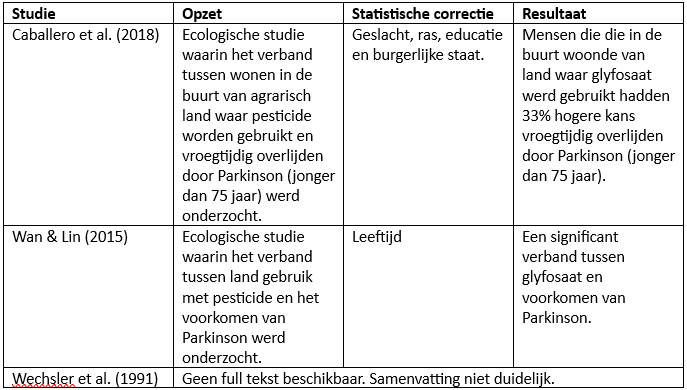
“The remaining four studies of neurodegenerative outcomes were rated as low quality overall. These included three ecological or semi-ecological studies of ALS or Parkinson disease that used regional data on agricultural applications of glyphosate (Andrew et al. 2021; Caballero et al. 2018; Wan and Lin 2016); and a small, pilot hospital-based case–control study of Parkinson disease that was rated as low quality due to its inclusion of some unvalidated cases identified from patient support groups, as well as its absence of any adjustment for confounding (Wechsler et al. 1991). Due to their serious methodological weaknesses, which limited their ability to provide scientific insight on any potential neurotoxic effects of glyphosate, these low-quality studies were not considered further in our weight-of-evidence evaluation.”
Conclusion
In total there are five observational studies that looked at the link between exposure to glyphosate and Parkinson's. All with different designs and of different quality and evidential weight. The main argument is that in studies with animals as well as with humans, the studies of moderate and high quality show no association. I have to say that there is thus still fairly little research done on glyphosate specifically. Five studies, when you compare this with the amount of literature on pesticides in general and Parkinson's, is of course very little. This makes me somewhat reluctant to draw strong conclusions. I did find very interesting (recent) publications by Bas Bloem in The Lancet and in Nature, high-standing journals. In them he voices his criticism of the approval of glyphosate. Let us put his criticism under the microscope.
Bas Bloem's response to the glyphosate approval
As I said earlier, Dokter Diederik's claim was mainly based on the work of Bas Bloem, which he also referred to. I also cited earlier an article in the Nederlands Tijdschrift voor Geneeskunde in which Bloem named pesticides as a possible risk factor on the basis of a review of prospective observational research, which unfortunately is behind a paywall. That was about pesticides in general. Bloem has also been quite outspoken about glyphosate and the relationship with Parkinson's disease. Now that we have an idea of the evidence on the link between pesticides and Parkinson's, it seems interesting to me to set Bloem's criticism of the approval of glyphosate against it. In the past two months Bloem published two responses to the renewal of glyphosate in two high-standing journals, in The Lancet and in Nature. I will discuss the publication in The Lancet because most points correspond quite well in the two publications.
Source: Bloem et al. Glyphosate and neurotoxicity — a call for scientific renewal. (2024)
Both are a kind of "expert opinion" articles in which the authors make an argument. Let us be clear, this does not have high evidential weight when it comes to science. Despite that, I want to put a few important claims under the microscope. In Bloem & Boonstra a very important claim is made right away. Many pesticides would cause the death of nigrostriatal cells and symptoms of Parkinson's in animals. This is a very important claim, because nigrostriatal cells are the cells that regulate dopamine in the brain. Parkinson's is a consequence of a decrease of these cells. In addition, farmers would have an increased risk of Parkinson's.
“Many pesticides cause nigrostriatal cell death and produce Parkinsonian signs in exposed animals. Moreover, farmers have an increased risk of developing Parkinson's disease. 1”
The authors base this on a source of which Bloem is a co-author:
Source 1: Dorsey et al. "The Emerging Evidence of the Parkinson Pandemic" (2018).
This study states that a relationship has been shown between products of the industrial revolution, including specific pesticides, and Parkinson's. But no evidence is provided for the claim that pesticides cause nigrostriatal cell death.
“Numerous by-products of the Industrial Revolution, including specific pesticides, solvents, and heavy metals, have been linked to Parkinson disease. 21”
Source 21: Goldman. Environmental toxins and Parkinson's disease. (2014)
In addition they state that a specific pesticide, paraquat, which is strongly associated with Parkinson's, has already been banned in 32 countries (mainly in Europe), but is still used in America.
“The use of specific pesticides linked to Parkinson disease also persists. For instance, although 32 countries have banned the use of paraquat, which is strongly linked to Parkinson disease, the United States continues to use paraquat in ever greater quantities. [23]”
Source 23: Mercola J. Paraquat-banned in EU while US increasing use of this toxic killer. (2017)
Goldman is a review that looks at various environmental factors and the relationship with Parkinson's. They state that pesticides have been recognised for decades as a possible risk factor for Parkinson's.
Source: Van der Mark et al. Is Pesticide Use Related to Parkinson Disease? Some Clues to Heterogeneity in Study Results. (2012)
They base this on Van der Mark et al. (2012), a meta-analysis of 46 observational studies that shows that people who had ever used pesticides in their lives had an increased risk of 60% of Parkinson's compared with people who never had. This is mainly based on case-control studies, the weakest observational research there is, in which a high heterogeneity was found in the meta-analysis.
I could not find the Mercola source. I did find various articles discussing the European ban on paraquat and how this pesticide is nevertheless still exported to countries where it is not yet banned.
Source: The Guardian. Toxic pesticides banned for EU use exported from UK. (2020)
The fascinating thing is that I am not able to find official information from the EU about why paraquat was banned. It would be super interesting to see the evidence they based that on. If anyone can find it, I would love to see it.
But to come back to the claim from Bloem & Boonstra: first of all, I always get a bit of an itch when people do not use an original source. In other words, they send you to a review, which in turn refers to a review. Bloem & Boonstra claims that there is a causal link between many pesticides and the death of nigrostriatal cells, as a result of which animal studies show symptoms of Parkinson's. I cannot find this anywhere in the source they cite for it. A strange thing, especially also because one of the points of criticism is that no association has been found in studies with animals because of the lack of the right outcome measure: nigrostriatal cells. A contradiction in the argumentation if you ask me. The increased risk among farmers you do find, at least, in the source that the source cites. However, this concerns outdated studies (2012), while there were already newer studies in 2018. So no, not a strong start if you ask me.
Next, Bloem & Boonstra name several arguments against extending the approval of glyphosate:
- The current system of the EFSA for regulating pesticides is inadequate. For instance, the assessment instruments for outcome measures related to neurotoxicity in animal studies would be too coarse. Parkinson's is a disease that only arises after long-term damage to the nigrostriatal system, in which symptoms only arise at a 60% loss of function. Studies should therefore look at cell counts in the right brain areas instead of at symptoms. This does not happen now.
- The doses that are used in studies with animals are too low and perhaps reflect the intake via food, but not that of total exposure (and certainly not the exposure of farmers). It is not stated what the current doses are and what a good dose would be.
- Pesticides can have a harmful effect on the gut flora. These effects have not been included in the process.
- The process focuses on the exposure to individual pesticides. The problem is that people are exposed to various substances that can have a combined neurotoxic effect.
- A lot of research on glyphosate is done by the producers themselves, and they have a bad reputation when it comes to reliability. For instance, at the previous approval of glyphosate they left out a relevant study.
“Glyphosate might be a cause of Parkinson's disease, as indicated by four case studies (summarised here8) and one epidemiological study.9”
After that they cite evidence that would demonstrate a possible relationship with glyphosate, four case studies and one epidemiological study:
Source 8: Eriguchi et al. Parkinsonism Relating to Intoxication with Glyphosate. (2019)
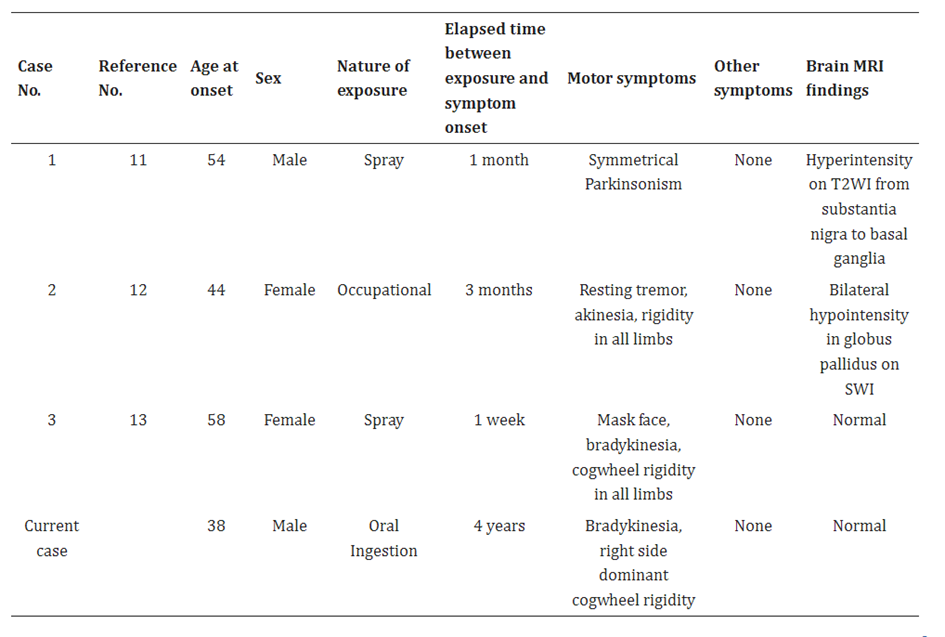
There are four case studies of individuals who developed Parkinson's after a high dose of glyphosate. The source is one case study of a 38-year-old man who wanted to commit suicide by drinking 200 ml of glyphosate. The man went to the hospital with glyphosate poisoning, his stomach was pumped, and he was able to go home alive. Four years later he developed Parkinson's. In addition the study gives an overview of the other three cases, which all showed symptoms much faster than 4 years.
Source 9: Caballero et al. Estimated Residential Exposure to Agricultural Chemicals and Premature Mortality by Parkinson’s Disease in Washington State. (2018)
In addition there is one epidemiological study that shows an association between land use that is associated with glyphosate and premature death from Parkinson's. This study was also cited by Chang et al. and rated as low quality. Bloem & Boonstra do not breathe a word about the quality of studies.
In the study they looked, within the state of Washington in the US, at which land was used for the agricultural sector. They correlated the agricultural land with pesticide use via a database in which pesticide use is recorded. They then correlated that in turn with medical data of people who died prematurely from Parkinson's. These are a lot of associations without any time component. The association was corrected for sex, race, education level and marital status. The results show a 19% higher chance of premature death from Parkinson's due to exposure to pesticide in general. When the researchers went on to look at specific pesticides, only glyphosate showed a significantly higher risk (33%). Fascinatingly, Paraquat, the banned pesticide, showed no significant association.
“In an animal experiment, co-exposure to glyphosate plus MPTP, a potent neurotoxin that kills dopaminergic neurons, was associated with greater neurotoxicity than exposure to MPTP alone.10”
What rubs me the wrong way a bit is that Bloem & Boonstra leave out almost all literature that shows no association and only focus on the studies that do show an association. This way of selecting is worrying. They also refer to an animal study that did use the right outcome measure: dopamine neurons in the brain.
Source 10: Pu et al. Glyphosate exposure exacerbates the dopaminergic neurotoxicity in the mouse brain after repeated administration of MPTP. (2020)
In this study mice were given water with MPTP, a neurotoxin that we know has a toxic effect on nigrostriatal cells, or with MPTP and glyphosate. This showed that the combination caused an additional negative effect compared with MPTP alone. So it is not clear whether glyphosate alone also has a neurotoxic effect.
“This study suggests that glyphosate exposure might exacerbate MPTP-induced dopaminergic neurotoxicity in the striatum and SNr of adult mice. It is likely that exposure of glyphosate may be an environmental risk factor for PD since glyphosate has been used widely in the world.”
Finally, they also cite a review in which laboratory research (in vitro) would show that glyphosate can cause oxidative stress, neuro-inflammation and dysfunction of the mitochondria.
“Finally, in vitro studies suggest that glyphosate can cause oxidative stress, neuroinflammation and mitochondrial dysfunction, processes that have all been associated with neurodegeneration in the context of Parkinson's disease.12”
Source 12: Costas-Ferreira et al. Toxic Effects of Glyphosate on the Nervous System: A Systematic Review. (2022)
This systematic review searched for all studies that investigated glyphosate (and formulations that contain glyphosate) and the effect on the nervous system of animals and humans. Yes, it is a systematic review in the sense that it is transparent about how it searched for literature. No, it is not a systematic review in the sense that it looked at the quality of the literature.
It is good to realise that the review looked at the effect on the nervous system, which is of course much broader than neurotoxicity and Parkinson's. In the chapter "Effects of Glyphosate in humans" they do cite epidemiology, but not epidemiology that looked at the association between glyphosate and neurotoxicity/Parkinson's. This is strange, because these studies do exist, as Chang et al. has shown.
It seems that the "oxidative stress and neuroinflammation" part of the claim of Bloem & Boonstra is mainly based on one study with human cells that Costas-Ferreira et al. cites.
“Another effect observed in a study by Martínez et al. [52] is an increase in oxidative stress, evidenced as an increase in the production of reactive oxygen species (ROS) and nitric oxide (NO), as well as lipid peroxidation (LPO). In addition, glyphosate and its metabolite also potentiated an inflammatory response by upregulating the expression of the proinflammatory cytokine interleukin 6 (IL-6) genes and tumor necrosis factor-alpha (TNF-α). As mentioned previously, injuries caused by glyphosate, such as neuroinflammation or oxidative stress, can cause neuronal death. It was shown that both glyphosate and AMPA reduced the viability of human cells and increased the leakage of lactate dehydrogenase (LDH) [52].”
Source 52: Martinez et al. Use of human neuroblastoma SH-SY5Y cells to evaluate glyphosate-induced effects on oxidative stress, neuronal development and cell death signaling pathways. (2020)
They indeed conclude that glyphosate and a metabolite of glyphosate can cause neurotoxic effects such as oxidative stress and cell death.
“Our results demonstrated that glyphosate and AMPA induced cytotoxic effects on neuronal development, oxidative stress and cell death via apoptotic, autophagy and necrotic pathways and confirmed that glyphosate environmental exposure becomes a concern. This study demonstrates that SH-SY5Y cell line could be considered an in vitro system for pesticide screening.”
In addition there would be some studies with animals that show the same effects. I do not have enough knowledge to assess this kind of studies, though. The problem is, however, that Costas-Ferreira et al. also did not look at the quality of the studies.
“Several studies show that exposure to glyphosate or GBH produces many toxic effects on both the CNS and peripheral nervous system (PNS) of rodents. The main effects observed include changes in the development of the nervous system and in the neurotransmission systems, as well as oxidative stress and neuroinflammation, processes that lead to neuronal death and the appearance of behavioral changes.”
All in all, Costas-Ferreira et al. conclude that glyphosate can have a neurotoxic effect.
“Glyphosate also seems to exert a significant toxic effect on neurotransmission, with the glutamatergic system being one of the most affected systems. Glyphosate was found to increase glutamate release and decreased its reuptake, in addition to activating NMDAR and L-VDCC, thus increasing the influx of Ca2+ into neurons. Likewise, the results analyzed herein reflect the capacity of glyphosate to induce oxidative stress, neuroinflammation, and mitochondrial dysfunction, processes that lead to neuronal death by autophagia, necrosis, or apoptosis, as well as the appearance of behavioral and motor disorders.”
In the end Bloem and Boonstra conclude that no clear conclusion can yet be drawn about the relationship between glyphosate and Parkinson's, but that there is sufficient evidence to take the suggestion of this relationship seriously. That is why they argue for an improved process to assess pesticides and propose postponing the approval of glyphosate.
“Overall, the evidence is inconclusive, but sufficient to suggest that there is a biologically plausible link between glyphosate exposure and nigrostriatal cell death, and hence a risk of Parkinson's disease. Together with the identified shortcomings in regulatory actions and the rapid growth of Parkinson's disease, this is cause for serious concern.”
My response to Bloem & Boonstra
I would now like to go through a few of the different points of criticism of Bloem & Boonstra and respond to them.
The current system of the EFSA for regulating pesticide is inadequate
Bloem & Boonstra are not alone in this position. For instance, the Rijksinstituut voor Volksgezondheid en Milieu (RIVM, National Institute for Public Health and the Environment) also concluded in 2021, in their study commissioned by the Ministry of Agriculture, Nature and Food Quality (LNV)
“Adjustments are needed in the approval requirements by which plant protection products are assessed and the guidelines that apply to them. This in order to be able to better demonstrate possible health effects of these products….. The RIVM study shows that with the current approval requirements part of the information that is needed to be able to demonstrate such an effect is missing. The current tests cannot make sufficiently clear whether a substance can cause small changes in the brain that can lead to conditions such as Parkinson's. The RIVM advises to describe more clearly in the approval requirements and test guidelines which effects must be investigated and which methods are needed for this.” (translated from Dutch)
First of all, it is interesting to see that the RIVM also acknowledges that there is possibly a relationship between plant protection products and Parkinson's disease, citing a large number of studies.
“A growing amount of epidemiological data points to exposure to plant protection products, whether or not in combination with exposure to other chemical substances, as a risk factor for developing Parkinson's (Allen and Levy 2013; Ascherio et al. 2006; Kamel et al. 2007; Kenborg et al. 2012; Moisan and Elbaz 2011; Moisan et al. 2015; Narayan et al. 2017; Narayan et al. 2013; Shrestha et al. 2020; Singh, Ahmad, and Kumar 2007; Van Der Mark et al. 2014; Van Maele-Fabry et al. 2012; Wang et al. 2011).” (translated from Dutch)
Sources
Allen and levy. Parkinsons disease and pesticide exposure - A new assessment. (2013)
Ascherio et al. Pesticide exposure and risk for Parkinson’s disease. (2006)
Kamel et al. Pesticide exposure and selfreported Parkinson's disease in the agricultural health study. (2007)
Kenborg et al. Parkinson's disease among gardeners exposed to pesticides - a Danish cohort study. (2012)
Moisan & Elbaz. Parkinson disease and pesticide exposure. (2011)
Moisan et al. Association of Parkinson’s disease and its subtypes with agricultural pesticide exposures in men: A case-control study in France. (2015)
Narayan et al. 'Occupational pesticide use and Parkinson's disease in the Parkinson Environment Gene (PEG) study. (2017)
Narayan et al. Household organophosphorus pesticide use and Parkinson’s disease. (2013)
Shrestha et al. Pesticide use and incident Parkinson's disease in a cohort of farmers and their spouses. (2020)
Sighn et al. Pesticides and metals induced Parkinson's disease: Involvement of free radicals and oxidative stress. (2007)
Van der Mark et al. Occupational exposure to pesticides and endotoxin and Parkinson disease in the N
The sources seem to be a jumble picked together, varying from case-control studies to reviews, many of which are outdated and most of which have already been named earlier in this piece. It is not clear how and why they made this selection, but apparently the RIVM finds it sufficient to demonstrate a possible causal link between pesticides in general and Parkinson's disease. They do, however, immediately name the important caveats of the literature.
“In many cases study populations are small and it is difficult to demonstrate a causal link between the development of neurodegenerative diseases and exposure to specific substances or groups of substances. The conclusion about the contribution of exposure to plant protection products exposure to the risk of developing such conditions is therefore often generic. Other reasons for this are the relatively long time needed to develop a (clinically detectable) neurodegenerative disease and that it is difficult to map exposure because of the large overlap in substances to which people have been exposed during this period. In a limited number of studies groups of active substances in plant protection products or even individual substances have been looked at in more detail, in relation to the risk of Parkinson's.” (translated from Dutch)
The RIVM draws a clear conclusion:
“In the current requirements in the OECD test guidelines the neurodegenerative parameters are not explicitly named. Although research into these additional parameters is not excluded in the test guideline, in practice it does not happen that this is actually carried out.” (translated from Dutch)
In other words, research has to be carried out to establish whether pesticides, and thus glyphosate, have an effect on mitochondrial dysfunction and cell death of dopaminergic neurons in the substantia nigra, as Bloem & Boonstra state. But it is not only the RIVM that shares this position.
The same conclusion came out of a workshop of the EFSA called "Workshop on the EFSA NAMs Project on Environmental Neurotoxicants". The workshop addresses precisely the problem that Bloem and the RIVM outline. The EFSA namely acknowledges that there are "data gaps" in assessing risks to human health. That is why they are starting the New Approach Methodologies (NAMs) project. The workshop is attended by 49 experts, both from the EFSA and from external research institutes such as Bas Bloem. The workshop is concluded with a plenary discussion with a clear conclusion: the current procedure does not give adequate insight into the neurotoxic effects of specific pesticides for the substantia nigra, the brain area that is leading for Parkinson's.
“Overall, there was broad consensus that the currently existing procedures, that are part of existing regulatory actions, are likely to give us an inadequate insight into the actual neurotoxic actions of specific pesticides for the substantia nigra, and consequently, offer an inadequate assessment of the risk of developing Parkinson's disease in case of human exposure.”
The doses that are used in studies with animals are too low and perhaps reflect the intake via food, but not that of total exposure (and certainly not the exposure of farmers).
I cannot place this criticism well. I have seen various studies with animals in which doses of up to 2,000 mg per kg body weight were used. Let us assume that a rat weighs 500 grams, then this concerns 1,000 mg. As I showed earlier, there was a case study in which a man tried to commit suicide and got a glyphosate poisoning from 200 ml. If you equate 1,000 mg with 100 ml, I do not think these are amounts that we take in via food. When we look at amounts in food, this usually concerns less than 1 mg per kg.
Source: NVWA. Residuen van gewasbeschermingsmiddelen op groente en fruit. (2014)
Pesticides can have a harmful effect on the gut flora, and these effects have not been included in the process.
It is indeed a justified concern that these aspects may be overlooked.
ECHA: “In addition the literature search found several studies related to the microbiome… Investigation of the gut microbiota is currently not part of the European assessment framework for pesticides. These studies are not considered further for the assessment.”
The process focuses on the exposure to individual pesticide. The problem is that people are exposed to various substances that can have a combined neurotoxic effect.
We see clear associations when we study pesticide in general in relation to Parkinson's. However, when we study specific pesticides, it becomes complex. This is firstly because there are a large number of different types of pesticides, and secondly because the measurement of exposure to pesticides varies greatly between studies and is sometimes based on retrospective questionnaires. If there are also indications that the combination of pesticides may possibly be harmful, but the EFSA assesses pesticides individually, a problem arises.
A lot of research on glyphosate is done by the producers themselves and they have a bad reputation when it comes to reliability. For instance, at the previous approval of glyphosate they left out a relevant study.
The fact that producers withhold information and at the same time are responsible for the burden of proof is a major concern. I do have to note, however, that the epidemiological research that I came across was never funded by the producers. The reviews, on the other hand, were. Nevertheless the fact remains that little epidemiological research has been done on glyphosate specifically, which may possibly be the result of limited funding of independent sources.
Summary
The Parkinson association here in the Netherlands sees relatively many members who have used pesticides occupationally or live in the vicinity of companies that use pesticides. With this in mind they have collected selective evidence that in their view demonstrates that there is a causal link between pesticide use, including glyphosate and mozeb, and Parkinson's. However, the studies that they cite themselves do not support the causal link between these specific pesticides and Parkinson's. Let alone that they also leave out the studies that actually investigated a link between e.g. glyphosate and Parkinson's.
The Canadian association for people with Parkinson's, Parkinson Québec, has drawn up a much more extensive document in which they go into various important questions, cite various reviews/meta-analyses and show that pesticides are associated with Parkinson's. They too support this, just like the Dutch association, with studies with animals to demonstrate a plausible biological mechanism and thereby a causal link. If you put all the observational research together, there seems to be a lot of evidence that working with pesticides in general leads to an increased risk of Parkinson's. They do acknowledge that there are many caveats to the literature: different ways of measuring exposure, low evidential weight, little research on specific pesticides, poor quality etc.
Despite a possible link between pesticides and Parkinson's the licence of Glyphosate has been extended. This is partly because glyphosate is looked at specifically, and the producers have supplied evidence that demonstrates that glyphosate has no association with Parkinson's, at least not according to studies with animals and observational research of high quality. Bas Bloem disagrees with this for various reasons, such as the fact that studies with animals use the wrong outcome measures, doses that are too low are used, the effect on the gut flora is ignored, individual substances are looked at while combinations possibly show toxic effects, a lot of research is funded by producers who can withhold information and there is epidemiological evidence that there is a link after all. I do not agree with all of Bloem's points, but especially the fact that the right outcomes are not used in studies with animals is a big problem.
SPRINT project
So, do pesticides cause Parkinson's? Probably. There is just too little good evidence that shows which specific pesticides, individually or in combination with others, cause Parkinson's.
It looks as if better research is coming. A collaboration of 25 institutions from 10 EU countries and Argentina, called Sprint (Sustainable Plant Protection Transition – a global health approach), led by Wageningen University, has united. In their first study they looked at the presence of various pesticides on farms and in the surroundings, such as in house dust and the soil. In the Netherlands a total of 170 different substances were found, of which glyphosate occurred most often and was found in the largest amounts.
"We are surrounded by a cloud of pesticide residues", summarises the Wageningen professor of soil science Violette Geissen the main outcome of the study. "We inhale them and we eat them. What that does for our health and the ecosystem is unclear." Some of the substances were banned long ago, but their residues are still found.” (translated from Dutch)
Even on organic farms the number of substances found was almost the same, but the amount was 10 times as low. SPRINT will now investigate further what possible effects this combination of pesticides has on the health of humans and the environment.
Despite all the knowledge we have about the problem here in the Netherlands, with contributions from neurologists, the RIVM, and SPRINT, the Netherlands remarkably enough did not vote against the approval of glyphosate.
Now we come to the crucial question: does consuming sprayed vegetables (and fruit) lead to a greater risk of Parkinson's?
Vegetable intake and Parkinson's
Even if there were a causal link between pesticide and Parkinson's, and those same substances are on our vegetables and fruit, this does not have to mean that eating vegetables and fruit causes a greater chance of Parkinson's. Firstly because the amounts on our food are much smaller than what farmers, for example, take in. Secondly because vegetables and fruit contain many more substances.
Let me start by saying that Bloem, in his publication in the Nederlands tijdschrift voor Geneeskunde, states that a Mediterranean diet, which is rich in vegetables and fruit, is associated with a lower chance of Parkinson's. He also refers to evidence about the relationship between antioxidants, which are present in vegetables and fruit, and Parkinson's. This could point to a potential protective role of certain nutrients against the development of the disease.
“Certain environmental factors and lifestyle factors are in fact protective in nature and seem to lower the risk of the disease. For instance, factors ….. the Mediterranean diet (MeDi) or ‘Mediterranean-DASH intervention for neurodegenerative delay’ diet (MIND) ….. are linked to a reduced risk of Parkinson's disease. Meta-analyses show that caffeine drinkers have a reduced risk of the disease (HR: 0.80; 95% CI: 0.75-0.85), as do people with a high intake of vitamin E (RR: 0.84; 95% CI: 0.71-0.99) or anthocyanins (plant pigments; RR: 0.76; 95% CI: 0.61-0.96) and people who strictly adhere to the MeDi (RR: 0.76; 95% CI: 0.59-0.98).” (translated from Dutch)
It does look as if this concerns a study by an Iranian student, which I cannot find on PubMed or in full text. So I can do little with it. The study on antioxidants and Parkinson's I can find.
Source: Talebi et al. Dietary Antioxidants and Risk of Parkinson’s Disease: A Systematic Review and Dose–Response Meta-analysis of Observational Studies. (2022)
The systematic review and meta-analysis aimed to look, on the basis of observational research, at the association between various vitamins and minerals (with an antioxidant action) and the risk of Parkinson's. In the end they found six prospective studies and eight case-control studies. The studies were all assessed for quality, which showed that four studies were of poor quality (Paganini-Hill, Morens, Powers and Hellenbrand). This was usually because of a large chance of confounding that had not been corrected for. I saw no strange interpretations of studies or choices in the design otherwise.
The results of the study show that various antioxidants were associated with a lower risk of Parkinson's (in the prospective observational studies).

People with the highest intake of anthocyanins had a 24% lower risk compared with people with the lowest intake. Anthocyanins are mainly found in berries and grapes. I do have to state that on the basis of the GRADE system the results had a low evidential weight.
The authors support the protective effect of antioxidants on Parkinson's with mechanistic evidence that shows that oxidative stress is an important factor in neurodegenerative diseases such as Parkinson's.
Source: Beal. Mitochondria, oxidative damage, and inflammation in Parkinson's disease. (2003)
In addition I went looking myself for a bit.
How do I go about this?
I start with Elicit.com, a website that uses AI to find all the literature for a research question. Then I take the studies that come closest to my research question, put these in ResearchRabbit (another AI tool), and I snowball on PubMed until I have found the most recent and strongest evidence for my question.
Source: Rimbau et al. Plant-Based Dietary Patterns and Parkinson's Disease: A Prospective Analysis of the UK Biobank. (2023)
The most recent and largest study on nutrition and Parkinson's is based on the UK Biobank. The UK Biobank is the largest biomedical database in the world in which genetic, lifestyle and health information has been collected. It is a prospective study in which almost half a million people between 40 and 69 years old, spread across all of England, were included between 2006 and 2010 and have been followed since then. People who lacked crucial information (such as Parkinson's data or dietary data) were excluded for this study. In the end almost 130 thousand people remained.
These people filled in a validated questionnaire about their eating pattern several times over an average of 12 years. On the basis of this it was looked at how plant-based (and thus how much vegetables and fruit) they ate. The more whole grains, fruit, vegetables, nuts, legumes, vegetarian protein products and coffee/tea they consumed, the higher their score was. The group with the highest score ate on average some 2.8/3.2 servings of vegetables and fruit per day compared with 1.6/1.8 servings in the group with the lowest score.
These groups were then associated with getting Parkinson's. This was corrected for sex, age, place of residence, education, BMI, smoking, alcohol intake, energy intake, variation in self-reported diet, comorbidity and medication. There was no correction for physical activity, even though this is related to Parkinson's and the group with the highest vegetable/fruit intake was also the most active. This is certainly a significant caveat. In the end the group with the highest score for plant-based eating had a 22% lower risk of Parkinson's compared with people in the lowest group. They also looked at individual food groups. This showed that especially vegetable and nut intake was significantly associated with a 28/31% lower risk of Parkinson's.
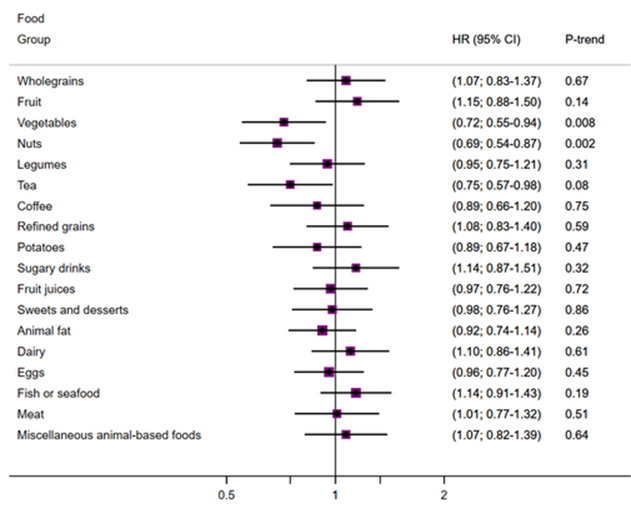
We also see these results in observational studies in America, the Netherlands and Sweden, in which people who keep to eating patterns with higher vegetable and fruit intake have a lower chance of Parkinson's compared with people who eat less vegetables and fruit. Only the study in Sweden corrected for physical activity, which is an important variable. Despite that, they found a positive effect there too when people adhered more to a Mediterranean-like eating pattern, high in fruit and vegetables (46% lower chance of Parkinson's).
Liu et al. Diet Quality and Risk of Parkinson's Disease: A Prospective Study and Meta-Analysis (2021)
Srikwerda et al. Diet Quality and Risk of Parkinson's Disease: The Rotterdam Study (2021)
Eating more vegetables and fruit is associated with a lower chance of Parkinson's, in which the antioxidants they contain play a protective role. Still I am left with the question: might you nevertheless do better to choose organic?
Organic versus non-organic
These studies do not distinguish between non-organic and organic vegetables and fruit. Dokter Smit states that organic is the better choice. He is not alone in this. The Hersenstichting (Dutch Brain Foundation) too is of the opinion that an eating pattern high in vegetables and fruit is protective, but that you would nevertheless do better to choose organic.
“Eat and drink healthily: follow a Mediterranean diet. This is the eating pattern as it is used in the countries around the Mediterranean Sea. For instance, it consists of fresh vegetables and fruit, olive oil, chicken, fresh fish, nuts and seeds and wholegrain products…..Eat organic more often: pesticides seem to make the chance of Parkinson's greater. That is why it can be wise to eat organic as much as possible and to wash your vegetables and fruit well.” (translated from Dutch)
I asked the Hersenstichting what they base this on. They sent me on to the work of the Nederlandse Parkinson vereniging and Bloem. So they have no concrete evidence that organic is better.
As I said earlier, the results of the European SPRINT project show that the amount of pesticide on organic farms is 10 times as low. However, I also showed earlier that the amount of pesticide on vegetables and fruit is already minimal. After a bit of searching I came across a report by the European Parliament.
Source: Europees Parlement. Human health implications of organic food and organic agriculture. (2016)
And this report was quite a revelation for me. They namely conclude that they estimate the cost item at 125 billion euros per year, because exposing children to pesticides causes a significantly lower IQ and thereby a lower lifetime income. Which they also call an underestimation.
“Nevertheless, at least 100 different pesticides are known to cause adverse neurological effects in adults, and all of these substances must therefore be suspected of being capable of damaging developing brains as well. Such adverse effects are likely to be lasting and one main outcome is cognitive deficits, often expressed in terms of losses of IQ points. The combined evidence suggests that current exposures to certain pesticides in the EU may cost at least € 125 billion per year, as calculated from the loss of lifetime income due to the lower IQs associated with prenatal exposures. This calculation is almost certainly an underestimation, and it does not take into account the possible contribution made by pesticides to the development of other prevalent diseases such as Parkinson’s disease, diabetes and certain types of cancer”
In addition they are convinced that choosing organic leads to a lower exposure to pesticides, both directly through the intake via food and indirectly because farmers use fewer pesticides, which results in fewer pesticides in the environment.
“Increased production and consumption of organic food in the EU is likely to substantially reduce the pesticide exposure of both consumers and producers. This effect is both direct, via a low use of pesticides in organic agriculture, and indirect, via the development of non-chemical plant protection practices that may eventually be adopted in conventional agriculture as part of a transition towards integrated pest management. As a consequence of reduced pesticide exposure, organic food consequently contributes to the avoidance of health effects and associated costs to society, as well as other hidden and external costs related to pesticide use, as recently reviewed and suggested to be greatly underestimated.”
They also refer to two observational studies that measured the metabolites of pesticides in urine. People who consumed more vegetables and fruit showed more metabolites in their urine, but those who chose organic products had significantly fewer metabolites.
"Similar conclusions have emerged from studies investigating associations between urinary concentrations of pesticides and questionnaire information on food intake, frequency of different foodstuffs and organic food choices. Thus a high intake of fruit and vegetables is positively correlated with pesticide excretion [154] and frequent consumption of organic produce is associated with lower urinary pesticide concentration [155].”
Source 154: Ye et al. Associations between dietary factors and urinary concentrations of organophosphate and pyrethroid metabolites in a Canadian general population. (2015)
Source 155: Curl et al. Estimating pesticide exposure from dietary intake and organic food choices: the Multi-Ethnic Study of Atherosclerosis (MESA). (2015)
So it is clear that choosing organic minimises the use of pesticide and thus exposure. What the effect of this is on your own health is not clear. But if you do not do it for yourself, you can certainly consider it for the health of others and of the world.
Final conclusion
We are above water again. What a shitshow. It has become a far too long blog, but I hope that I have given a clear overview of the scientific story behind pesticides and Parkinson's.
Let me state up front that Dokter Diederik's claim is well supported, but with a big caveat: the concept of 'pesticide' is too broad. It is abundantly clear from the body of evidence that work-related exposure to pesticides goes together with an increased chance of Parkinson's. It is just as abundantly clear that we do not know exactly how things stand. For instance, we do not know which pesticides are the problem. This is partly caused by the big differences in the design of the studies on this question. Still it looks as if eating vegetables and fruit lowers the chance of Parkinson's, even if it is non-organic. The net result is positive. I am, however, convinced that choosing organic is the better choice, both out of precaution and for the health of the farmer and the world around us. Out of precaution, because it has been shown time and again that substances that once came onto the market as safe later turned out to be harmful after all. For the farmer and the world, because the use of pesticide not only causes exposure for you as an individual but to a higher degree for people who live and work in the surroundings of the places where it is used.
That we do not know exactly how things stand becomes clear when we start looking at individual pesticides, such as glyphosate. The approval of glyphosate is based on studies with animals that use the wrong outcome measure (so that we are not sure whether there is a plausible biological mechanism) and both little and inconsistent evidence for an epidemiological link between (work-related) exposure and Parkinson's. It is noteworthy that organisations such as the EFSA and ECHA do (cite studies that) give a substantive assessment of relevant scientific evidence. Opposite them are the parties who are fighting to demonstrate a link between pesticides and Parkinson's. Even though they make a strong case for the relationship between pesticides in general and Parkinson's, there are also a lot of gaps in the argumentation. No attention to the quality of studies and leaving out relevant studies/results are the biggest gaps.
We cannot say that pestcidie cause Parkinson's, because we know for sure that not all pesticide do this. It most probably concerns (a combination of) specific pesticide, of which a part have already been banned. The discussion calls for nuance, and for better research. Until then it is a good idea to eat enough vegetables and fruit, and it looks as if choosing organic is an even better idea.
What did you think? Let me know in the form of a comment or an email: [email protected]
Have you come across a claim on the internet or social media and are you curious about an assessment of its support, let me know and I will dive in!
Do you want to support me and my nutrition science adventure? Share my articles or the podcast on your socials!
Everything you read on this website is my opinion based on knowledge and experience. There is a good chance that I sometimes overlook something, or that something could be better. I would love to hear it! We do science together.
Follow me on:
Instagram: https://www.instagram.com/coenfirmation_bias/
Linkedin: https://www.linkedin.com/in/coen-dros/